
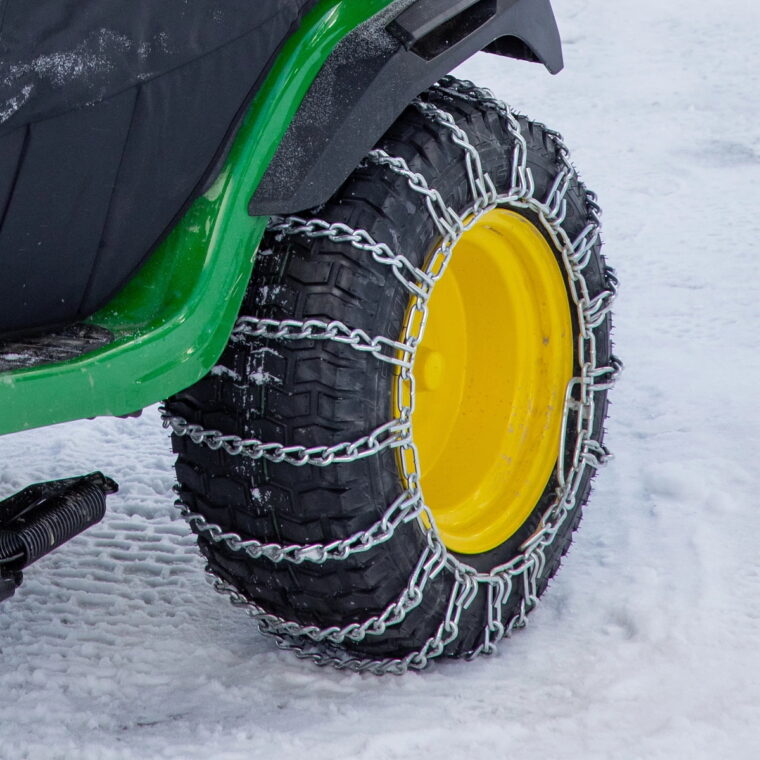
If you manage a property or jobsite where snow is unavoidable, knowing when to use tire chains is critical. It directly impacts uptime, surface protection, and operator safety.
Tire chains provide added traction when standard tires begin to lose grip on snow, ice, or uneven winter terrain. Understanding when chains are necessary and how to choose the right chain pattern helps keep your tractor, Gator, or loader productive and controlled all season.

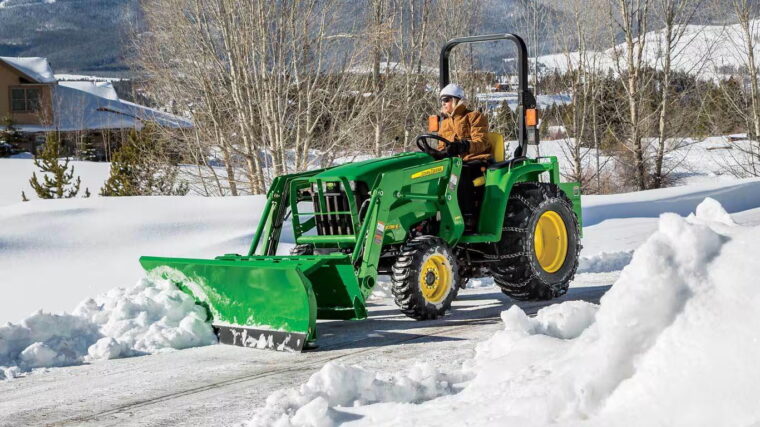
Key Takeaways
- Tire chains improve traction when snow, ice, or terrain reduce grip beyond what standard tires can reliably handle during winter operation.
- Chains are most effective in deep snow, icy conditions, slopes, and heavy workloads where consistent traction and control are critical.
- Different chain styles affect traction consistency, surface impact, and ride quality.
- Proper sizing, installation, and operation are essential to prevent equipment damage and maintain safe, controlled performance in winter conditions.
Understanding Winter Traction for Equipment
Traction is vital for safe winter operation. Whether you’re clearing a driveway with a compact tractor or plowing with a utility vehicle, your equipment needs steady contact with the ground to steer, brake, and transfer power effectively.
In winter conditions, several factors reduce grip, making steering and stopping less predictable:
- Cold temperatures cause standard tire compounds to stiffen, reducing their ability to flex and maintain solid contact with the ground.
- Snow can fill tread voids and limit the tire’s natural bite, decreasing traction when pushing, pulling, or breaking.
- Ice creates a near-frictionless surface, limiting steering control and stopping performance.
When these conditions reduce traction beyond what tires alone can handle, tire chains provide the added grip needed to restore stability and control.
What Are Tire Chains?
Tire chains are external traction devices made of metal links that wrap around a tire’s tread. Rather than relying solely on rubber grip, chains create mechanical contact with snow and ice to improve traction in more severe winter conditions.
They’re commonly used on tractors, compact utility tractors, loaders, and Gators when surfaces become too icy, steep, or compacted for tires alone to maintain reliable control.
How Tire Chains Work
Tire chains help equipment maintain grip in icy or deeply compacted conditions by adding mechanical traction:
- Metal link contact points create sharp edges that press into snow and ice, helping the tire cut through slick surfaces and maintain forward motion.
- Cross-chain spacing and design affect how often the tire makes contact points with the ground, which influences traction consistency as the wheel rotates.
Best Conditions for Tire Chains
Tire chains are best suited for severe winter conditions that demand maximum traction. They’re particularly useful in:
- Icy or frozen conditions
- Deep snow and unplowed areas
- Slopes and uneven terrain
- Heavy pushing or towing applications
Limitations of Tire Chains
Despite their traction benefits, chains have trade-offs:
- Harsher ride and increased vibration
- Potential surface damage on paved or decorative areas
- Speed limitations
- Not suitable for dry pavement use
Choosing the Right Chain Pattern
Tire chains come in several patterns, each designed to deliver a different balance of traction, ride quality, and surface impact. The right pattern depends on your surface conditions, workload, and how aggressively you need the chain to bite into snow or ice.
- Ladder-style chains use cross chains that run straight across the tread, delivering straightforward, dependable traction for general snow conditions.
- Diamond-pattern chains wrap the tread in a crisscross pattern, creating more continuous ground contact for smoother operation and more consistent traction.
- V-bar chains feature V-shaped bars welded to the links, adding aggressive biting edges that dig into hard-packed snow and ice on steep or icy terrain.
- Studded chains attach hardened metal studs to the links, providing the most aggressive grip on ice and extremely slick surfaces, often in severe or off-road conditions.
When Are Tire Chains Necessary vs. Optional?
Tire chains aren’t always required, but certain conditions make them essential for safe and efficient operation. The right choice depends on your equipment, terrain, and workload.
| Factors | Tire Chains Necessary | Tire Chains Optional |
| Surface conditions | Ice or hard-packed snow where tires lose grip | Light snow on plowed or maintained surfaces |
| Snow depth | Deep or unplowed snow limiting tire contact | Light, frequent snowfall with consistent clearing |
| Terrain | Slopes, inclines, or uneven ground requiring added control | Flat terrain with minimal traction challenges |
| Workload | Heavy pushing, towing, or continuous operation under load | Light-duty work or short-duration tasks |
| Work environment | Remote or untreated areas with persistent winter conditions | Residential or maintained properties |
| Equipment type | Construction equipment and loaders on heavy-duty tasks | Utility vehicles or tractors on light-duty tasks |
| Operating style | Frequent starts/stops or sustained traction demand | Steady, low-speed transport with minimal load |
Best Practices for Using Winter Tire Chains
Even the right traction setup won’t perform as expected without proper installation, operation, and maintenance. These are several factors to consider when using tire chains on your machine.
Installation and Fitment Tips
Proper fitment helps prevent premature wear, component damage, and unexpected downtime during winter operation.
- Select the correct size for your chain based on your equipment model to ensure proper ground contact and prevent interference with other machine components.
- Check for adequate clearance around fenders, axles, and driveline components to ensure chains won’t contact or strike the machine as they rotate.
- Center and tension chains properly by positioning them evenly across the tread and tightening them securely to prevent shifting, slippage, or uneven wear during operation.
Operating Safely in Winter Conditions
Traction aids improve grip, but safe winter operation still depends on controlled driving habits:
- Reduce speed and extend stopping distances to account for reduced surface friction.
- Avoid sudden turns or aggressive throttle inputs that can cause wheel slip, loss of control, or unnecessary drivetrain strain.
- Maintain steady, controlled movements when pushing or plowing snow to keep traction consistent and minimize sliding.
Maintenance and Inspection
Routine inspections help extend equipment life and prevent avoidable downtime during peak winter use:
- Inspect chains for wear or damage by checking for broken, bent, or loose links that could fail under load.
- Remove chains when no longer needed to reduce unnecessary wear on both the chains and the underlying tires.
Build a Reliable Winter Traction Setup for Your John Deere Equipment
The right traction setup balances safety, performance, and the realities of your winter environment. While light conditions may not require additional traction, steep terrain, ice, or heavy workloads often demand the added grip of tire chains.
Take time to assess your operating conditions, surface types, and workload demands, then confirm proper sizing and compatibility with your John Deere dealer to ensure a secure, equipment-specific fit.
Ready to operate with confidence this winter? Explore tire chain options through MachineFinder and connect with your local John Deere dealer to prepare your equipment for the season.


When to Use Tire Chains FAQs
1. Do I need tire chains for my equipment?
Not always. In light snow or on maintained surfaces, standard tires may provide enough traction. Chains become necessary when you’re operating on glare ice, steep inclines, or in deep, compacted snow where additional grip is required.
2. Can tire chains damage pavement or gravel driveways?
Yes. Chains can scratch asphalt or concrete and dig into loose gravel if operated aggressively or at higher speeds. Careful throttle control and removing chains when conditions improve help minimize surface damage.
3. Do I need chains on all four tires for my equipment?
Not always. On two-wheel-drive (2WD) machines, chains are typically installed on the drive wheels to provide needed traction, while four-wheel-drive (4WD) or all-wheel-drive (AWD) equipment benefit from chains on all four tires to improve overall stability and control. Always check your equipment’s drivetrain configuration and consult manufacturer guidance before deciding how many tires to chain.
4. When should tire chains be removed for the season?
Chains should be removed once snow and ice are no longer consistently present. Running chains on dry pavement increases wear on both the chains and tires and can add unnecessary strain to driveline components over time.