A row crop tractor gives operators one machine for work across multiple stages of crop production. Designed to travel between planted rows and work with a range of implements, these versatile machines can handle planting, spraying, cultivation, tillage, transport, and harvest support.
Adjustable configurations help operators navigate planted rows while precision agriculture technology can improve field efficiency. Understanding these benefits, along with key features, John Deere models, and buying considerations, can help operators choose the right row crop tractor for their operation.

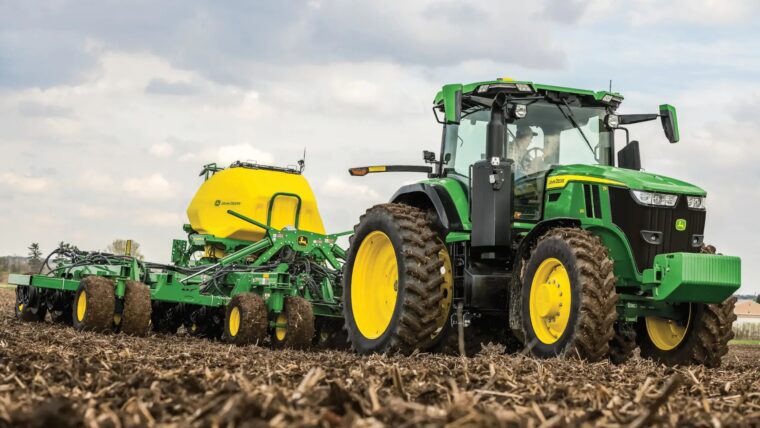
Key Takeaways
- Row crop tractors can handle planting, spraying, cultivation, tillage, transport, and harvest support throughout the growing season.
- Adjustable wheel configurations and crop clearance help operators work between planted rows with greater control.
- Hydraulic, PTO, hitch, drawbar, and electrical capacity help determine which implements a tractor can operate.
- Matching tractor power and traction to the workload can help operators cover acres efficiently during tight fieldwork windows.
- Precision agriculture technology can support guidance, automated steering, implement control, and field documentation.
What Are the Main Benefits of a Row Crop Tractor?
A row crop tractor delivers the versatility, control, and capacity to handle multiple jobs efficiently throughout the growing season.
Versatility Across the Growing Season
Compatibility with different implements allows a row crop tractor to move from one seasonal job to the next. Operators can switch from planting in spring to spraying or cultivation during the growing season, then use the same tractor for tillage, transport, or harvest support.
This flexibility keeps one machine working across seasons and reduces the need for a separate tractor for every application.
Better Access Between Planted Rows
Adjustable wheel spacing and clearance beneath the axle and other components allow a row crop tractor to adapt to different crop types, enabling it to work between rows while limiting contact with growing crops.
Clear sightlines and responsive steering also support more accurate travel along the intended path during spraying, cultivation, and other in-season work.
Compatibility With a Range of Implements
Row crop tractors are designed to work with a wide range of mounted and drawn implements, including planters, cultivators, sprayers, tillage tools, and grain carts. This broad compatibility is what allows a single tractor to take on multiple roles throughout the season.
To support that versatility, the tractor’s hydraulic, PTO, hitch, drawbar, and electrical systems must match the requirements of each implement. When properly aligned, these systems help ensure consistent performance from both the tractor and the equipment it powers or pulls.
Improved Field Productivity
A row crop tractor can stay productive as field conditions and workloads change. Its combination of power, traction, and implement control helps operators maintain steady field speeds and cover more acres within tight planting, application, and harvest windows.
Precision Agriculture Capabilities
Equipping a row crop tractor with precision agriculture technology can make field passes more accurate and reduce manual work. Guidance systems and automated steering can keep the tractor on a consistent path, while compatible implement controls can coordinate functions and reduce overlap.
Field documentation and connectivity can also record completed work and provide greater visibility into field activity, helping operators track progress throughout the season.
How Row Crop Tractors Are Used Throughout the Season
Each stage of crop production requires a different row crop tractor setup, from the implement behind the tractor to the technology used in the cab.
Planting and Seeding
During planting, a row crop tractor pulls the planter while supplying the hydraulic and electrical capacity needed to operate it. Guidance systems help keep passes aligned, while section control can shut off compatible planter sections or rows in overlap areas, such as headlands and irregular field boundaries. This can reduce unnecessary double planting and improve input placement in those areas.
Spraying and Crop Application
When the tractor returns to the field for spraying and nutrient application, it moves through established rows to apply inputs after crops have emerged. Appropriate wheel spacing and clearance help it travel between rows while minimizing crop damage, while GPS-based guidance and automated steering help keep the tractor and application equipment on the intended path.
Compatible rate-control technology can also adjust product delivery across the field, helping operators apply inputs more consistently.
Cultivation and In-Season Fieldwork
Row cultivators cut weeds in the narrow space between plants, so the row crop tractor must keep the implement precisely centered between rows. Clear sightlines let operators monitor both the crop and cultivator, while accurate steering and implement control help maintain the proper position as conditions change.
Together, these features support mechanical weed management without disturbing the crop on either side.
Tillage and Field Preparation
In tillage, a row crop tractor provides the pulling power and stability needed to run implements like disks, field cultivators, chisel plows, and rippers through the soil.
Proper ballast helps transfer that power to the ground and reduce wheel slip under heavy draft loads. When the tractor is matched correctly to the implement, it can maintain consistent depth and steady speed, resulting in a more uniform seedbed and more reliable soil and residue conditions ahead of planting.
Proper ballast and tire or track setup can affect:
- Fuel use under load
- Traction and wheel slip
- Tire wear
- Ground pressure and soil compaction risk
Transport and Harvest Support
At harvest, a row crop tractor may pull a grain cart alongside the combine to transfer grain to trucks waiting at the field edge. For longer hauls, it may pull grain wagons from the field to a nearby storage or unloading location. This shuttle system keeps grain moving out of the field and helps reduce delays in the harvest process.
For road transport, the tractor and towed equipment must be properly matched for load, hitching, braking, lighting, marking, tires, and permitted transport width. Operators should also choose an appropriate transport speed, maintain clear visibility, and follow applicable operator’s manuals and local road regulations when moving large or heavy equipment.
Row Crop Tractor Features
Certain features determine how well a row crop tractor fits the crops, implements, field conditions, and technology already in a farm operation. The key areas to compare are:
- Adjustable wheel and tire configurations
- Hydraulic, PTO, and hitch capacity
- Transmission and speed control
- Precision agriculture integration
- Operator visibility and comfort
Adjustable Wheel and Tire Configurations
Adjustable tread spacing allows row crop tractors to match tire position to planted rows. Operators can then select single or dual tires and adjust tire size to improve traction or flotation, while also managing soil compaction, maintaining crop clearance, and supporting efficient travel between fields.
When operated according to the tire manufacturer’s load and inflation recommendations, VF (Very High Flexion) and IF (Increased Flexion) tire technologies may allow lower inflation pressures for a given load than comparable conventional radial tires.
Hydraulic, PTO, and Hitch Capacity
Match hydraulic flow, PTO power, and hitch capacity to the requirements of the implements the tractor will use. Equipment with higher hydraulic demands needs sufficient flow to operate functions like cylinders and fans, while PTO-driven implements require compatible power and speed. Hitch or drawbar capacity should also support the weight and load of mounted or towed equipment.
Transmission and Speed Control
Transmission options shape how operators manage ground speed as the workload changes. John Deere’s PowerShift transmissions move through defined gear ratios, while an Infinitely Variable Transmission™ (IVT) offers continuous speed adjustment, which can provide finer control for applications like planting.
Precision Agriculture Integration
In practice, compatible implements, displays, and activations can work together to guide the tractor, monitor implement performance, and automate certain functions in the field. For example, section and rate control can adjust how an implement operates based on where it is in the field, while prescription execution can change application rates according to a predetermined field plan.
These integrated systems can also document work as it happens, giving operators a record of completed passes and applications. Together, these capabilities can reduce overlap and skips while improving consistency throughout fieldwork.
Operator Visibility and Comfort
Cab control layout determines how easily operators can make adjustments while staying focused on the field. Thoughtfully placed controls and displays minimize unnecessary movement, while seating and suspension help maintain comfort over uneven ground during long hours in the field.
John Deere Row Crop Tractor Options
John Deere row crop tractor series are built for different job demands. Comparing them by application can help operators narrow the lineup before evaluating individual models.
The following capabilities represent selected models and configurations. Transmissions, cab packages, steering and suspension systems, hydraulic capacity, and precision agriculture features vary by model year.
John Deere 6M Series

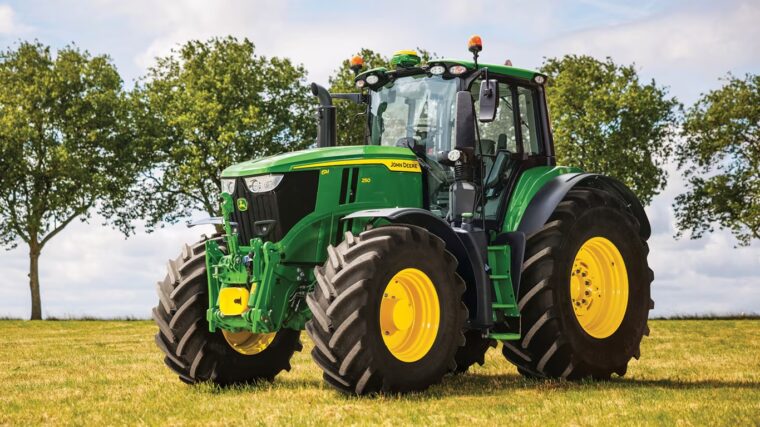
The 6M Series covers a broad range of general-purpose, utility, and field applications, with available configurations suited to selected row crop operations.
- Improved maneuverability: The tractor’s design supports a tight turning radius, providing the maneuverability needed for loader work, livestock operations, planting, hay production, and transport.
- Sloped hood and panorama roof: These features give operators a better view of loaders, attachments, and front-mounted implements.
- Straightforward cab controls: A digital corner-post display with the compact CommandARM™ keeps key tractor functions accessible during day-to-day work.
John Deere 6R Series
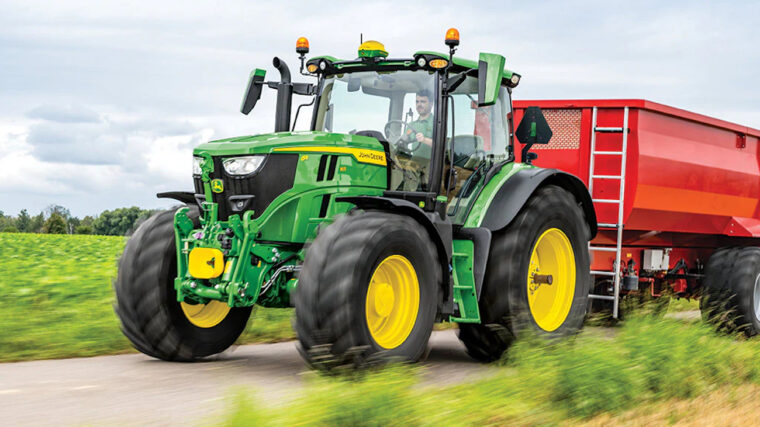
The 6R Series combines row crop versatility with a greater focus on power efficiency and operator comfort.
- Efficient power delivery: The 6R combines strong power-to-weight characteristics with versatile field performance.
- Continuous speed control: The IVT™ allows operators to adjust ground speed without shifting through fixed gears as loads and field conditions change.
- A quieter, more comfortable cab: Ergonomic controls, air-suspension seating, and available hydraulic cab suspension reduce fatigue during long days.
- Improved cooling and fuel efficiency: A reversible fan helps clear chaff and debris from radiator screens while supporting engine cooling.
John Deere 7R Series
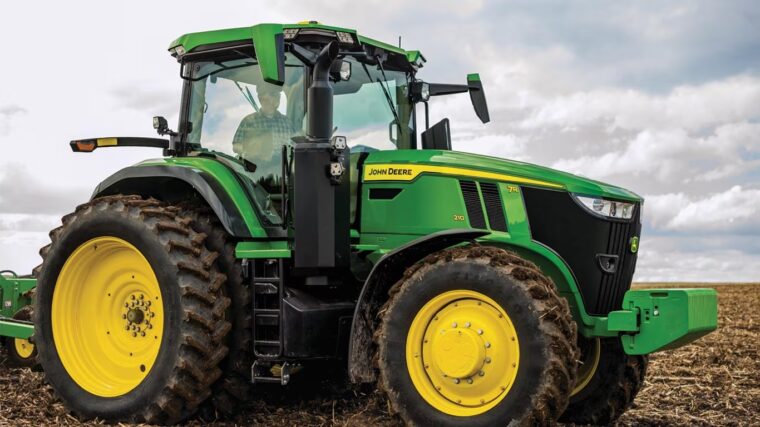
John Deere’s 7R Series is built to handle larger implements and heavier fieldwork without sacrificing transport speed.
- High-capacity hydraulics: These tractors support implements with greater hydraulic demands, including larger planting and tillage equipment.
- Heavy-duty drawbar options: Drawbars provide the connection and load support needed for heavier drawn implements.
- Available ActiveCommand Steering™: On equipped models, the system is designed to reduce steering effort and adjust steering response based on travel speed, supporting maneuverability in the field and controlled steering during transport.
- Available ActiveSeat™ II suspension: This helps isolate the operator from rough field conditions, improving ride quality during long days in the cab.
John Deere 8R, 8RT, and 8RX Series
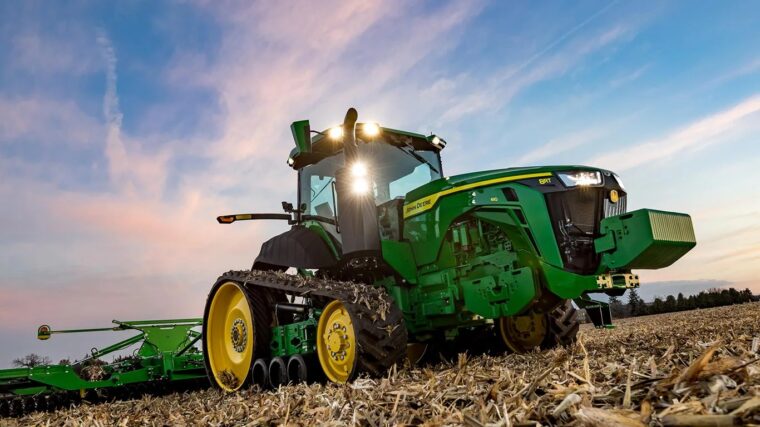
The John Deere 8 Series offers wheeled, two-track, and four-track configurations for high-capacity planting, tillage, and other demanding fieldwork.
- Wheeled 8R models balance maneuverability with the pulling power and hitch capacity needed for large planters and other heavy implements.
- Two-track 8RT models maximize straight-line traction and flotation, with AirCushion™ suspension to maintain working speeds over rough terrain.
- Four-track 8RX models distribute the tractor’s weight across four track assemblies, providing traction and a larger contact area. Depending on tractor setup and field conditions, this configuration can reduce ground pressure compared with certain wheeled configurations.
How to Match a Row Crop Tractor to Your Operation
Looking at your operation as a whole helps ensure your row crop tractor is productive today without limiting future needs. To identify the best fit:
- Consider the jobs the tractor must perform
- Match the tractor to current and future implements
- Account for crop spacing and field conditions
- Evaluate seasonal capacity needs
Consider the Jobs the Tractor Must Perform
Start with the tractor’s realistic workload across the year. An operation that relies heavily on tillage may need more pulling capacity, while frequent spraying or cultivation puts greater emphasis on maneuverability and crop clearance.
Also consider how often implements will change. A tractor moving between planting, transport, and harvest support needs to accommodate each piece of equipment without creating time-consuming setup challenges.
Match the Tractor to Current and Future Implements
Use the largest or most demanding implements in the equipment lineup as a practical benchmark. Working width and weight help establish power and draft needs, while PTO, hydraulic, electrical, hitch, and drawbar requirements should also factor into the decision.
Factor in planned equipment upgrades, too. This helps ensure you won’t outgrow the tractor by buying a larger planter or more hydraulically demanding implement.
Account for Crop Spacing and Field Conditions
Evaluate the conditions where the tractor will spend most of its time. Narrower rows require a tractor and tire setup that can fit between crops without damaging plants, while soft soils may call for greater flotation to limit compaction and maintain traction.
Smaller or irregular fields favor a more maneuverable tractor that can navigate tight turns and headlands. If fields are spread farther apart, consider road speed and overall equipment width to make frequent transport between locations faster and easier.
Evaluate Seasonal Capacity Needs
Compare total acreage with the number of workable planting or application days to estimate how many acres must be covered each day. Get a sense for effective field capacity using implement width, realistic operating speed, field efficiency, refill time, transport time, and expected downtime. Then consider expected operating hours and whether extra capacity is needed when weather shortens that window.
Based on that, choose a tractor with enough power and implement capacity to meet the required daily acreage. The goal is enough reserve to keep work moving without sizing the tractor far beyond what the operation will use.
Put the Benefits of a Row Crop Tractor to Work
A row crop tractor delivers the most value when its configuration lines up with the operation around it. The right fit can move confidently between rows, handle the equipment already in the shed, and keep pace as fieldwork changes throughout the season.
When comparing John Deere models, focus on the applications each series is designed to support rather than horsepower alone. This helps translate the tractor’s capabilities into better field performance.
Ready to make every pass count? Compare John Deere row crop tractors on MachineFinder and connect with your local John Deere dealer to confirm equipment condition, specifications, and implement compatibility.


Row Crop Tractor FAQs
1. What Makes a Tractor a Row Crop Tractor?
A row crop tractor is designed for a wide range of field operations throughout the growing season and typically features adjustable tread spacing, high crop clearance, and compatibility with a broad range of implements. These characteristics allow it to perform work both before and after crop emergence.
2. How Can Operators Determine Whether a Row Crop Tractor Is Appropriately Sized?
Start with the tractor’s most demanding regular job. It should have enough horsepower, traction, hydraulic capacity, and implement support to handle that work at the required speed without adding unnecessary power or size.
3. How Should Future Acreage Growth Influence Row Crop Tractor Selection?
Choose a tractor with enough capacity to handle expected acreage growth. If expansion will mean larger implements or more acres to cover each day, additional capacity now can help avoid replacing the tractor sooner than planned.
4. How Should Road Transport Needs Influence Row Crop Tractor Size and Configuration?
Consider how often and how far the tractor will travel between fields. Frequent road use makes transport width, braking, visibility, travel speed, and ride quality more important, especially when pulling large implements or heavy loads.
5. When Is Adding a Second Tractor More Practical Than Upgrading?
Consider a second tractor when two jobs regularly need to happen at the same time. Using separate tractors for planting and tillage or harvest and transport can keep both jobs moving while reducing time spent switching implements.
6. When Can a Lower-Horsepower Row Crop Tractor Be More Productive Than a Larger Model?
A lower-horsepower tractor can be more productive when the job does not require extra pulling power. Its smaller size can make it easier to maneuver through tight fields and planted rows while still providing enough power for the implement.