Heavy traffic, changing weather, runoff, and loose material gradually break down a gravel driveway surface. Over time, this can lead to potholes, washboarding, ruts, and uneven grading.
In many cases, gravel driveways can be restored without a full rebuild. With the right equipment and consistent maintenance, operators can restore grading, improve drainage, and reduce long-term surface deterioration.
Whether you’re maintaining a long rural driveway, managing acreage access roads, or repairing storm damage, choosing the right tractor attachments can improve efficiency and consistency.

Key Takeaways
- Gravel driveways commonly develop washboarding, ruts, potholes, and erosion from traffic and water runoff.
- Rear blades handle routine grading and crown maintenance, while box blades are better suited for deeper repairs and compacted material.
- Proper drainage and driveway crowning help reduce recurring washouts and gravel loss.
- Compact utility tractors paired with the right attachments make driveway maintenance faster, more consistent, and easier to manage over time.
- Regular upkeep and timely repairs can extend the life of a gravel driveway while reducing long-term restoration costs.
What Causes Gravel Driveway Damage?
Gravel driveways gradually break down as traffic, weather, and water shift material across the surface. Identifying the root cause is critical because surface grading alone will not solve recurring drainage or material-loss issues.
Washboarding and Ruts
Washboarding appears as a series of closely spaced ridges across the direction of travel. Ruts are depressed tracks that generally follow vehicle wheel paths. Traffic, loose surface material, moisture, drainage, speed, braking, and acceleration can contribute to one or both conditions.
What are the effects? These uneven surfaces make the driveway less stable and more difficult to maintain, and allow water to collect in low spots. Over time, trapped moisture weakens the surface and accelerates further breakdown.
Erosion and Water Runoff
Poor drainage is one of the most common causes of recurring gravel driveway failure. As runoff moves across the surface, it carries gravel away and gradually erodes the driveway.
What are the effects? Runoff can create washouts, low spots, and channels that continue trapping water after every storm. Left untreated, erosion often leads to ongoing gravel loss and repeated surface damage.
Gravel Migration and Edge Loss
As vehicles repeatedly travel across a gravel driveway, material naturally shifts outward toward the edges. Over time, this movement leaves the center thinner and less stable.
What are the effects? Gravel migration and edge loss can make the driveway uneven, expose the base layer, and increase the likelihood of potholes forming in high-traffic areas. Gravel may also spread into nearby grass, ditches, or landscaping.
Best Equipment to Fix a Gravel Driveway
Different implements handle different types of repairs, so choosing the right tools depends on the severity of the damage and how often the driveway needs maintenance.
Rear Blade (Rear Grader Blade)
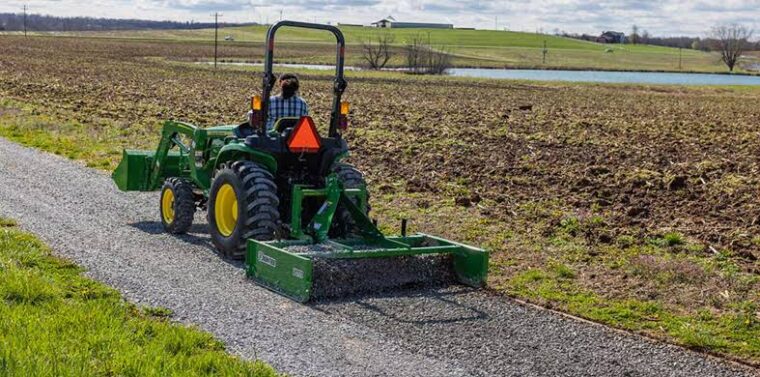
Rear blades are typically the commonly used tool for ongoing driveway maintenance because they reshape the surface without aggressively disturbing the base layer. Mounted to the tractor’s three-point hitch, the blade can be angled to pull gravel from the edges back toward the center of the driveway to help rebuild the crown and redistribute loose material.
Many rear blades can also be reversed to create smoother finishing passes after grading. This helps level washboarding, handle light reshaping work, and create a cleaner driving surface while maintaining better control over material movement.
Box Blade
Box blades are generally better suited for heavier grading and material redistribution, making them well-suited for neglected driveways with severe rutting, potholes, or compacted gravel. The box-shaped frame and cutting edges help collect and move material evenly across the driveway surface while reshaping larger uneven sections.
Box blades also include scarifiers, which are adjustable teeth that loosen packed gravel before grading begins. Once the surface is properly loosened, the blade moves gravel from high spots into lower areas to fill potholes and create a more level finish.
Land Plane or Grading Scraper
A land plane is useful for routine driveway smoothing and maintaining an established surface. Its blades shave material from high spots and allow loose aggregate to fall into lower areas. It is generally better suited to maintenance and finishing than to repairing deep washouts or substantially reshaping the driveway.
Front-End Loader (Bucket)
A front-end loader can carry and place gravel around the work area, helping operators add material to low spots, potholes, and washed-out sections. A loader is useful for bulk material placement, while a rear blade, box blade, land plane, or other grading implement generally provides more controlled finish grading.
Loader buckets are especially useful for redistributing gravel across longer driveways and rebuilding areas damaged by runoff or erosion. Some operators also use the bucket to lightly back drag the surface for quick smoothing between larger grading sessions.
Compact Utility Tractor
A compact utility tractor provides the horsepower, traction, and attachment compatibility needed for regular gravel driveway maintenance. For many rural property owners, a compact utility tractor becomes the foundation for long-term driveway and property maintenance.
Compact utility tractors such as the John Deere 3038E may be paired with appropriately sized rear blades, box blades, and compatible loaders. Operators should confirm hitch compatibility, implement width and weight, lift capacity, ballast requirements, and other model-specific limitations before use.
How to Fix a Gravel Driveway With a Rear Blade
A rear blade is a useful tool for routine gravel driveway maintenance. When used properly, it helps reshape the surface gradually while improving drainage and redistributing loose material.
Step 1: Attach and Set Up the Blade
Attach the rear blade to the tractor using the three-point hitch and confirm the implement is properly secured before grading begins. Quick-hitch systems like the iMatch™ Quick-Hitch can simplify compatible Category 1 implement changes. Confirm that the implement is iMatch-compatible and properly connected and locked before operation.
Step 2: Angle the Blade to Pull Gravel Inward
Angle the blade enough to move displaced gravel gradually from the driveway edges toward the center. Begin with a moderate setting and make controlled passes, adjusting the blade angle as needed based on material movement, driveway width, and the implement manufacturer’s instructions.
Making smaller, controlled passes typically produces a smoother finish, while overly aggressive grading can create ridges and uneven surfaces.
Step 3: Use Light Finishing Passes
After redistributing the gravel, reduce the blade’s aggressiveness and make light finishing passes to blend ridges and repaired areas. If the rear-blade model is designed for reverse-facing or back-dragging operation, follow the implement operator manual for the proper configuration and direction of travel.
Step 4: Create a Crown for Drainage
A crown helps move water off the driving surface, but it must work with open ditches, functional culverts, stable shoulders, and an unobstructed drainage outlet. If runoff enters from surrounding land or repeatedly crosses the driveway, the drainage problem may require professional evaluation rather than surface grading alone.
How to Fix a Gravel Driveway With a Box Blade
A box blade is a strong option for repairing heavily damaged gravel driveways, especially when compacted material, deep ruts, and potholes require more aggressive grading.
Step 1: Lower Scarifiers to Break Up the Surface
Lower the scarifiers enough to loosen compacted surface material and the hardened edges of ruts or potholes. Avoid excessive penetration that mixes the underlying base or subgrade into the driveway surface. Begin with a shallow setting and adjust according to conditions and the implement operator manual.
Making a few overlapping passes across the driveway helps break up packed areas more consistently and prepares the surface for smoother leveling with the box blade.
Step 2: Level and Redistribute Gravel
Once the surface is loosened, raise the scarifiers and drag the box blade across the driveway to pull gravel from high spots into lower areas. The box design helps hold material inside the blade, allowing gravel to spread more evenly instead of being pushed entirely off the surface.
Step 3: Control Depth for Even Grading
Adjust the tractor’s top link to change the box blade’s cutting angle. Shortening the top link angles the box blade forward for a more aggressive cut. For lighter smoothing, raise the scarifiers and extend the top link so the box blade angles slightly upward. Make small adjustments and follow the tractor and implement operator manuals.
Proper top-link adjustment improves grading consistency while limiting unnecessary disturbance to the driveway base.
Step 4: Make Finishing Passes to Smooth the Surface
After the major leveling work is complete, keep the scarifiers raised and make lighter finishing passes to smooth the surface. These final lighter passes help blend repaired sections, distribute loose gravel evenly, and create a more uniform driving surface.
Rear Blade vs. Box Blade: Which Should You Use?
A rear blade and box blade both help fix gravel driveways, but they serve different purposes depending on the condition of the surface.
| Best use cases for rear blades | Best use cases for box blades |
| – Routine maintenance – Smoothing washboarding – Reshaping the crown – Pulling gravel inward – Light grading work | – Deep potholes – Heavy ruts – Compacted surfaces – Major leveling projects – Moving larger amounts of gravel |
Many operators use a combination of both tools, starting with a box blade for heavier repair work before switching to a rear blade for routine grading and smoothing maintenance.
Choosing the Right Equipment for Your Property
The right equipment setup depends on driveway size, repair severity, and how frequently maintenance is required. Keep these factors in mind:
- Driveway length and width: Longer or wider driveways often benefit from wider implements that cover more ground and reduce the number of grading passes needed.
- Severity of damage: Deep potholes, severe ruts, and compacted gravel may require a box blade with scarifiers, while lighter maintenance is often manageable with a rear blade and occasional gravel replacement.
- Tractor and implement compatibility: Confirm the implement’s hitch category, width, weight, and lift requirements. Appropriate ballast, tire setup, traction, and tractor stability may also affect safe and effective operation.
- Frequency of maintenance: Property owners who maintain gravel driveways regularly often reduce long-term gravel replacement needs and avoid larger restoration projects.
Tips for Maintaining a Gravel Driveway
Once a gravel driveway has been repaired and regraded, regular maintenance helps preserve the surface and decrease the need for larger repairs over time.
Maintain It Regularly
Regular light grading is usually more effective than waiting for major surface failure. Smaller grading sessions are also typically easier and less expensive than waiting until potholes, ruts, and washouts become more severe.
Avoid Overworking the Surface
Overgrading is a common mistake that can weaken the driveway base and accelerate future washboarding. In many cases, lighter maintenance passes are enough to smooth the surface and maintain proper drainage without disturbing stable material underneath.
Watch Moisture Conditions
Slightly damp gravel is typically easier to shape and compact than extremely dry or saturated material. Extremely dry gravel tends to scatter during grading, while muddy conditions can create deeper ruts and uneven compaction.
Address Drainage Early
If water consistently pools or cuts channels into the driveway, addressing drainage should be part of your spring yard cleanup list before adding more gravel.
Reshaping the crown and improving side drainage helps direct water away from the surface, while ditches, proper slope, and consistent crowning all help reduce washouts and extend the life of the driveway.
Safety Tips for Grading a Gravel Driveway
- Read the tractor and implement operator manuals before beginning work.
- Inspect the hitch, pins, cutting edges, scarifiers, tires, and work area before operation.
- Keep bystanders away from the tractor and implement, use the seat belt when operating a tractor equipped with a rollover protective structure, and operate at a controlled speed.
- Use ballast when required by the tractor or loader configuration, and keep a raised loader bucket low while traveling.
- Exercise additional caution on slopes, near ditches, culverts, drop-offs, utilities, buildings, and public roads.
- Stop the tractor, lower the implement, set the parking brake, and shut off the engine before making manual adjustments.
Procedures and settings vary by tractor and implement. Always follow the applicable operator manuals and consult a John Deere dealer when confirming compatibility, ballast, setup, or operating requirements.
Keep Your Gravel Driveway in Top Shape
A well-maintained gravel driveway stays smoother, drains more effectively, and is easier to manage year-round. Staying ahead of washboarding, potholes, and erosion also helps reduce long-term repair costs and avoid larger restoration projects later on.
The right combination of tractor and grading attachments makes long-term driveway maintenance faster, more consistent, and less labor-intensive. Rear blades, box blades, loaders, and compact utility tractors give property owners the flexibility to handle everything from routine grading to heavier driveway repairs without depending solely on outsourced grading or repair work.
For help choosing the right equipment to fix a gravel driveway, contact your local John Deere dealer or explore available tractors and attachments on MachineFinder.


Gravel Driveway Restoration FAQs
1. How Do I Make My Gravel Driveway Look New Again?
Identify and correct drainage problems first. Loosen compacted potholes and ruts, redistribute existing aggregate, restore the driveway’s drainage profile, add compatible gravel where material is missing, and compact repaired areas as appropriate.
2. How Do You Firm Up a Loose Gravel Driveway?
After shaping the driveway, compact newly placed or loosened aggregate as appropriate for the material and repair. Grading establishes the profile, while compaction helps seat the aggregate and reduce immediate displacement. If the surface remains loose after grading and compaction, the aggregate type or gradation may need to be evaluated.
3. How Do I Fix a Gravel Driveway That Keeps Washing Out?
Determine where the runoff is entering and where it should leave the site. Restoring the crown may help, but ditches, culverts, shoulders, or other drainage features may also require repair. Severe or recurring washouts may need professional drainage or base reconstruction.
4. Why Do Potholes Keep Coming Back in My Gravel Driveway?
Recurring potholes often indicate trapped water, inadequate drainage, a weak base, or an incomplete repair. Simply filling the depression may be temporary. The compacted edges and damaged material should be loosened before compatible aggregate is placed, shaped, and compacted.
5. What Is the Lifespan of a Gravel Driveway?
A properly constructed gravel driveway can remain serviceable for many years, but it requires periodic grading, drainage maintenance, and gravel replenishment. Its service life depends on factors such as the base, aggregate, traffic, weather, and how effectively water drains from the surface.
6. How Do You Adjust a Box Blade on a Tractor?
Follow the tractor and box-blade operator manuals. In general, shortening the top link angles the box blade forward for a more aggressive cut. For smoothing, raise the scarifiers, level the blade side to side, and extend the top link so the box blade angles slightly upward.