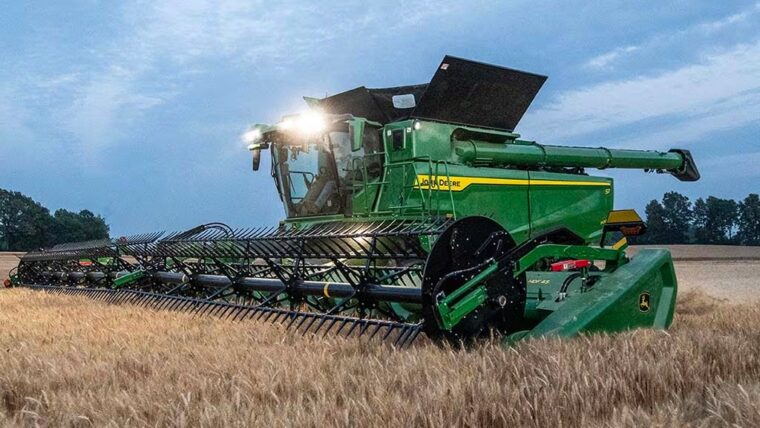
Draper headers use moving belts to carry cut crop toward the center of the platform and into the feederhouse. That steady movement can reduce bunching before material reaches the combine’s threshing and separating systems.
When crop moves evenly, operators can reduce sudden surges of material and manage header loss, both important pieces of a successful harvest season.
This guide explains how draper headers move crop, how that design can affect harvest performance, and what to consider when choosing a header for your operation.

Key Takeaways
- Draper headers use side belts to move crop inward, helping reduce bunching before material reaches the feederhouse.
- Steadier feeding can give the combine a more consistent volume of material to process when threshing and separating.
- Flexible cutterbars can benefit low-growing crops and close cutting, while rigid designs maintain a fixed cutting line.
- John Deere draper options include HDR, RDF HydraFlex™, HDF, and 700D model families, each with different cutterbar and frame configurations.
- Wider headers cover more ground per pass, but field layout, terrain, and combine capacity determine how much width is practical.
What Is a Draper Header?
A draper header is a combine cutting platform that cuts crop and uses moving belts to carry the material toward the center of the header.
The cutterbar severs the crop, the reel guides it onto the platform, and the side draper belts move it inward. From there, the center feed section directs the crop into the feederhouse, which carries it into the combine.
Draper Header vs. Auger Header
The main difference between draper and traditional auger platforms is how they move crop across the header. Draper headers use side belts to carry material toward the center, while auger platforms rely primarily on a rotating auger.
Neither design is the right fit for every operation. Crop type, terrain, combine configuration, harvest conditions, and operator priorities all affect which header makes the most sense.
How Does a Draper Header Move Crop Through the Platform?
Crop moves through a draper header in three stages: cutting and gathering, belt conveyance, and feeding into the combine.
Cutting and Gathering the Crop
Harvest begins at the cutterbar, which severs the standing crop as the combine moves through the field. The reel guides the material backward onto the draper belts and clears the cutterbar for the next crop entering the header.
Moving Crop Across the Draper Belts
Once crop reaches the platform, the side draper belts carry it from the outer sections of the header toward the center. Because the belts continuously convey material inward, they can reduce bunching before crop reaches the center feed section.
Feeding Crop Into the Combine
At the middle of the platform, the center feed section gathers crop from the side belts and directs it into the feederhouse. The feederhouse carries the material into the combine, where grain is threshed from the plant and separated from the remaining residue.
How Draper Headers Can Improve Harvest Performance
Steady movement across the platform can reduce bunching, limit header loss, and keep crop moving across wider headers.
Support More Consistent Crop Feeding
An even crop mat reduces sudden surges into the feederhouse, helping provide a more consistent flow of crop material. That can help the threshing and separating systems avoid repeated swings between heavy and light loads.
Help Manage Header Loss
Header loss occurs when grain or crop reaches the ground before entering the combine. Draper headers can help manage certain types of header loss by promoting smooth crop flow, although actual loss levels depend on crop conditions, machine setup, and operator adjustments.
Maintain Crop Flow Across Wider Headers
As header width increases, crop from the outer edges has farther to travel before reaching the center. Side draper belts continuously carry that material inward, helping prevent buildup and maintain feeding to the feederhouse.
Adapt to Changing Crop and Field Conditions
Lodged plants, low-growing crops, dense stands, terraces, and uneven ground can make crop capture more difficult. Cutterbar flexibility and frame movement help the header follow ground contours and maintain the appropriate cutting position, reducing missed material and uneven cutting as conditions change.
Types of John Deere Draper Headers
John Deere offers several draper configurations with different cutterbar designs, widths, crops, and terrain requirements.
- HDR Rigid Cutterbar Drapers
- RDF HydraFlex™ Drapers
- HDF Flexible Cutterbar Drapers
- 700D Rigid Cutterbar Drapers
HDR Rigid Cutterbar Drapers

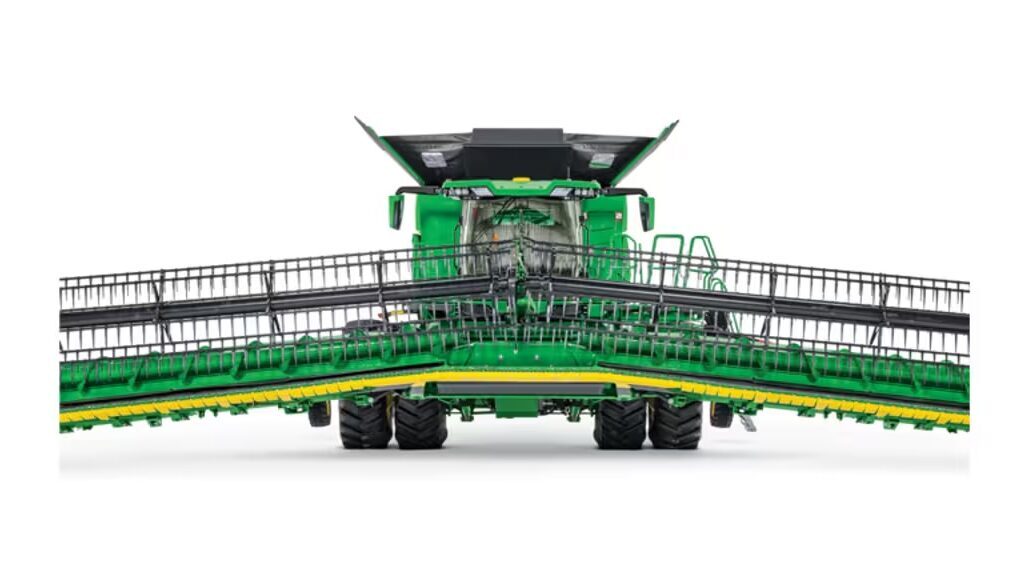
John Deere HDR models pair a hinged frame with a rigid cutterbar and are available in multiple widths. The wings move independently as terrain changes, while the cutterbar maintains a rigid cutting edge across each section of the header.
Features that help the HDR manage crop positioning and changing terrain include:
- A three-piece reel that maintains its position relative to the cutterbar over rolling ground and terraces, helping capture crop consistently.
- Position Control Gauge Wheels that help maintain the desired stubble height as the header moves across the field.
- Grain Saver Draper Belts that help capture grain that might otherwise roll forward and past the cutterbar.
RDF HydraFlex™ Drapers

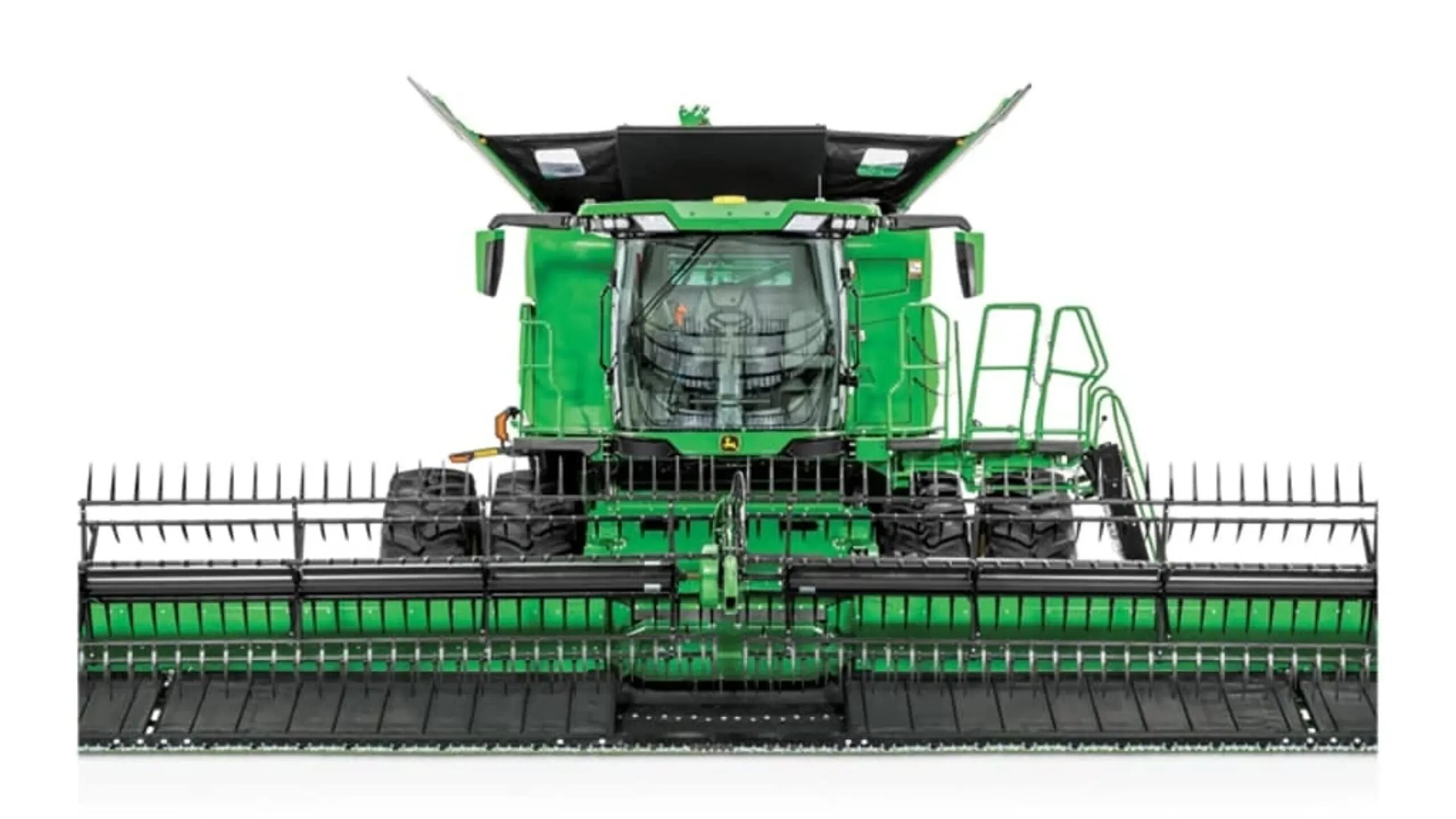
RDF HydraFlex™ Drapers use a flexible cutterbar designed to follow ground contours more closely. That can help maintain a low cutting height as terrain changes, particularly for crops harvested close to the soil surface.
The RDF lineup includes:
- A two-speed center feed section with different speeds for moving crop into the feederhouse based on harvest conditions.
- A double-cut, dual-drive cutterbar with knives driven from both sides to maintain cutting performance at higher harvest speeds.
HDF Flexible Cutterbar Drapers

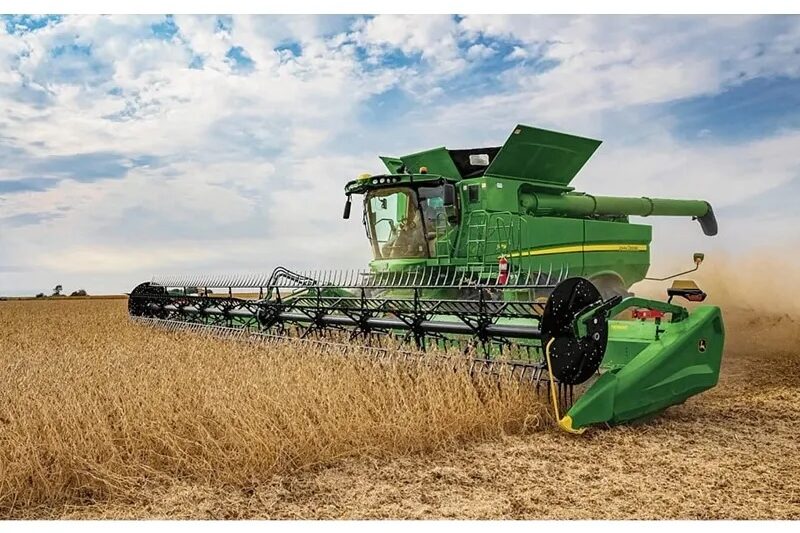
HDF Flexible Cutterbar Drapers combine a hinged frame with a flexible cutterbar, giving the header two levels of terrain following. The wings accommodate larger elevation changes, while the cutterbar flexes closer to the ground to follow smaller contours.
Key configurations and features include:
- Flexible cutterbar that supports a low cutting height to capture low-growing crops and reduce missed material.
- Hinged frame that helps maintain a steady cutting position across changes in field elevation.
- Enhanced terrain following that helps keep cutting performance consistent throughout rolling and uneven fields.
700D Rigid Cutterbar Drapers

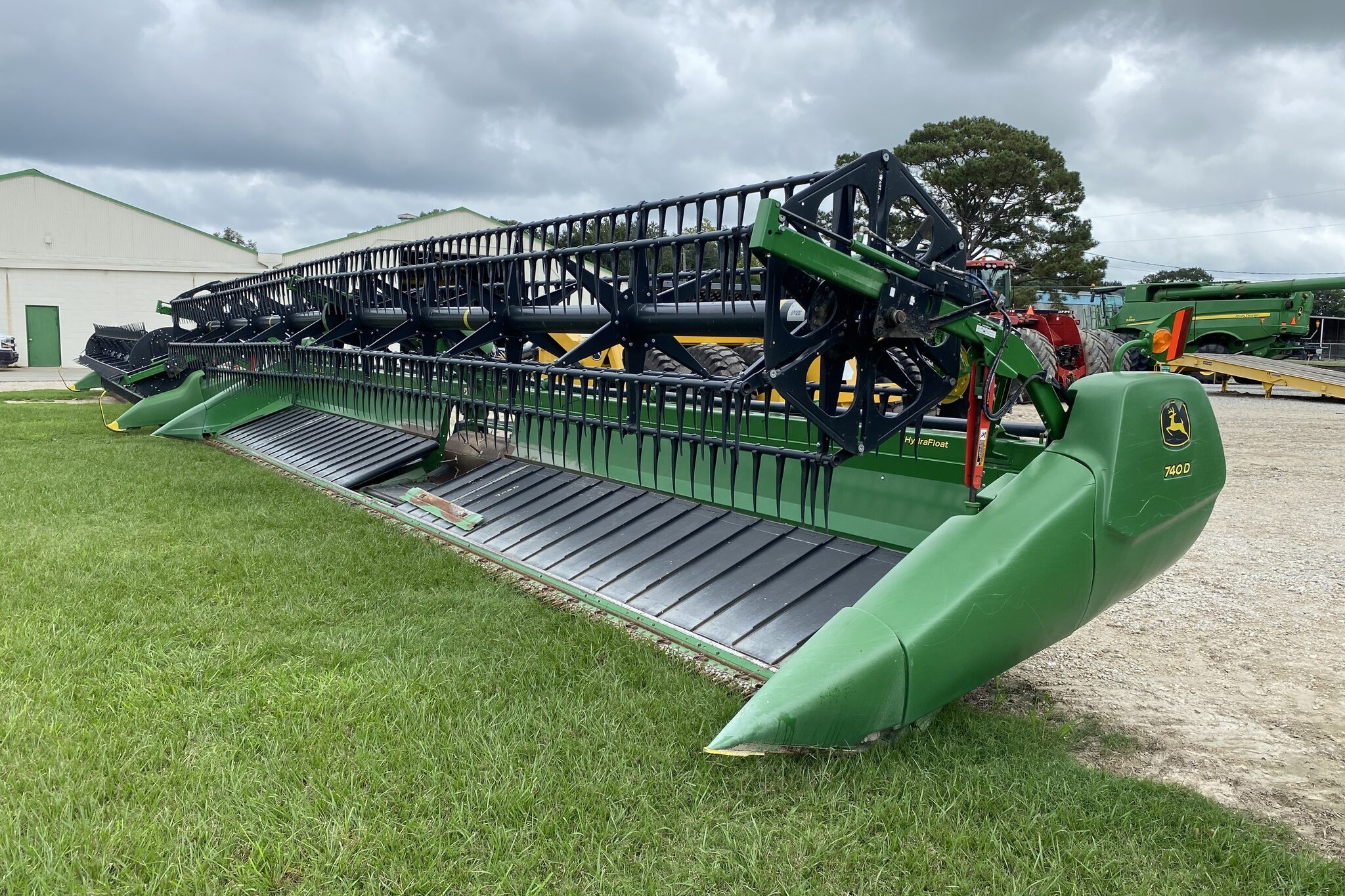
The 700D series is a previous-generation John Deere rigid cutterbar draper lineup that remains widely available on the used equipment market. This includes the 730D, 735D, and 740D.
The lineup supports cutting and crop feeding with:
- A dual-knife drive that cuts crop from both sides of the platform to maintain cutting performance across the cutterbar.
- Hydraulic cutterbar tilt that lets operators adjust the cutting angle from the cab as crop or field conditions change.
- A center feed drum and top crop auger that help gather material from the draper belts and direct it into the feederhouse.
How to Choose a Draper Header for Harvest
Draper headers are commonly used in wheat, soybeans, canola, lentils, and other small grain crops where smooth crop feeding is important. The right draper header depends on crop, terrain, cutting height, header width, and combine setup.
Start With the Crop You Harvest
Start with how closely the crop needs to be cut to the ground. Low-growing soybeans and lentils can benefit from a flexible cutterbar that follows small ground contours and keeps the cutting edge close to the soil surface.
For taller, standing crops harvested at a higher stubble height, a rigid cutterbar can provide a consistent cutting line without the same ground-following flexibility.
Consider Field Terrain and Ground Conditions
Match frame movement to the terrain the header needs to cross. Rolling ground and terraces can favor a hinged frame because the wings can follow larger elevation changes across the header width.
On particularly uneven ground, an HDF header adds cutterbar flex to that wing movement for closer tracking of smaller contours.
Compare Rigid and Flexible Cutterbar Designs
Cutting height is a key difference between rigid and flexible cutterbars. A rigid cutterbar, such as an HDR or 700D, can suit crops harvested at a higher stubble height, where close ground following is less important.
For low-growing crops that require a closer cut, an RDF or HDF flexible cutterbar can help capture more crop near the soil surface. HDF models add a hinged frame when close cutting needs to be combined with greater movement across uneven terrain.
Match Header Width to Your Operation
Consider how much ground the combine needs to cover and where it will operate. Large, open fields paired with a higher-capacity combine may favor a wider draper, while smaller or irregular fields may favor a narrower header for easier maneuvering. Road transport and available storage can also limit how much width is practical.
Check Combine and Header Compatibility
A wider draper can cover more ground per pass, but the combine still needs the capacity, connections, and configuration to operate it effectively. Header compatibility can vary by combine model year, feederhouse configuration, hydraulic requirements, and electrical connections.
Find the Right Draper Header for Your Harvest
Choosing a draper header comes down to how the cutterbar, frame, width, and combine capability match the crops and fields you harvest.
For used equipment, consider overall header condition. Those factors can help narrow the options to platforms suited for the work ahead.
Ready to find the right draper for your next harvest? Explore available combine platforms on MachineFinder or contact your local John Deere dealer for help finding equipment that fits your operation.

Draper Header FAQs
1. How Should a Draper Header Be Maintained for Harvest Performance?
Keep the cutting and crop-handling components clean, properly adjusted, and in good condition. Check the cutterbar and reel for wear, confirm the draper belts have proper tension and tracking, and clear buildup around the center feed section that could disrupt crop flow.
2. What Factors Have the Biggest Impact on Draper Header Performance in the Field?
Crop conditions and header setup have the biggest impact on how effectively a draper cuts and feeds material. Adjust ground speed, cutting height, reel position, and belt operation to field conditions. For example, dense crop may require slower ground speed to prevent uneven cutting or feeding.
3. How Do Crop Conditions Influence Draper Header Setup and Operation?
Crop height, density, moisture, and lodging affect how the header needs to gather and move material. Short or lodged plants may require a lower cutting height and adjusted reel position for better pickup, while dense crop may call for slower travel to maintain steady feeding.
4. When Does a Flexible Cutterbar Provide an Advantage Over a Rigid Cutterbar?
A flexible cutterbar is useful when crops need to be harvested close to the ground across changing contours. RDF HydraFlex™ drapers flex with smaller variations near the soil surface, while HDF models combine cutterbar flex with hinged-frame movement to accommodate larger terrain changes across the header.
5. How Can Operators Reduce Crop Loss When Using a Draper Header?
Keep crop controlled as it moves from the cutterbar onto the platform. Proper reel position and ground speed can prevent plants from being knocked forward, while Grain Saver Draper Belts help catch loose grain that might otherwise roll past the cutterbar.