Corn head performance can change quickly as stalk strength, ear size, moisture, and field conditions shift throughout the harvest. Proper setup and maintenance can help limit header loss, maintain consistent crop flow, and manage residue.
Knowing what to inspect before harvest and what to watch once the combine enters the field can help identify problems before they lead to lost crop or downtime.

Key Takeaways
- Corn head performance depends on how well row units gather stalks, separate ears, and maintain consistent crop flow into the combine.
- Worn or improperly adjusted components can contribute to crop loss, uneven feeding, and harvest downtime.
- Deck plate spacing, header height, and operating speed should be checked as crop and field conditions change.
- When comparing harvesting equipment, consider head condition, row configuration, combine compatibility, residue management, and transport needs.
What Is a Corn Head and How Does It Work?
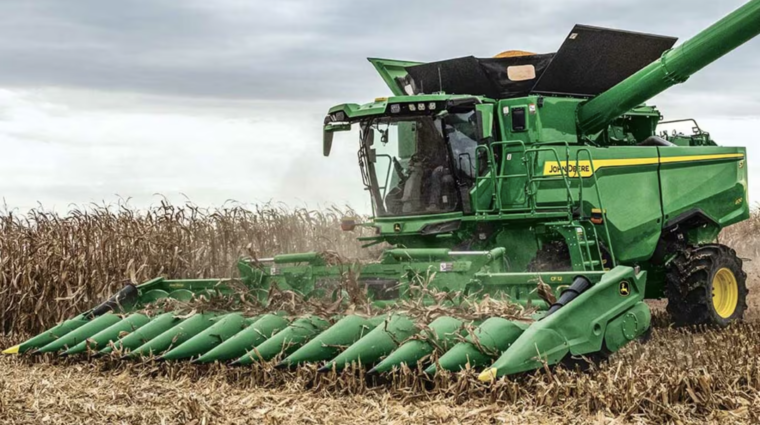
A corn head attaches to the front of a combine harvester and gathers standing corn row by row.
As the combine moves forward, row dividers guide stalks into the row units. Gathering chains move the stalks rearward while stalk rolls pull stalks between the deck plates, separating the wider ears from the plant. The gathering chains and cross auger then move them toward the feederhouse and into the combine for threshing and separating.
Key Corn Head Parts and How They Affect Harvest Performance
Corn head component condition and adjustment directly affect crop loss, feeding performance, and residue management.
Row Dividers and Gathering Chains
Bent or misaligned row dividers can push plants outside the row unit path, especially in leaning or down corn, causing ears to miss the gathering chains and fall to the ground.
Worn or misaligned chains, incorrect tension, and worn sprocket teeth can interrupt that movement, leading to uneven feeding or lost ears.
Deck Plates
If the gap is too wide, ears can slip between the plates and fall to the ground; if it’s too narrow, extra contact with the ear can knock kernels loose.
Proper spacing lets stalks pass through while keeping ears above the plates.
Stalk Rolls
Stalk rolls pull stalks below the deck plates, while different roll configurations can cut, crush, or otherwise process residue.
As rolls wear, they may grip stalks less effectively, allowing more plant material into the head and leaving residue less consistently processed across the field.
Cross Auger and Feed Components
The cross auger moves separated ears toward the feederhouse, and proper clearance helps maintain steady crop flow instead of allowing ears to bunch before entering the combine.

What to Check on a Corn Head Before Harvest
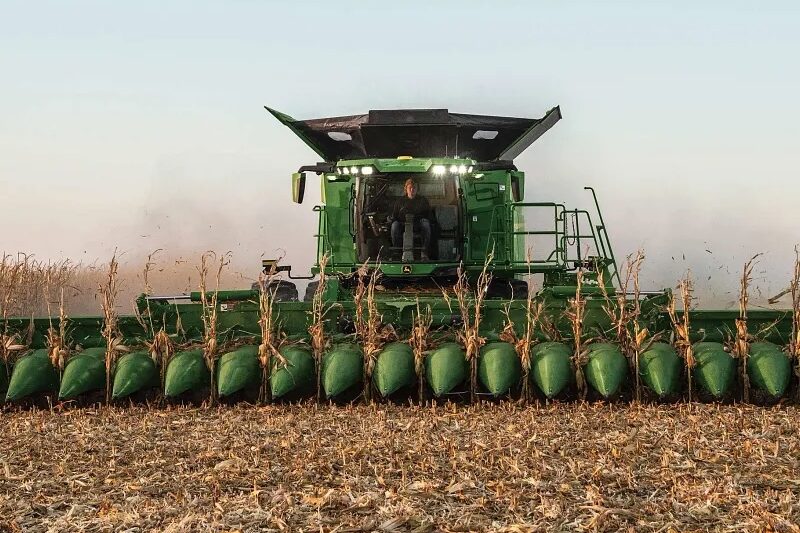
A pre-harvest corn head inspection and regular maintenance can uncover worn parts, loose hardware, and service needs before they cause downtime. Before heading to the field:
- Inspect gathering chains and sprockets
- Check deck plate condition and spacing
- Inspect stalk rolls and row units
- Review drive components and lubrication points
- Check dividers, shields, and structural components
Inspect Gathering Chains and Sprockets
Check gathering chains for damaged or stiff links, excessive wear, proper tension, and alignment. Compare chains across the head to spot one that hangs differently or shows more wear than the others.
Inspect sprocket teeth for rounding, chipping, or uneven wear, and follow the operator’s manual for adjustment and replacement specifications.
Check Deck Plate Condition and Spacing
Examine deck plates for worn edges, bends, cracks, or other damage, then compare the opening across each row unit for consistent spacing.
Set initial clearance for the expected stalk and ear size, then fine-tune it once you see how the crop moves through the head.
Inspect Stalk Rolls and Row Units
Inspect stalk rolls for worn, bent, broken, or missing components and compare wear across rows.
Check each row unit for loose hardware and damaged or excessively worn parts, and address anything that could loosen further once the head is under load.
Review Drive Components and Lubrication Points
Inspect applicable drive chains, belts, bearings, and gear cases for looseness, excessive wear, leaks, or damaged parts. Rotate or move components as directed in the operator’s manual to check for binding, excess play, or unusual movement.
Lubricate specified grease points and complete scheduled service according to the intervals and procedures for the corn head model.
Check Dividers, Shields, and Structural Components
Walk the width of the head and inspect row dividers for cracks and alignment issues. Make sure shields and covers are intact and securely fastened.
Inspect the frame, mounting points, and visible hardware for cracks, loose fasteners, previous damage, or excessive wear before attaching the head.
How to Set Up a Corn Head for Harvest Conditions
Before entering the field to harvest, adjust deck plate clearance, header height, and operating speed to gather ears cleanly without taking in unnecessary plant material.
Match Deck Plate Settings to Crop Conditions
Start with the pre-harvest deck plate setting, then see how it handles the actual stalks and ears. If ears slip between the plates, narrow the opening. If the plates knock kernels loose, additional clearance may be needed.
Follow the operator’s manual and make adjustments in small increments until stalks pass through while ears remain above the plates.
Set Corn Head Height for Field Conditions
Set the head low enough for the row dividers to guide stalks smoothly into the row units while minimizing unnecessary stalk material entering the machine. Running unnecessarily low can pull additional leaves and stalks into the head, increasing the volume of material the combine has to process.
Down or leaning corn may require a lower operating height so the dividers can get underneath the plants before they reach the row units.
Match Corn Head Speed with Ground Speed
Match ground speed to crop conditions so stalks enter the row units cleanly and ears separate consistently. Driving too fast for the head and crop conditions can push stalks forward, miss ears, or create uneven feeding.
Watch how plants enter the head rather than solely judging speed by acres per hour. If stalks aren’t entering the row units cleanly, reduce travel speed or adjust the head according to the operator’s manual.
Confirm Combine and Header Settings Work Together
Corn head performance also depends on a consistent handoff into the combine. Check header controls, feederhouse operation, and guidance settings alongside the head rather than adjusting each system in isolation.
A steady handoff into the combine helps prevent crop from bunching at the feederhouse and keeps material moving consistently into the threshing and separating systems.

How to Monitor Corn Head Performance During Harvest
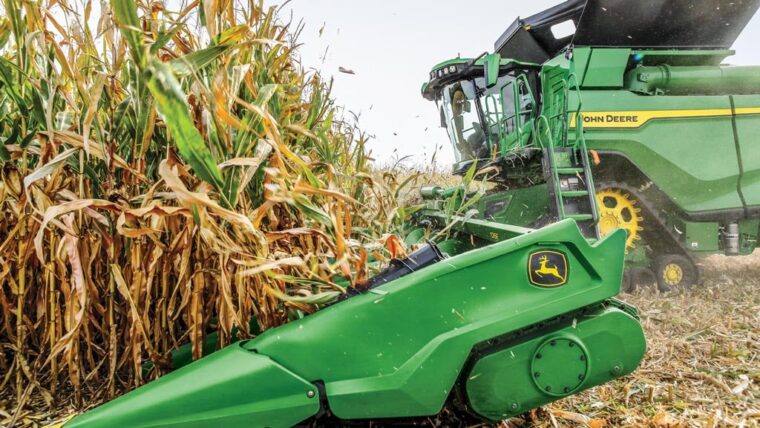
Regularly check for crop loss, uneven feeding, and material buildup as conditions change throughout the field.
Watch for Ear and Kernel Loss
Examine the ground ahead of the combine to see what corn was already down, then inspect the harvested rows behind it for additional loss. Whole ears or loose kernels that appear after the pass can point to gathering, deck plate, header-height, or shelling issues.
Monitor Crop Feeding
Watch for bunching, hesitation, or buildup as crop moves across the head. If one row unit feeds differently, compare its gathering chains, sprockets, deck plates, and related components with adjacent row units to pinpoint the problem before uneven crop flow reaches the combine.
Adjust as Field Conditions Change
Reassess settings as stalk moisture, strength, ear size, crop density, or lodging changes. Smaller stalks or ears may require narrower deck plate clearance, while down corn may call for a lower header height or slower ground speed.
Check for Residue and Material Buildup
Look out for stalks, leaves, husks, or ears collecting around row units, end dividers, and feed areas. Buildup that repeatedly returns can point to restricted crop flow, changing field conditions, or a component that needs attention.
Shut down the equipment and follow proper safety procedures before inspecting or clearing material.
How to Choose Between John Deere Corn Head Options
MachineFinder inventory spans several generations of John Deere corn heads, with model naming changing over time. Earlier options include the 608C and 612C, followed by models such as the CR8 and CF12. Current families use CR for rigid heads and CF for folding models.
Understanding the naming conventions and configurations can make it easier to compare used heads across model generations on MachineFinder.
Know the Difference Between a Rigid and Folding Corn Head
A rigid corn head maintains its full working width, so road transport typically requires moving the head on a header trailer. A folding head brings sections inward, reducing transport width without removing the head from the combine.
In current and recent model families, ‘R’ and ‘CR’ designate rigid heads, while ‘F’ and ‘CF’ designate folding heads. For example, the CR8 is rigid, while the CF12 is folding, with current CR and CF families following the same convention.
Featured Rigid John Deere Corn Heads to Compare
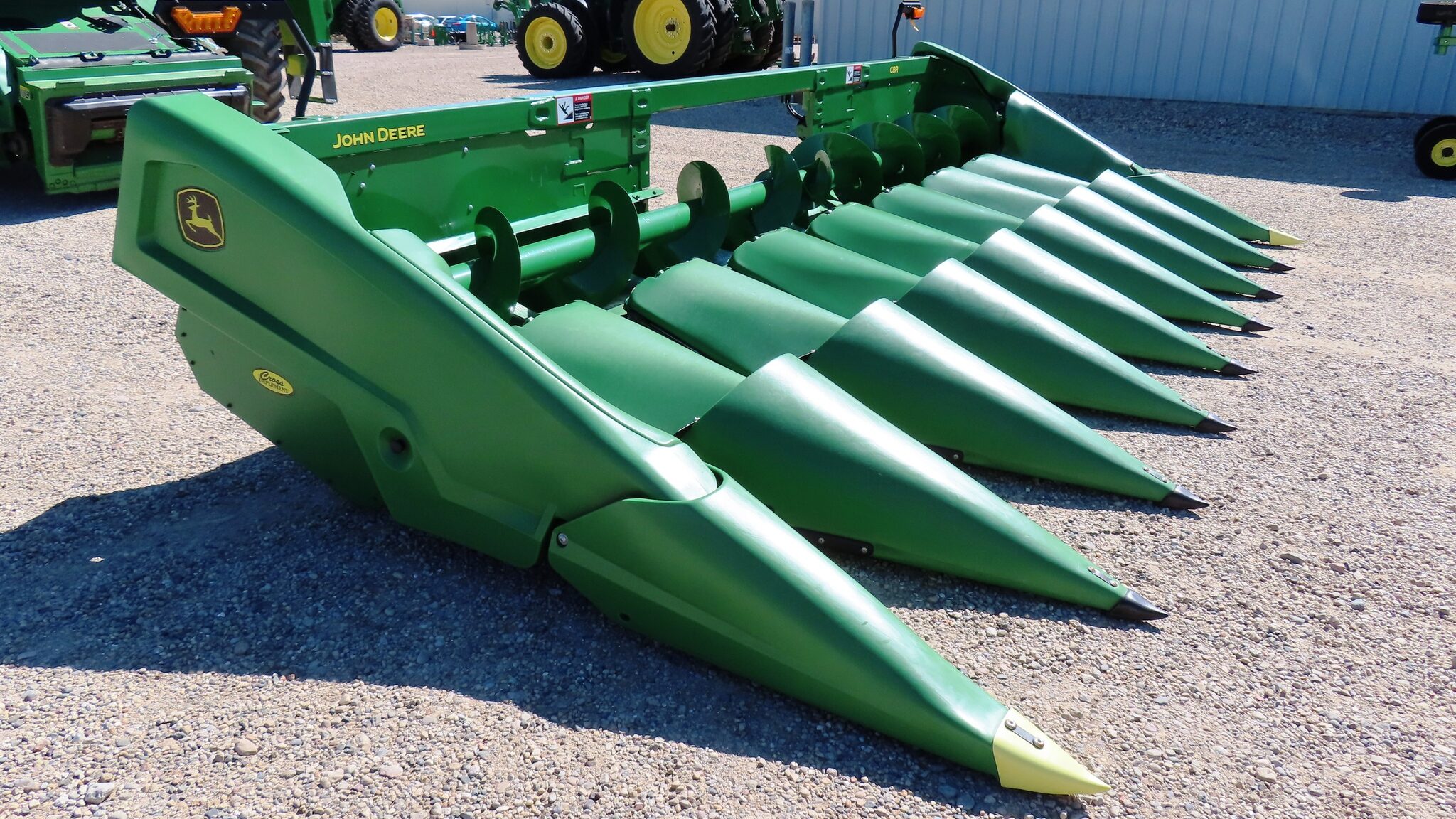
Rigid corn head options on MachineFinder span multiple generations, including:
- 608C, an earlier-generation eight-row rigid head. It was designed to support smooth crop flow and effective residue handling.
- 612C, an earlier-generation 12-row rigid head that offers more working width. Hydraulically adjustable deck plates allow on-the-go changes, while available StalkMaster™ configurations chop stalks into more uniformly sized residue.
- CR8, a later-generation eight-row rigid head. RowMax™ row units, adjustable deck plates, and integrated header height sensing support improved crop gathering, responsiveness to changing conditions, and more efficient harvesting.

Featured Folding John Deere Corn Heads to Compare
Folding heads combine wider field coverage with a narrower profile for transport. Some examples across model generations include:
- 612FC, an earlier-generation 12-row folding head that folds from the cab for quicker moves between fields. Its StalkMaster™ chopping system also sizes stalk residue during harvest, reducing the need for a separate pass.
- CF12, a later-generation 12-row folding head with RowMax™ row units and hydraulically adjustable deck plates. Automatic height control and lateral tilt help the wider head follow changing ground contours.

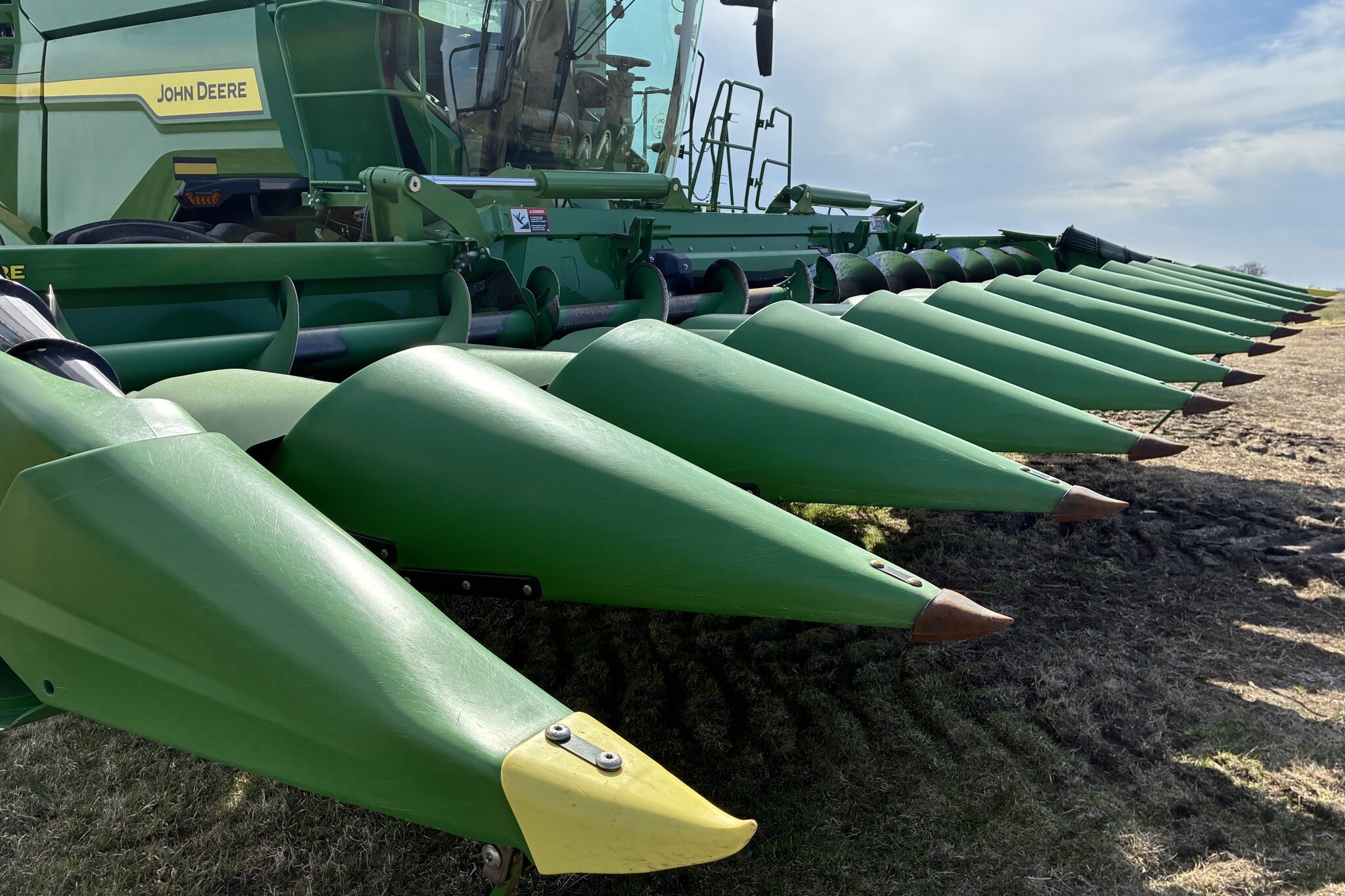
MachineFinder offers additional folding corn head options for operators balancing field capacity with transport needs.
What to Consider When Buying a Corn Head
Once you’ve narrowed down the right configuration of harvest equipment, evaluate whether a used head fits your operation and whether its condition justifies the purchase price. Consider:
- Row configuration. Match row spacing to how the corn is planted, and choose a row count that fits your combine capacity, field size, and transport needs.
- Combine compatibility. Confirm the head fits the combine’s feederhouse and works with its hydraulic, electrical, drive, and header-control systems. Older corn heads may require adapters or software updates to work with newer combines.
- Overall wear and repair needs. Consider wear across gathering chains, sprockets, deck plates, stalk rolls, the cross auger, and drive components together. A head needing several wear parts at once may require significant repairs before it’s ready for harvest.
- Structural condition. Look at the frame, dividers, shields, and previous repairs for signs of damage that go beyond routine wear. Cracks, bent components, or extensive welding can indicate additional repair costs.
- Folding-system condition. For folding heads, make sure the sections fold smoothly and lock securely in field and transport positions. Worn hinges, leaking hydraulics, or damaged locking components can add repairs to the purchase.
- Residue-management setup. Determine whether the stalk-roll or chopping configuration produces the residue size and distribution you need. Changing that setup after purchase may add equipment or cost.
- Maintenance history. Review available service records to see what has already been repaired or replaced and what may be due soon. Recent wear-part replacement or documented service help put the head’s current condition and asking price in context.
A John Deere dealer can confirm combine compatibility and help identify any additional equipment or modifications required before purchasing.
Find the Right Corn Head for Your Harvest
Inspect wear components before harvest, set the head for current stalk and ear conditions, and keep checking losses and crop flow once the combine starts rolling.
Once harvest begins, let the crop guide the fine-tuning. Lost ears, loose kernels, uneven feeding, and buildup are all indicators the head needs attention before the next acres roll by. If you’re replacing or adding a corn head, match row configuration, combine compatibility, residue goals, and transport needs first, then evaluate the condition of the individual head.
Ready to find the right corn head for your operation? Explore available corn and row crop headers on MachineFinder or connect with your local John Deere dealer to compare options.

Corn Head FAQs
1. What Is the Difference Between a Corn Head and Other Combine Headers?
A corn head follows planted rows and uses individual row units to separate ears from standing stalks. Other headers use different gathering methods based on the crop, such as cutterbars that cut soybeans or small grains before feeding the entire plant into the combine.
2. How Do You Know if a Corn Head Is Causing Harvest Loss?
Check the ground before and after the combine passes. An increase in whole ears or loose kernels can indicate problems with gathering, deck plate settings, header height, or shelling.
3. How Should a Corn Head Be Maintained Between Harvest Seasons?
After harvest, clean the head and inspect gathering chains, sprockets, deck plates, stalk rolls, bearings, drives, and structural components for wear or damage. Complete required lubrication, repairs, and other service according to the operator’s manual so worn parts can be addressed before the next harvest.
4. How Does Row Spacing Affect Corn Head Selection?
Match corn head row spacing to the planted crop so stalks align with the row units and feed cleanly into the head.
5. Can Older John Deere Corn Heads Work With Newer Combines?
Some older John Deere corn heads can work with newer combines, but compatibility depends on the specific models and their mounting, drive, hydraulic, electrical, and control requirements. Confirm the combination with a John Deere dealer, including any conversion equipment or updates that may be required.