Hauling supplies and moving around a property doesn’t have to come with engine noise and exhaust. A John Deere electric Gator can handle those everyday hauling and transportation jobs with quieter operation and no tailpipe emissions during use.
This guide compares John Deere electric Gator models, their work capabilities, and the factors when deciding whether electric power fits your property and workload.


Key Takeaways
- John Deere electric Gators are designed for utility work such as hauling materials, towing equipment, and moving people around a property.
- Quiet operation and no tailpipe emissions during operation make electric Gators useful around people, animals, and noise-sensitive or enclosed areas.
- Cargo, towing, seating, dimensions, and battery systems vary by model, affecting the work each Gator can handle.
- Charging access, travel distance, terrain, and workload help determine whether an electric Gator can support your typical workday.
What Is a John Deere Electric Gator?
A John Deere electric Gator is a battery-powered utility vehicle designed primarily for property, grounds-care, transportation, and light-duty work. Although it may also support casual transportation and recreational use, its capabilities, two-wheel-drive configuration, terrain limits, and intended application should be considered before using it in more demanding off-road conditions.
Battery systems, seating, cargo and towing capacities, and dimensions vary by model, affecting what each Gator can carry, where it can work, and how many people it can transport.
What Features Are Available on John Deere Electric Gator Models?
Features vary by model, but John Deere electric Gators may include a cargo box or fold-down cargo platform, onboard charging, regenerative braking, side-by-side seating, operator storage, and controls designed for repeated transportation and utility work.
- Cargo and hauling features. Depending on the model, electric Gators may feature a dedicated cargo box or fold-down rear cargo platform. The GX Electric offers an 800-lb. cargo-box capacity, while the GX Electric Crew includes a fold-down rear cargo platform with a 250-lb. capacity.
- Electric drive system. The electric drivetrain provides responsive power for accelerating, climbing inclines, and hauling loads. Features such as regenerative braking, anti-rollback, and speed control help operators manage speed on slopes and prevent the Gator from rolling backward when stopped.
- Battery charger. An onboard charger allows the vehicle to recharge from a standard grounded 120-V outlet. Charging procedures, cord requirements, environmental conditions, and ventilation requirements should follow the operator’s manual for the specific model.
- Operating conveniences. Side-by-side seating provides room for an operator and passenger, while high-back seats support comfort during repeated trips. Onboard storage and familiar controls also keep essentials within reach and operation straightforward.
Which John Deere Electric Gator Models Are Available?
John Deere offers several electric Gator configurations. The primary electric utility-vehicle lineup includes the GX Electric, GX Electric Crew, and TE 4×2 Electric. John Deere also offers the GS Electric for golf, sports-turf, grounds-care, and similar applications.
John Deere GX Electric

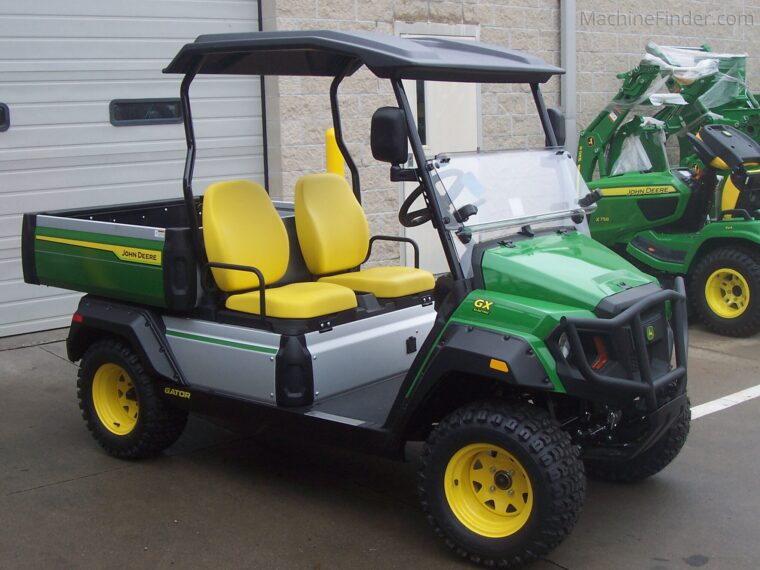
The John Deere GX Electric is a two-passenger utility vehicle and includes:
- Lithium-ion electric power. A 51.2-V lithium-ion battery provides 5.376 kWh of capacity to power the Gator during everyday hauling, transportation, and property work.
- Cargo and towing capacity. An 800-lb. cargo-box capacity supports heavier loads of tools, feed, landscaping materials, and other supplies, while a 1,500-lb. towing capacity allows operators to pull compatible trailers or equipment.
- Compact dimensions. At 53.5 in. wide, the GX Electric can navigate tighter paths and work areas while providing substantial hauling capacity.
John Deere GX Electric Crew

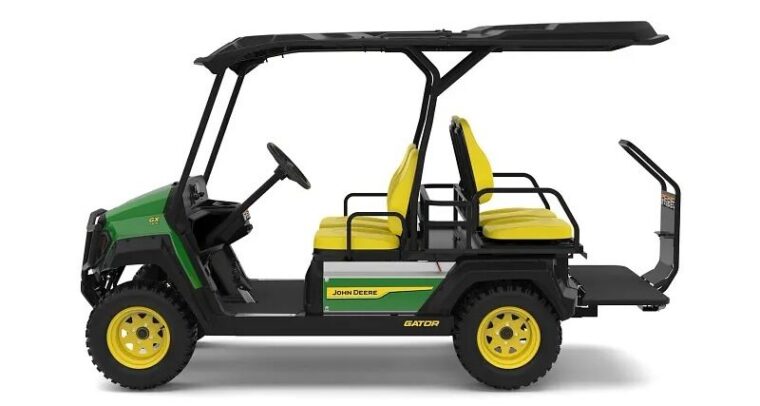
The John Deere GX Electric Crew adds room for more passengers while giving operators flexibility to use that space for cargo when needed. It offers:
- Four-person seating. This allows maintenance teams, landscaping crews, and other groups to travel between jobs together instead of making separate trips.
- Fold-down rear cargo platform capacity. The rear seats fold down to create a cargo platform with a 250-lb. capacity, providing room for tools and supplies when fewer passengers are riding.
- Power for added passenger capacity. A 51.2-V lithium-ion battery with 5.376 kWh of nominal capacity powers the GX Electric Crew, supporting transportation and utility work for up to four passengers.
John Deere TE 4×2 Electric

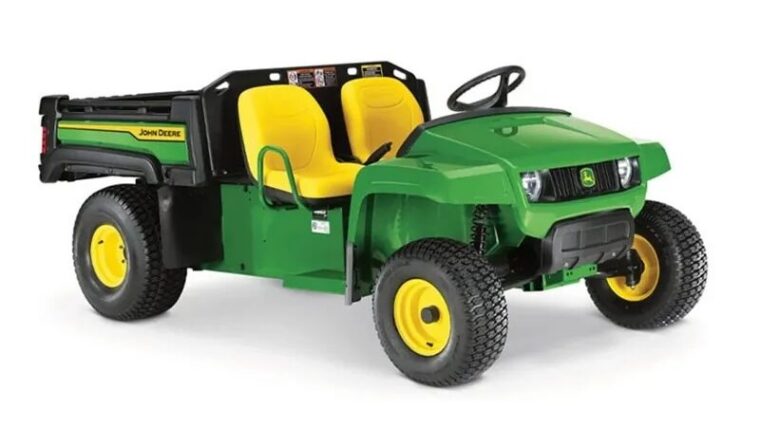
The John Deere TE 4×2 Electric is a current electric work-utility model that uses a different battery system and vehicle design than the newer lithium-ion GX models. Notable features include:
- 48-V electric system. Its 48-V electrical system uses eight Trojan T-105 lead-acid batteries rather than the single lithium-ion battery used in the GX models.
- Dedicated cargo bed. Rear cargo space gives operators room to carry tools, supplies, and materials for maintenance, grounds care, and other jobs around a property.
- Onboard charging. A built-in charger stays with the vehicle, allowing operators to plug into a compatible electrical outlet when it’s time to recharge.
John Deere Gator™ GS Electric
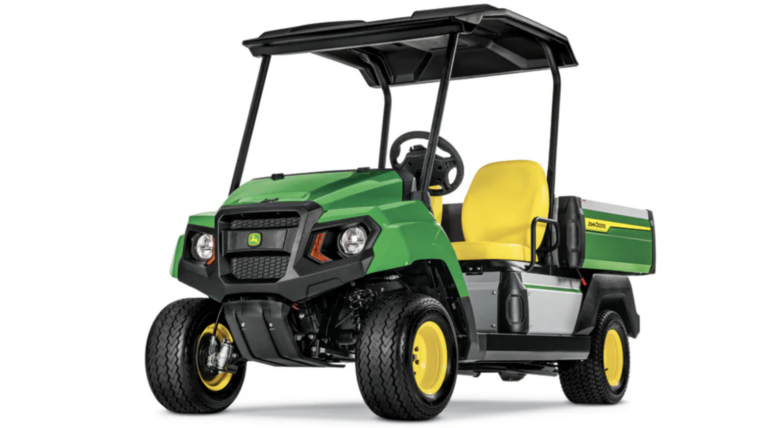
The John Deere Gator GS Electric is a golf, sports-turf, and professional grounds-care model. Its key features include:
- Cargo and towing capacity. With an 800-lb. cargo capacity and 1,500-lb. towing capacity, operators can haul tools and materials in the cargo box or tow compatible equipment when needed.
- Narrow footprint. At 49.3 in. wide, the GS Electric can navigate narrow paths and tighter work areas.
- Operator-focused features. A standard canopy and windshield provide protection from the elements, while high-back seats, smooth steering, and USB ports add comfort and convenience throughout the workday.
What Are the Benefits of an Electric Gator for Property Work?
An electric Gator offers several practical benefits, allowing operators to:
- Work with less noise
- Operate without tailpipe emissions
- Get smooth, responsive electric performance
- Reduce routine powertrain maintenance
Work With Less Noise
Around homes, livestock, campuses, and landscaped grounds, frequent vehicle noise can disrupt people and animals. An electric drivetrain keeps operating noise lower than a gas-powered vehicle, making repeated trips around these areas less disruptive.
Lower noise can also make it easier for crews to communicate without competing with engine sound, particularly around occupied buildings, public spaces, and active work areas.
Operate Without Tailpipe Emissions
Because electric Gators produce no tailpipe emissions during operation, they may be suitable for certain barns, maintenance buildings, and other covered work areas. However, zero tailpipe emissions do not by themselves make a vehicle suitable for every indoor location.
Operators should follow the model’s operator manual, facility policies, ventilation requirements, charger instructions, and applicable safety rules.
Get Smooth, Responsive Electric Performance
Hauling a load or making frequent stops and starts requires consistent power. Electric drivetrains provide responsive torque and smooth acceleration, delivering predictable performance for these everyday tasks.
On models with regenerative braking, slowing down or traveling downhill can also return some energy to the battery while helping manage vehicle speed.
Reduce Routine Powertrain Maintenance
Without a gasoline engine, electric Gators eliminate service items such as engine oil and spark plugs. That means fewer routine powertrain maintenance tasks to keep on the schedule, although requirements vary across utility vehicles.
Electric, however, doesn’t mean maintenance-free. Batteries, brakes, tires, suspension components, and other vehicle systems still require regular inspection and service throughout the Gator’s working life.
How Much Work Can a John Deere Electric Gator Handle?
Cargo, towing, and passenger capacity can help operators move more tools, materials, or people in each trip around the property. Here’s what those capabilities can look like on the job.
Haul Tools and Materials
With an 800-lb. cargo-box capacity, the GX Electric can carry fence posts, wire, tools, and other supplies before leaving the barn, bringing everything needed in one trip.
Tow Equipment and Supplies
When a job requires more space than the cargo box provides, operators can attach a compatible trailer to an electric Gator. The GX Electric has up to 1,500 lb. of towing capacity and can tow a compatible trailer carrying branches from storm cleanup, landscaping materials, or equipment needed elsewhere on the property.
Buyers should also consider traction requirements. Electric Gator models covered here are two-wheel-drive utility vehicles, so properties with steep, muddy, deeply rutted, or consistently loose terrain may require a different Gator configuration.
Move People Around the Property
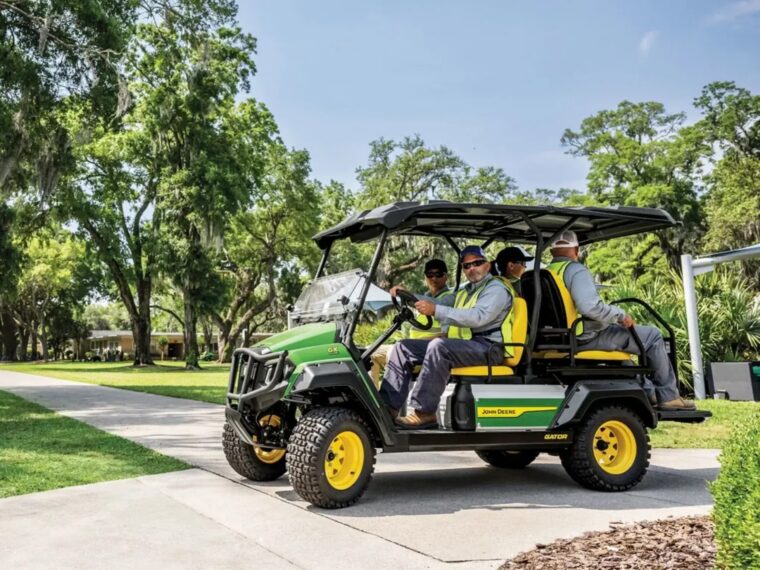
If several people are working on the same job, passenger space can eliminate separate trips between barns, fields, buildings, or maintenance areas. The GX Electric seats two, while the GX Electric Crew can carry up to four people together.
The GX Electric Crew also adapts when the job shifts from moving people to moving supplies. Folding the rear seats creates a platform that can carry up to 250 lb. of tools, materials, or other gear.
Where Does a John Deere Electric Gator Make the Most Sense?
Electric Gators can work across many properties, but their quiet operation, compact size, and lack of tailpipe emissions make them especially useful in certain settings, including:
- Residential and large properties. Frequent short trips between a house, garden, shed, and other work areas suit an electric utility vehicle, particularly when charging is available where the Gator is stored.
- Farms and agricultural properties. Quiet operation is useful around livestock, while the cargo box and towing capacity support routine jobs between barns, sheds, and nearby fields.
- Recreational grounds. Crews can work around campuses, parks, and golf courses while limiting noise around visitors and other people using the grounds.
- Commercial and institutional environments. Lower operating noise can help crews work around offices, schools, and other occupied facilities with less disruption.
Model-compatible attachments and accessories may expand the vehicle’s usefulness for grounds care, material handling, lighting, connectivity, and seasonal work. Because compatibility varies by model and model year, verify the attachment and any required mounting hardware with a John Deere dealer before purchase.
The property and workload help determine which electric Gator makes the most sense. Consider terrain, traction needs, travel distance, cargo weight, passenger capacity, and charging access when comparing models.
What Should You Know About Charging and Battery Performance?
Battery systems vary across John Deere electric Gators. The GX and GX Electric Crew use a 51.2-V lithium-ion battery, while the TE 4×2 Electric uses a different 48-V system.
Both systems use onboard chargers, allowing operators to plug in the Gator where it’s stored and recharge between uses. GX models also include a charge-level indicator for checking remaining power before and during a job.
John Deere does not present one universal range figure for every electric Gator and application. Runtime depends on the model, battery condition, payload, towing, terrain, temperature, attachment use, travel speed, and operating pattern.
When comparing models:
- Consider how often you can recharge. If the Gator regularly returns to a barn, garage, or maintenance building with access to an outlet, recharging can fit naturally between jobs. Longer stretches away from a charging location make battery capacity between charges more important.
- Match the battery to the work you do. Frequent towing, heavier loads, and sustained travel can demand more from the battery than short trips and lighter hauling. Consider whether the battery can support your typical combination of travel, hauling, and towing between charging opportunities.
- Account for where you work. Hills, uneven terrain, and temperature can affect battery performance. Buyers working regularly in more demanding conditions should factor those conditions into how much work they expect to complete between charges.
- Look beyond the initial purchase. Battery type also affects what you will eventually need to maintain or replace. When buying used, ask about battery age, condition, service history, and previous replacements to better understand the remaining life and potential ownership costs.
Find a John Deere Electric Gator on MachineFinder
An electric Gator can be a practical option for properties where quiet operation, frequent short trips, and everyday utility work are priorities. Compare cargo and passenger capacity, battery type, charging access, and typical workload when choosing a model.
Ready to put an electric Gator to work? Browse used John Deere Gator utility vehicles on MachineFinder or connect with your local John Deere dealer to find the right configuration for your property and workload.


John Deere Electric Gator FAQs
1. What Should You Check When Buying a Used John Deere Electric Gator?
Check the overall condition of the Gator, including the tires, brakes, suspension, cargo box, battery, and charging system. Review available maintenance records, confirm that the vehicle charges properly, and take a test drive to check steering, acceleration, and braking.
2. How Can You Evaluate the Battery Condition of a Used Electric Gator?
Ask for the battery’s age, service history, charging history, and any diagnostic or capacity-test results available from the dealer. Confirm that the correct charger and charging cord are included.
For a TE 4×2 Electric, inspect the lead-acid batteries for corrosion, damaged cables, low electrolyte, or evidence of inconsistent battery replacement.
For a lithium-ion GX or GS model, ask the dealer whether diagnostic information is available to help evaluate battery condition. A short test drive alone may not reveal the battery’s usable capacity under a full work cycle.
3. Can Attachments from Other John Deere Gators Be Used on an Electric Gator?
Some attachments may be compatible, but fit varies by model, model year, and attachment. Check compatibility with the specific electric Gator before purchasing or installing an attachment.
4. What Maintenance Does a John Deere Electric Gator Still Require?
Electric Gators eliminate routine engine maintenance such as oil changes and spark plug replacement, but the rest of the vehicle still needs regular service. Follow the model’s maintenance schedule for the battery and charging system, brakes, tires, steering, suspension, and other components.
5. What Should You Ask a Dealer Before Choosing a John Deere Electric Gator?
Ask about battery condition and charging requirements, along with the model’s cargo, towing, passenger, and attachment capabilities. For a used Gator, ask for available maintenance records to better understand its service history and whether it fits your typical workload.