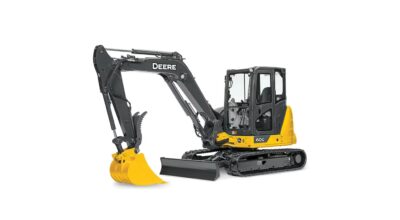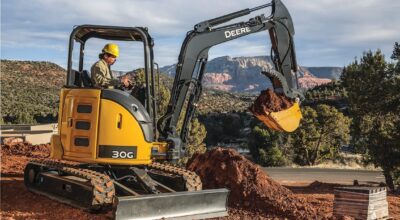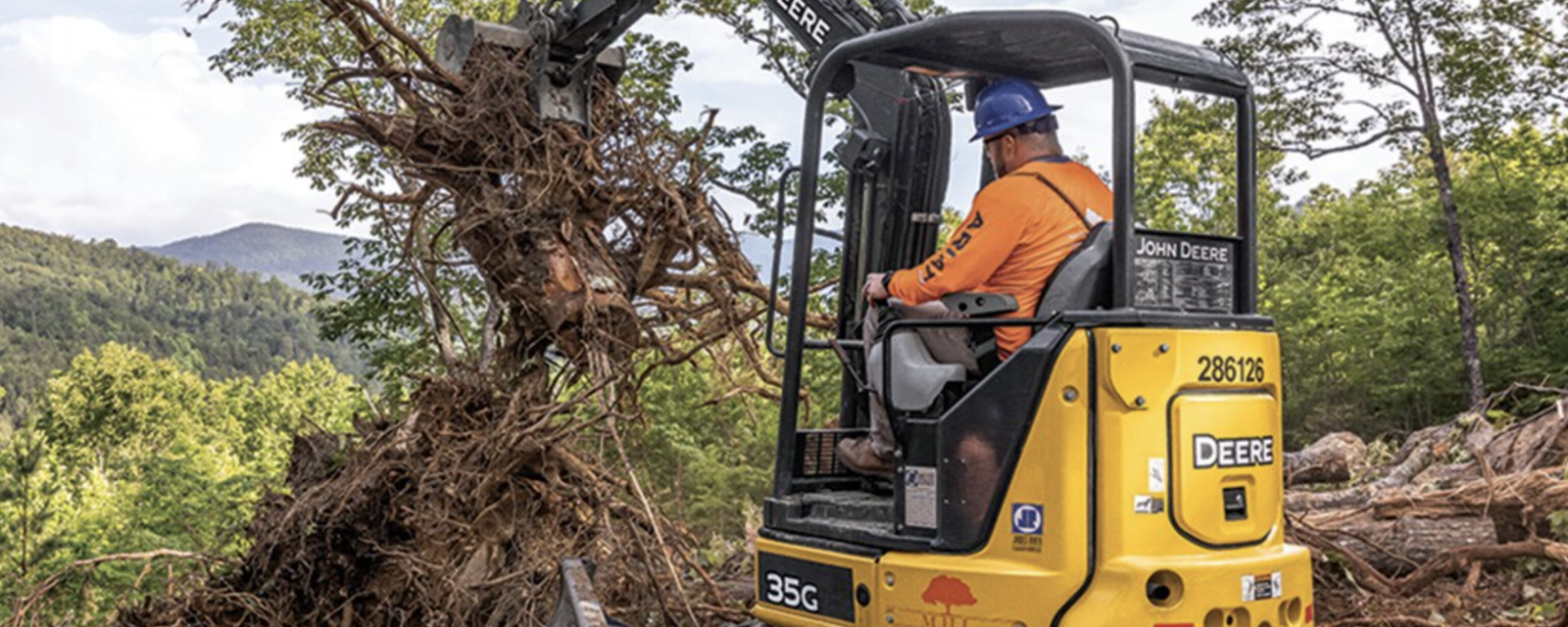
Choosing the right excavator is key when you’re working on tasks that require precision and efficiency, such as trenching, digging foundations, or landscaping large areas. Two standout models in John Deere’s compact excavator lineup are the 30G and 35G. The John Deere 30G and 35G both provide excellent hydraulic control and digging depth while offering the maneuverability needed for confined spaces. But what sets these two models apart, and which one is the right choice for your specific requirements?
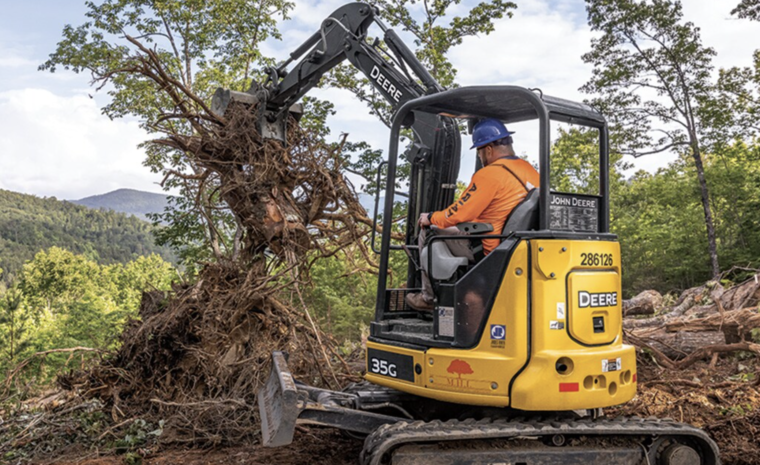
In this guide, we’ll explore the differences between the 30G and 35G, highlight their key features, and provide an in-depth comparison to help you make an informed decision.
Key Takeaways
- The main difference between the John Deere 30G and 35G is size and capability, with the 35G offering greater digging depth, lift capacity, and stability for heavier-duty work.
- The 30G is lighter, more compact, and easier to transport, making it ideal for tight job sites, residential projects, and sensitive terrain.
- Both models share the same engine power and offer strong attachment compatibility, providing versatility across a range of excavation tasks.
- Choosing between the 30G and 35G depends on your job requirements, with the 30G suited for maneuverability and the 35G better for deeper digging and heavier materials.
John Deere 30G: What You Need to Know
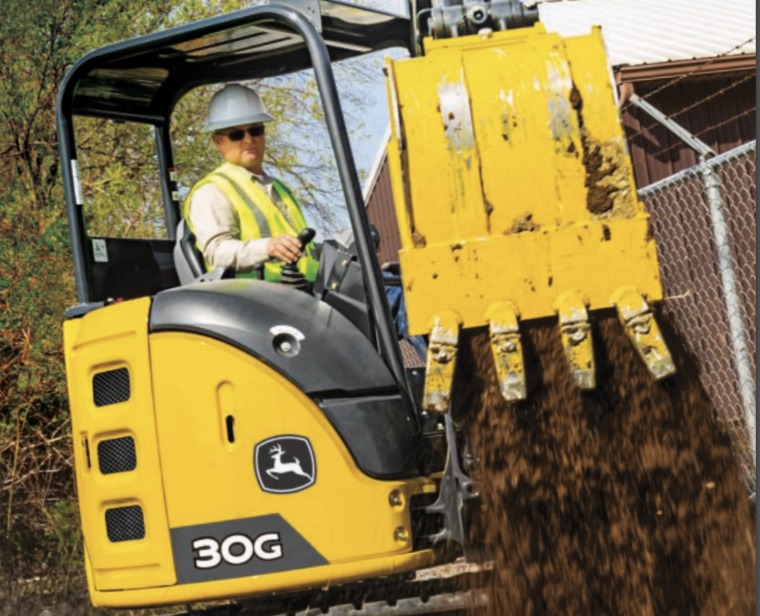
The John Deere 30G is a compact excavator engineered for operators who need a balance between power and maneuverability. Weighing about 6,900 pounds, it’s ideal for jobs that require easy transportation and operation in tighter spaces.
The 30G is powered by a 17.4-kW, approximately 23-horsepower Yanmar engine, giving it efficient power for light- to medium-duty excavation tasks. Its compact design makes it a popular choice for residential and urban projects where space is limited, yet power is still essential.
John Deere 35G: Stepping Up in Size, Reach, and Capacity
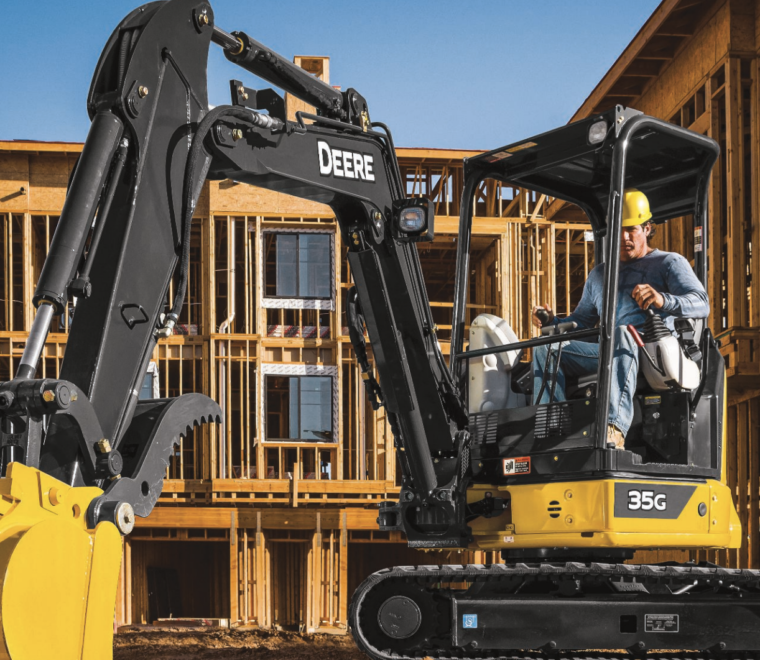
While similar in design to the 30G, the John Deere 35G offers increased size, reach, stability, and lifting capability for more demanding tasks. Weighing in about 7,760 – 8,135 pounds, it provides more stability and can handle heavier jobs.
With the same 23-horsepower engine as the 30G, the 35G delivers more digging depth and lifting capacity. That makes it a better fit for operators who need to tackle bigger tasks while still benefiting from the maneuverability of a compact excavator.
John Deere 30G vs. 35G: What’s the Difference?
The main differences between the John Deere 30G and John Deere 35G are operating weight, digging depth, lift capacity, and tail-swing configuration. The 35G is larger and more capable, making it better suited for deeper digging, heavier lifting, and jobs that benefit from added stability. The 30G is lighter, easier to transport, and ideal for tight job sites and lighter applications.
| Feature | 30G | 35G |
| Operating Weight | About 6,850–7,220 lbs depending on canopy/cab | About 7,760–8,135 lbs standard arm depending on canopy/cab |
| Engine Power | About 23 hp / 17.4 kW | About 23 hp / 17.4 kW |
| Maximum Digging Depth | 9 ft. 2 in. | 10 ft. 0 in. standard arm / 11 ft. 4 in. long arm |
| Lift Capacity | Lower | Higher |
| Tail Swing | Reduced | Zero |
| Best For | Tight spaces, easier transport, lower ground pressure | Deeper digging, more stability, heavier lifting |
Key Features of the John Deere 30G
The John Deere 30G stands out for its ability to deliver solid performance in smaller, more confined spaces. Here are some of the key features that make the 30G a reliable choice for various job sites.
- Compact size
- Reduced tail swing
- Fuel efficiency
- Versatility
Compact Size
The John Deere 30G is built for tight spaces, making it perfect for job sites where space is at a premium. Whether you’re navigating urban environments, working near buildings, or tackling residential projects, the 30G’s small footprint allows you to get the job done without the need for larger, bulkier equipment.
Reduced Tail Swing
The 30G’s unique design minimizes tail swing during turns, reducing the risk of damage to nearby structures or the machine itself. This feature enhances maneuverability so operators can work confidently in confined spaces.
Fuel Efficiency
The 30G is equipped with auto-idle and auto-shutdown features, which automatically reduce engine speed or power down completely when hydraulics are not in use. These functions help conserve fuel, minimize emissions, and ultimately reduce operating costs, making the 30G both environmentally and economically efficient.
Versatility
This model is compatible with a wide variety of attachments, such as hydraulic hammers, augers, and compactors. Whether you need to dig, grade, or handle materials, the 30G can adapt to the job, making it an excellent choice for contractors looking for flexibility on the worksite.
Key Features of the John Deere 35G
The John Deere 35G is designed for operators who need a bit more power and capacity, without sacrificing the maneuverability that compact machines are known for. Below are some of the 35G’s standout features:
- Greater digging depth
- Increased lift capacity
- Zero-tail-swing design
- Comfort and accessibility
Greater Digging Depth
The John Deere 35G offers a maximum digging depth of 10 ft. with a standard arm and 11 ft. 4 in. with a long arm. This additional reach makes the 35G a better choice for projects that require deeper trenches, such as installing underground utilities or laying foundation footings.
Increased Lift Capacity
Thanks to its larger size and robust construction, the 35G boasts a higher lift capacity compared to the 30G. This enhanced capability makes it suitable for handling heavier materials, such as large rocks or construction debris.
Zero-Tail-Swing Design
The 35G’s zero-tail-swing design ensures that the rear of the machine does not extend beyond its tracks when rotating, maximizing maneuverability in tight spaces. This feature is particularly useful in space-constrained urban or residential environments, allowing the 35G to operate without causing damage to surrounding structures.
Comfort and Accessibility
The 35G is equipped with a spacious operator station that minimizes noise and vibration with rubber cab mounts and a noise-reducing muffler. These features boost comfort and make long workdays less taxing on the operator, enhancing productivity by reducing fatigue. The ergonomic design also ensures that controls are easily accessible, making the machine simple and intuitive to operate.
John Deere 30G vs. 35G: Specifications Overview
Selecting the right compact excavator to match your project’s specific needs is crucial. To help with your decision, here’s a comparison of the key specifications for the John Deere 30G vs. 35G:
Operating Weight
The John Deere 30G weighs about 6,850–7,220 lbs, making it easier to transport between job sites and ideal for smaller projects. The 35G, on the other hand, weighs about 7,760-8,135 lbs, providing more stability and greater lift capacity for heavier-duty tasks.
Reduced Ground Pressure
Since the 30G is lighter, it exerts less pressure on the ground. This makes it better suited for working on sensitive terrain where minimizing ground disturbance is important, such as soft soil or landscaped areas.
Engine Power
Both models use a similar horsepower class and hydraulic-flow setup, but the 35G’s larger frame, higher operating weight, and expanded working range give it an advantage in digging depth, lifting capability, and overall stability.
Ease of Transportation
Due to its lighter weight and smaller size, the 30G is easier to transport between job sites, especially when space is limited or weight restrictions are in place. This makes it a great option for contractors who need to frequently move equipment or work on smaller job sites where maneuverability is key.
Should You Choose the 30G or 35G?
Choosing between the John Deere 30G and 35G ultimately comes down to your job site conditions, workload, and performance needs. While both machines offer strong versatility and reliability, each model is better suited for specific types of projects.
Choose the 30G if:
- You need easier transport
- Work in tight or residential spaces
- Want lower ground pressure
Choose the 35G if:
- You need deeper digging
- Handle heavier materials
- Want more stability
John Deere 30G vs. 35G: Choose Your Ideal Compact Excavator Today
A John Deere compact excavator is a smart choice for operators who value efficiency, reliability, safety, and powerful performance on the job site.
When deciding between the 30G and 35G, think about your specific project needs. Both models are designed for maneuverability in tight spaces: the 30G uses a reduced-tail-swing configuration, while the 35G features a zero-tail-swing design. However, the 35G’s additional digging depth and lifting capacity may be better suited for larger jobs that require more power and stability.
No matter which machine you choose, you can count on John Deere to provide exceptional performance and durability for years to come.
To explore our full range of John Deere compact excavators, reach out to your nearest John Deere dealer today.
John Deere 30G vs. 35G FAQs
1. How Deep Can a John Deere 30G Dig vs How Deep a 35G Dig?
The John Deere 30G has a maximum digging depth of 9 ft. 2 in., while the 35G can dig deeper at 10 ft. with a standard arm and 11 ft. 4 in. with a long arm. This added depth gives the 35G an advantage for projects that require deeper trenching or excavation.
2. What Is Considered a Lot of Hours for a Mini Excavator?
For many used mini excavators, 3,000 to 5,000 hours may be considered moderate usage, while machines above 5,000 hours should be evaluated carefully based on maintenance history, inspection results, previous application, and overall condition.
3. Is a John Deere 35G a Good Excavator?
Yes, the John Deere 35G is considered a strong, reliable compact excavator. It offers a balance of power, digging depth, and maneuverability, making it well-suited for construction, landscaping, and utility work where a compact yet capable machine is needed.