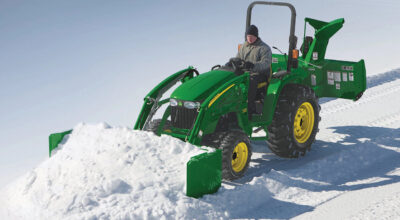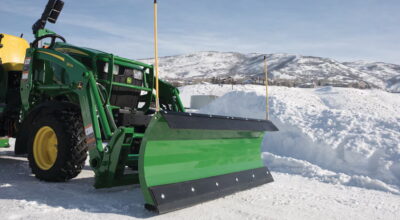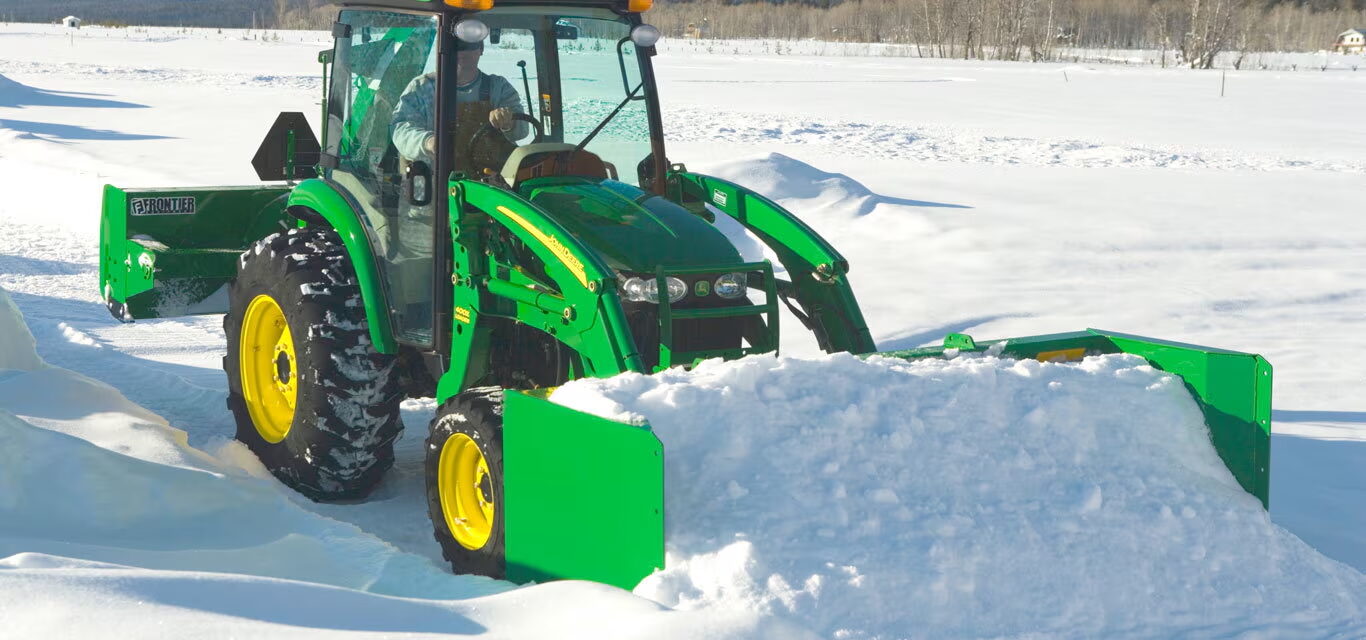
In areas with moderate snowfall, maintaining a snow blower or angled plow can feel like more equipment than you really need. A snow pusher offers a simpler, efficient alternative for clearing driveways, gravel surfaces, and open lots.
Unlike blowers or angled plows that lift or throw snow to the side, a snow pusher moves snow straight ahead, gathering it into controlled piles with minimal disruption to the surface beneath. This simplicity lets operators clear moderate snowfall faster with less effort and fewer moving parts to maintain.
John Deere snow pushers are designed to pair with both compact and utility tractors, with multiple width, edge, and mounting options. Here’s how snow pushers work, where they perform best, and what to consider when choosing the right one for your tractor.
Key Takeaways
- A snow pusher tractor attachment clears snow by pushing it forward, delivering fast, efficient removal for driveways, gravel surfaces and open lots in moderate snowfall.
- Compared with snow blowers or angled plows, snow pushers are easier to operate and have fewer moving parts, which can reduce maintenance needs over time.
- Selecting the right snow pusher means matching size, mount type, cutting edge and surface conditions to your tractor’s specs and clearing demands.
- Proper operation, skid shoe adjustment and routine maintenance protect both the attachment and ground surface while maintaining consistent performance throughout the winter season.
Why Use a Snow Pusher on Your Tractor?
While snow blowers handle deep accumulation and plows work best in narrower spaces, a snow pusher efficiently clears moderate snowfall across large, open areas.
Some key advantages of using a snow pusher on your tractor include:
- Faster clearing with fewer passes: The wide, box-style design contains snow as you push, so you can move larger volumes in one pass instead of windrowing it to the side and circling back for cleanup.
- Low maintenance and operating complexity: With no augers, impellers, or driveline components, snow pushers are simple to operate and maintain throughout the season.
- Gentle on surfaces: Rubber or steel cutting edges paired with adjustable skid shoes help protect gravel, paved driveways, and turf by minimizing gouging.
- Cost-effective for many jobs: For moderate snow depths and larger open areas, a snow pusher delivers efficient clearing without the added cost of more advanced equipment.
Snow Pusher Basics for Tractors
How Snow Pushers Work
Snow pushers are designed to move large volumes of snow quickly while keeping operation simple. Here’s what makes them work:
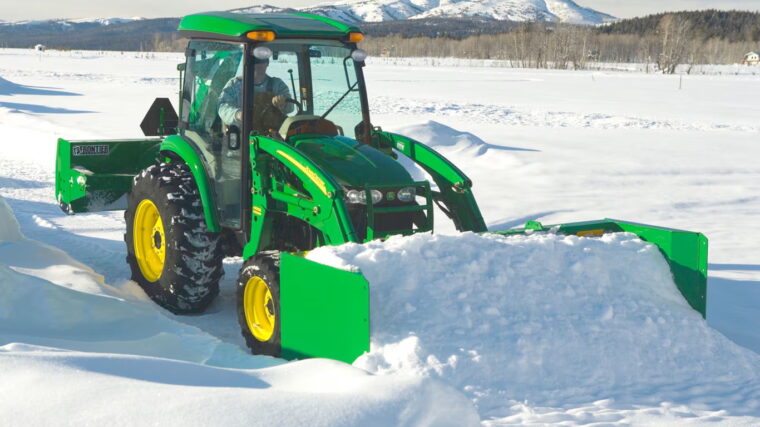
- Containment design: Tall side panels keep snow from spilling out as the tractor moves forward, so more snow stays in front of the attachment instead of sliding off to the sides.
- Front mounting options: Most snow pushers connect through a loader mount or quick-attach system, making them easy to work with on compact and utility tractors.
- Straight-ahead clearing: Instead of lifting or throwing snow, the pusher moves it forward into controlled piles, keeping clearing predictable and reducing cleanup passes.
Snow Pusher vs. Snow Blower & Plow
Snow pushers are one of several snow removal attachments available, and each handles snow differently. Here’s how they compare:
| Attachment type | Design overview | Snow movement method | Best for |
| Snow pusher | Box-style frame with tall sidewalls and a curved back panel | Pushes snow straight ahead while keeping it contained | Moderate snowfall, open lots, wide driveways, stacking snow in controlled piles |
| Snow blower | Enclosed housing with auger, impeller, and discharge chute | Lifts snow and throws it away from the cleared area | Deep snow, drifts, and areas where snow must be discharged far from the path |
| Snow plow | Single straight blade or V-blade with adjustable angle | Angles snow to the side as the tractor moves | Long lanes, narrow passes, and road-style clearing |
Choosing the Right Snow Pusher for Your Tractor
Getting the most out of a snow pusher means matching its width to your tractor’s size, horsepower, and the type of work you’re doing.
Sizing for Your Tractor
John Deere snow pushers are offered in several series, each designed for different tractor classes and workloads:
| Snow pusher series | Width options | Recommended tractor size | Typical tractor HP range | Best uses |
| AS10F | – 48 in. – 60 in. | Sub-compact and compact tractors | 20-30 HP | Residential driveways, sidewalks, tight or confined spaces |
| AS10H | – 72 in. – 84 in. – 96 in. | Compact utility tractors | 30-50 HP | Long driveways, farm lanes, medium-sized lots |
| AS11E | – 8 ft. – 9 ft. – 10 ft. | Utility tractors with higher loader capacity | 50+ HP | Parking lots, open properties, large work areas |
Mounting and Compatibility
Choosing the right mounting configuration helps ensure your snow pusher fits properly and performs as expected on your tractor. Before purchasing, confirm compatibility with your specific tractor and loader model.
- Loader-mounted design: Most snow pushers attach to the tractor’s front loader arms, giving operators the leverage and visibility needed for controlled, efficient snow removal.
- Quick-attach compatibility: On many John Deere tractors, the front loader is equipped with Quik-Tatch™, a coupler-style system that allows quick, secure attachment changes for easier hookup and seasonal swaps.
Blade and Edge Options
The cutting edge on a snow pusher makes direct contact with the ground, so it’s important for both clearing performance and surface protection. There are two different kinds of blade edges:
- Steel cutting edges deliver a firmer scrape, helping break up packed snow and light ice. They leave a cleaner finish but can be less forgiving on gravel or decorative surfaces.
- Rubber cutting edges flex slightly as snow is pushed, making them a good choice for navigating uneven terrain and protecting sensitive surfaces.
Back Drag and Pull-Back Kits
Back-dragging is the process of pulling snow back toward the tractor while reversing, making it easier to clear snow from tight spaces where forward pushing isn’t practical.
John Deere’s AS11E Series snow pushers include a field-installed back-drag attachment as standard equipment. For other models, a pull-back kit adds a rear-facing cutting edge to the snow pusher that delivers similar functionality when needed.
Best Practices for Using a Snow Pusher Tractor
These quick checks and small adjustments help protect surfaces, reduce wear on your snow pusher, and keep your tractor running smoothly through the winter season.
Pre-Use Safety Checks
Before each session, make sure the snow pusher is securely attached to the tractor and sitting properly on the loader. Then take a quick look at skid shoes, cutting edges, and mounting hardware to confirm nothing is loose, worn down, or missing.
Operating Tips
Begin clearing at a controlled, moderate speed to maintain traction and keep the snow pusher stable. Consistent speed improves control and helps deliver a smoother, more uniform result.
As you work, overlap each pass slightly to prevent narrow strips of leftover snow, and adjust the skid shoes as conditions change. Proper skid shoe settings help prevent gouging and reduce unnecessary wear on both the attachment and the surface being cleared.
Terrain and Surface Considerations
On gravel or uneven terrain, raise the pusher slightly and use a rubber cutting edge if available to avoid digging into loose material. On paved surfaces, avoid forcing the pusher downward, especially near edges, joints, or decorative hardscapes.
Maneuvering Around Obstacles
Slow down when working near posts, curbs, and landscaping, and plan each pass ahead of time so snow is pushed where you want it to go. In tight spaces, back-dragging with a pull-back kit helps pull snow away from buildings and corners where forward pushing is limited.
Maintenance Tips for Longevity
Regular care helps snow pushers perform consistently season after season. These simple steps during and after winter use can extend the life of the attachment and reduce avoidable wear.
- Regular cleaning and inspection
- Replace wear parts
- Off-season storage
Regular Cleaning and Inspection
Snow, ice, and road salt can build up quickly and accelerate corrosion if left unchecked. Cleaning the moldboard, cutting edge, and mounting points after use helps prevent rust and keeps frozen buildup from affecting performance.
Replace Wear Parts
Cutting edges and skid shoes naturally wear down as they contact pavement, gravel, and packed snow. Replace them when they show noticeable wear to help maintain even surface contact and uniform clearing results.
Off-Season Storage
Once winter ends, store the snow pusher in a dry, sheltered location to protect steel components and hardware from moisture. Take a few minutes to inspect and clean the attachment before storage to help ensure it’s ready to go next winter.
Put Snow Pusher Best Practices to Work on Your John Deere Tractor
When matched to the right tractor and used correctly, a snow pusher delivers reliable, low-maintenance snow removal across a wide range of conditions.
Whether you’re maintaining residential driveways or larger open lots, choosing the proper width, mounting compatibility, and cutting edge helps keep clearing efficient and predictable all season long.
Ready to simplify snow removal this winter? Visit your local John Deere dealer or explore available options on MachineFinder to find the right snow pusher for your tractor.

Snow Pusher FAQs
1. What is a snow pusher and how does it work?
A snow pusher is a box-style plow attachment that pushes snow straight ahead while keeping it contained between tall sidewalls. As the tractor moves forward, the pusher gathers snow into controlled piles, making it easier to clear open areas efficiently.
2. How do I choose the right snow pusher size for my tractor?
Start by matching the pusher width to your tractor’s horsepower and size, then consider the size of the area you’re clearing. Smaller tractors typically perform best with narrower pushers for better control, while larger tractors can handle wider models to move more snow per pass.
3. Can a snow pusher damage my driveway?
Snow pushers can damage your driveway if the cutting edge is too aggressive for the surface or the skid shoes aren’t adjusted correctly. Choosing the right cutting edge, using skid shoes, and avoiding excessive down pressure helps protect asphalt, concrete, gravel, and decorative surfaces.
4. What’s the difference between a rubber and steel cutting edge?
Steel edges provide a firmer scrape, which can be helpful for packed snow and light ice. Rubber edges are gentler, making them better for uneven ground and surfaces where protection matters, like gravel or decorative pavement.
5. How often should I replace the cutting edge or skid shoes?
It depends on how often you clear snow and what surfaces you’re working on, but it’s best to inspect cutting edges and skid shoes regularly throughout the season. Replace cutting edges or skid shoes when wear becomes noticeable, since worn parts can reduce clearing performance and increase surface damage.