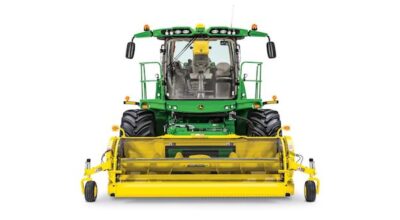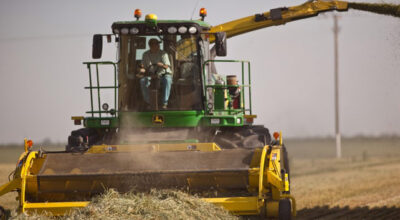
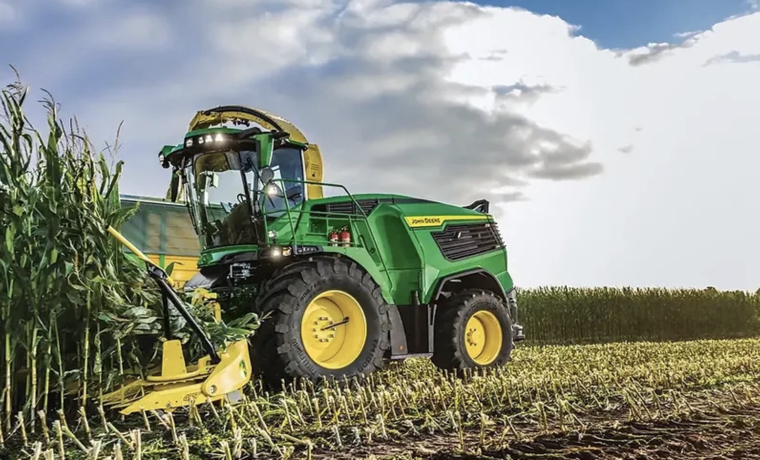
A field of corn or a windrow of alfalfa has a long way to go before it becomes livestock feed. Forage harvesters make that transition by gathering and chopping standing or windrowed crops for haylage and silage production.
But the harvester is only one part of the process. Timing, crop conditions, transport, and storage all affect how efficiently forage moves from the field into storage.
From selecting the right crop head to matching transport capacity with harvester output, each part of the harvest system needs to work together. Understanding those relationships can help operators choose equipment that best fits their harvest operation.
Key Takeaways
- Forage harvesters gather standing or windrowed forage and chop it for haylage or silage production.
- Crop type and workload help determine the right harvester, crop head, and processing equipment.
- Harvest efficiency depends on balancing harvester capacity with available transport, labor, and storage.
- Length-of-cut controls and precision technology can support crop processing, monitoring, and harvest efficiency.
How Forage Harvesting Works: From Field to Feed
A forage harvester gathers, chops, processes, and discharges crops as it moves through the machine. Each stage in the harvesting process prepares the forage for transport and storage.
Gathering Standing and Windrowed Crops
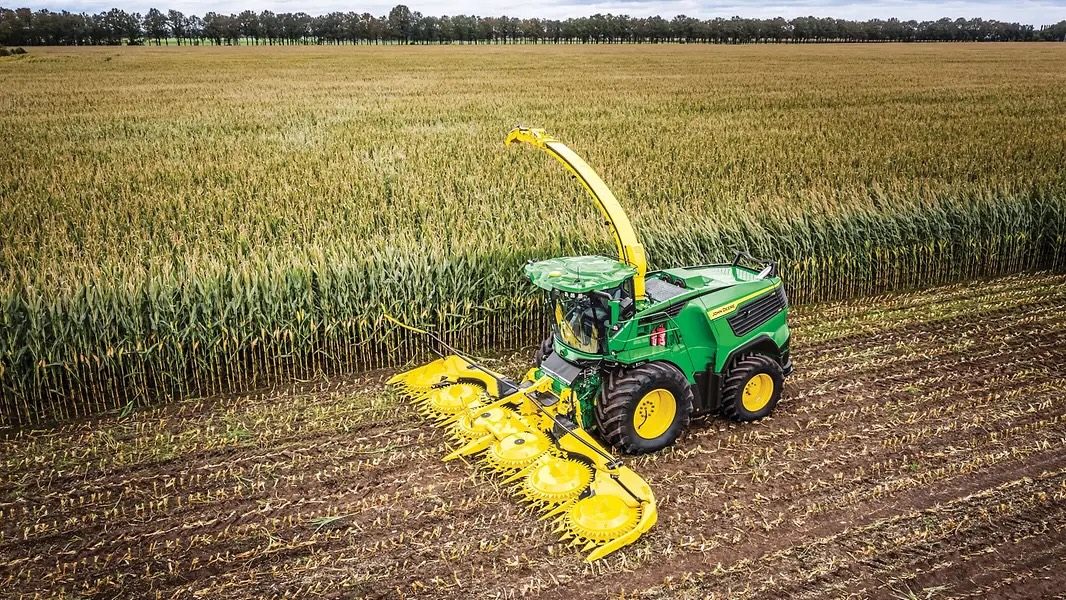
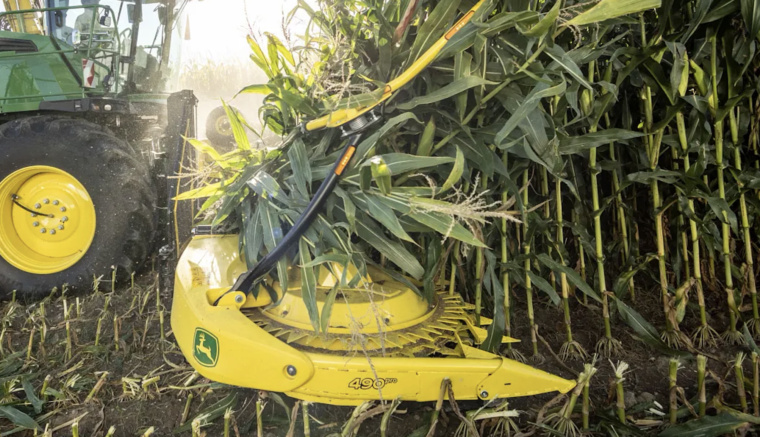
The crop head gathers forage from the field and feeds it into the harvester, with the right head depending on the crop and how it’s positioned in the field. Standing corn, for example, requires a different head than alfalfa that has already been cut and formed into windrows.
Common options include:
- Rotary heads harvest standing forage crops and are commonly used in corn, sorghum, and other forage crops.
- Row-crop heads are designed to follow planted row configurations and can improve feeding performance in certain crop conditions.
- Hay pickup heads lift previously cut grass, alfalfa, and other forage from prepared windrows.
Controlling Chop Length and Crop Processing
Once forage enters the harvester, feed rolls move the crop toward the cutterhead, which chops it to the selected length of cut. For corn silage, a kernel processor can also break kernels and process plant material before discharge.
Machine setup should account for crop type, moisture, and storage method because each can affect processing requirements.
Moving Forage from the Field to Storage
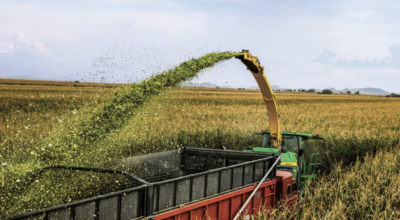
After chopping and processing happens, the discharge spout transfers forage into a truck or wagon traveling alongside the harvester. Forage boxes and blowers can also move chopped forage into silos or other compatible storage systems.
Transport also has to keep pace with harvester output. If a full truck leaves the field before an empty one is ready to take its place, the harvester may have to stop.
How Forage Harvesters Support Different Feed Crops
Crop type determines how a forage harvester is configured. Corn, grass, alfalfa, and sorghum all have different gathering and processing requirements.
Corn Silage
Corn silage uses the entire above-ground corn plant, including stalks, leaves, ears, and grain and while harvested it’s still standing and chopped for feed. Operators typically use a rotary or row-crop head to gather the crop and feed it into the harvester.
Consistent chop length helps the silage pack tightly in storage, limiting trapped air that can contribute to spoilage. Kernel processing helps break and crush corn kernels while increasing plant fiber disruption, improving the accessibility of nutrients in silage.
John Deere F8 and F9 Series Self-Propelled Forage Harvesters pair refined kernel processing with a re-engineered crop-flow path. Together, these features are designed to improve material handling while helping preserve the crop’s nutritional value for feed.
Grass and Alfalfa Haylage
Grass and alfalfa haylage is forage harvested and stored at moisture levels higher than dry hay but lower than many silage crops.Operators typically mow these crops, allow them to wilt, and form them into windrows.
A hay pickup head then gathers the prepared windrow and feeds it into the forage harvester for chopping. The chopped haylage can then be packed and stored in a silo, bunker, or other suitable storage system.
Sorghum and Other Forage Crops
Sorghum and other forage crops can be harvested while standing. Depending on the planting pattern, operators may use a row-crop head for defined rows or a rotary head for crops that don’t require row-following.
Different crops can also require different cutting and processing configurations. For example, some sorghum varieties harvested for silage may benefit from additional processing, depending on grain content and feed objectives.
How to Choose the Right Forage Harvester Setup
Choosing the harvester is only one part of building an effective setup. The power source, crop heads, and attachments also need to match the operation’s crops, workload, and harvest pace.
Self-Propelled Forage Harvesters
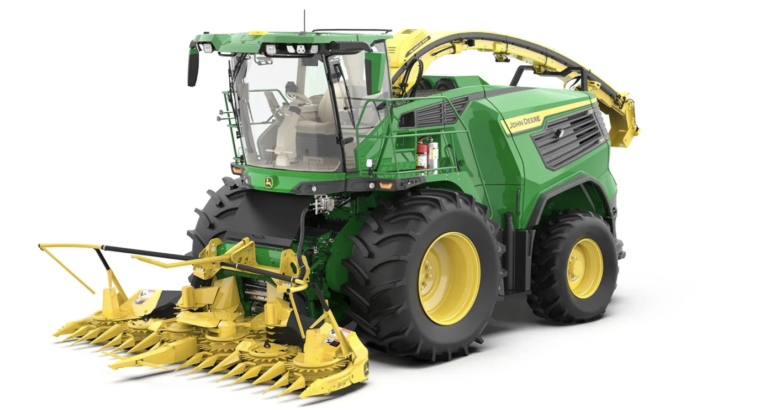
Self-propelled forage harvesters combine the engine, drivetrain, and harvesting components in one dedicated machine rather than relying on a tractor for power. This design supports higher-capacity harvesting and accommodates different crop heads, processing options, and precision technology.
John Deere offers several series and models for different harvesting demands:
- 8000 and 9000 Series: Combine high-capacity crop flow with configurable heads and processing components, plus available precision technology to support efficient forage harvesting.
- 9500 and 9600: Two 9000 Series options powered by the John Deere JD18X engine and designed for demanding harvest conditions.
- 9900: A higher-capacity 9000 Series option designed to maintain power at lower engine speeds while managing fuel use.
- F8 Series: The new-generation successor to the 8000 Series, designed for farmers and smaller custom operators seeking strong forage-harvesting performance in a standard-body machine.
- F9 Series: The new-generation successor to the 9000 Series, designed for operations that need greater power and capacity to move high volumes of forage.
Pull-Type Forage Harvesters
Pull-type forage harvesters rely on a tractor for power rather than carrying their own engine and drivetrain. Operators need to consider PTO requirements, tractor capabilities, and compatibility to make sure the two can work together effectively.
Operators should also weigh crop volume and desired harvest pace, then pair the machine with a compatible hay pickup or row-crop head for the crops they plan to harvest.
Crop Heads and Attachments
The right forage attachments depend on how the crop enters the harvester, what processing it requires, and how it will move into storage. When building a setup, consider:
- Is the crop standing or windrowed? Windrowed grass and alfalfa require a pickup head, while standing crops like corn and sorghum call for a rotary or row-crop head.
- How is the crop planted? Row configuration can determine whether a row-crop head or a rotary head better fits the field.
- Does the crop need additional processing? Corn silage may require a kernel processor to thoroughly process kernels after chopping.
- Is the equipment compatible? Confirm that crop heads, processors, and other attachments work with the forage harvester being considered.
- How will forage move after chopping? Factor in forage boxes, blowers, and other supporting equipment needed to transport material and move it into storage.
What Keeps Haylage and Silage Harvest Moving Efficiently?
Transport, timing, labor, and equipment readiness all need to keep pace with harvester output. Three areas have the greatest effect on whether forage keeps moving:
- Matching capacity across the harvest system
- Harvesting within the right window
- Reducing downtime during harvest
Matching Capacity Across the Harvest System
A high-capacity harvester only increases harvest pace if supporting equipment can keep up. Trucks, wagons, or forage boxes need enough combined capacity to move each load without leaving the harvester waiting for the next empty vehicle.
Field distance, unloading time, storage access, and available operators all affect turnaround time. A short haul may keep trucks cycling quickly, while longer trips may require additional transport capacity to prevent delays.
Harvesting Within the Right Window
Crop maturity, moisture, weather, and available labor determine how much time an operation has to complete harvest. When that window tightens, the operation may need to move more crop through the harvest system each day.
That workload should factor into equipment selection. Larger operations facing short harvest windows may benefit from greater machine capacity, while smaller acreages or longer windows may not require the same throughput.
Reducing Downtime During Harvest
A breakdown during a tight harvest window can quickly put the day’s workload behind schedule. Before heading to the field, inspect high-wear components such as knives, cutterheads, feed rolls, processors, and crop heads so worn parts can be addressed before harvest.
When considering used equipment, review component condition and maintenance history alongside operating hours. Also factor in dealer service and replacement-parts availability because faster access to repairs can reduce downtime.
Forage Harvester Features That Support Feed Production
Forage harvester features can help operators maintain consistent crop processing, adjust machine settings, and monitor harvest conditions. Key areas to evaluate include:
- Crop processing and length-of-cut controls
- Automation and precision technology
- Operator control and visibility
Crop Processing and Length-of-Cut Controls
Length-of-cut controls determine how finely crop is chopped, while kernel processors provide additional processing for crops like corn silage. A consistent, appropriate chop helps silage pack more effectively, limiting trapped air that can contribute to spoilage.
John Deere forage harvesters combine adjustable length-of-cut systems with Dura-Drum™ cutterheads and kernel processors designed for crop processing at different lengths of cut. Automatic in-cab knife sharpening helps maintain cutting performance with fewer stops for manual sharpening.
Automation and Precision Technology
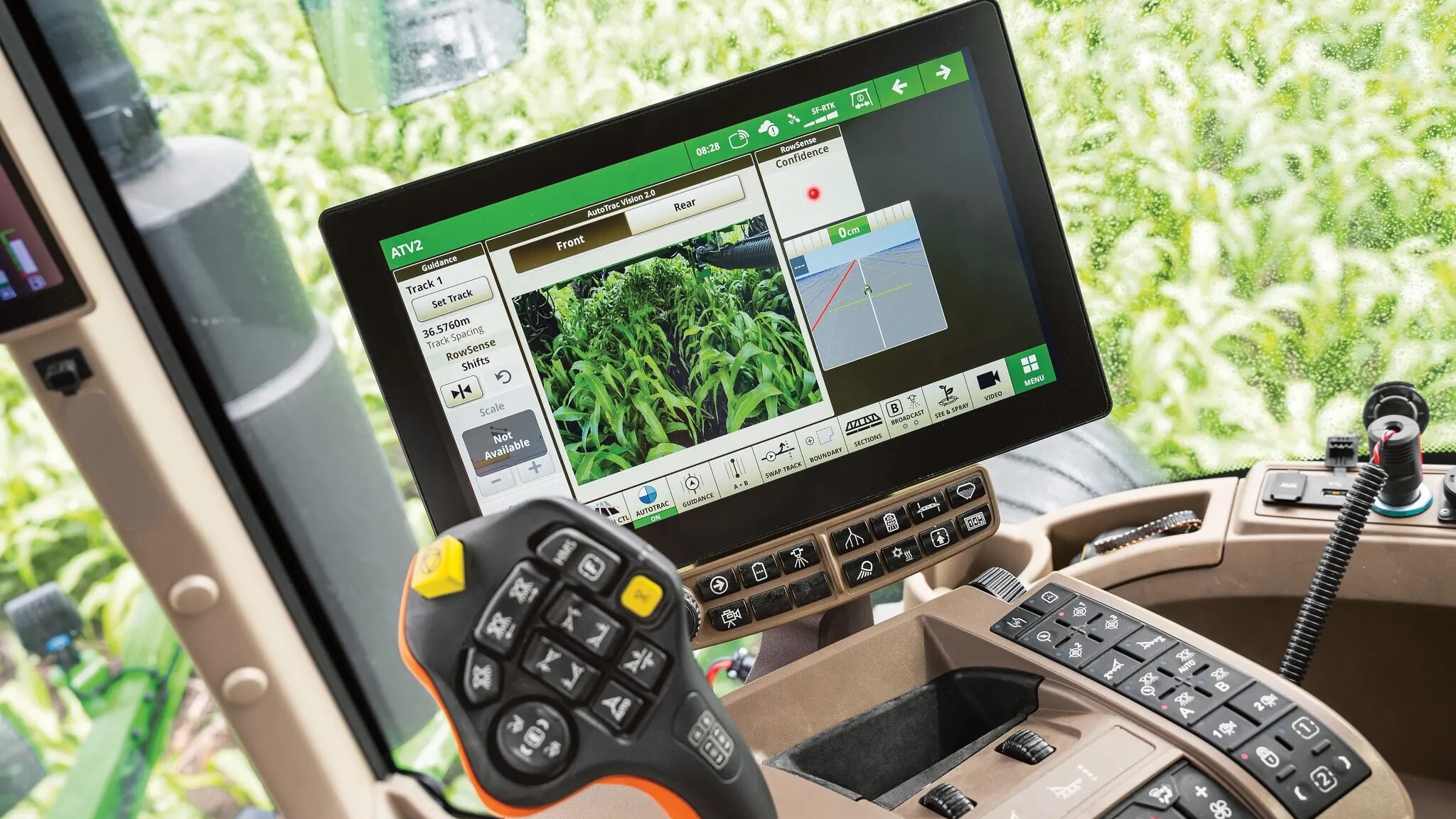
Precision technology can help operators monitor changing crop conditions and collect harvest data while the machine is working. Depending on the system, that information can provide visibility into crop characteristics, yield, and machine productivity.
John Deere’s HarvestLab™ 3000, for example, measures dry matter and forage constituents in real time. When paired with AutoLoc on compatible machines, length of cut can be adjusted automatically based on operator-defined targets.
Operator Control and Visibility
Clear sightlines and accessible controls help operators monitor the header and crop flow while watching the truck or wagon alongside the harvester.
John Deere combines panoramic cab visibility with camera-based features that can assist with trailer filling. Active Fill Control (AFC), for example, uses camera-based technology to monitor trailer positioning and filling, automatically adjusting the spout to help distribute forage and reduce spillage. With less attention required for trailer filling, the operator can focus more on steering the harvester and monitoring crop flow.
What to Evaluate When Comparing Forage Harvesters
Whether shopping new or used, compare forage harvesters based on the crop, workload, and field conditions they will encounter. Focus on three areas:
- Crop and header requirements
- Harvest capacity and field conditions
- Machine condition and ownership considerations
Crop and Header Requirements
Start with what the machine will harvest. Grass and alfalfa haylage require a different setup than standing corn, and corn silage may also require kernel processing. Consider:
- Crops being harvested
- Standing versus windrowed material
- Header and attachment compatibility
- Need for kernel processing
Harvest Capacity and Field Conditions
Harvester capacity should reflect how much crop needs to move each day and how much time is available. Greater capacity can help during tight harvest windows, but field access and distance to storage can limit daily output. Factor in:
- Acreage and expected crop volume
- Available harvest window
- Field size and access
- Distance between the field and storage
- Required daily output
Machine Condition and Ownership Considerations
With used equipment, the model number tells only part of the story. A complete evaluation should also account for:
- Operating hours
- Cutterhead and knife condition
- Feed-roll condition
- Maintenance history
- Technology compatibility
- Parts and service availability
- Kernel processor wear, if equipped
Build the Right Forage Harvester Setup for Haylage and Silage
Productive forage harvest depends on the full system: the harvester and crop head, transport and storage equipment, and the operators coordinating each stage.
When comparing equipment, start with the crops you harvest, acreage, harvest window, and processing needs. Then make sure harvester capacity aligns with transport, storage, and labor so the full operation can keep pace.
Ready to build your setup? Compare John Deere forage harvesters, crop heads, and supporting equipment on MachineFinder. You can also contact your local John Deere dealer for help confirming machine condition, capacity, and equipment compatibility.
Forage Harvester FAQs
1. How Can Forage Harvesting Efficiency Be Improved Across the Full Operation?
Match harvester output with transport, unloading, storage, and available labor. When those parts of the system are aligned, forage can move from the field to storage with fewer delays.
2. What Factors Have the Greatest Impact on Forage Harvest Timing?
Crop maturity, moisture, weather, and available labor help determine when and how quickly harvesting needs to happen. Equipment capacity and storage readiness then determine how much crop the operation can handle within that window.
3. How Does Crop Moisture Influence Forage Harvester Performance?
Crop moisture affects processing decisions, including the appropriate length of cut. On compatible John Deere machines, HarvestLab 3000 measures crop dry matter, while AutoLoc™ can use those readings to adjust length of cut within operator-defined settings.
4. How Can Operators Reduce Bottlenecks During Forage Harvest?
Identify where forage stops moving efficiently. If trucks spend too long traveling or unloading, for example, adding transport capacity may reduce delays more effectively than increasing harvester output.
5. What Role Does Precision Technology Play in Forage Harvesting?
Precision technology can provide information about crop conditions and machine performance while harvest is underway. Monitoring and automation features can help operators respond to changing conditions, maintain consistent processing, and collect harvest data for future decision-making.
6. When Does Upgrading to a Higher-Capacity Forage Harvester Make Sense?
A higher-capacity harvester can make sense when the current machine can’t cover enough acreage within the available harvest window. Before upgrading, confirm that transport, storage, labor, and field access can handle the additional output.