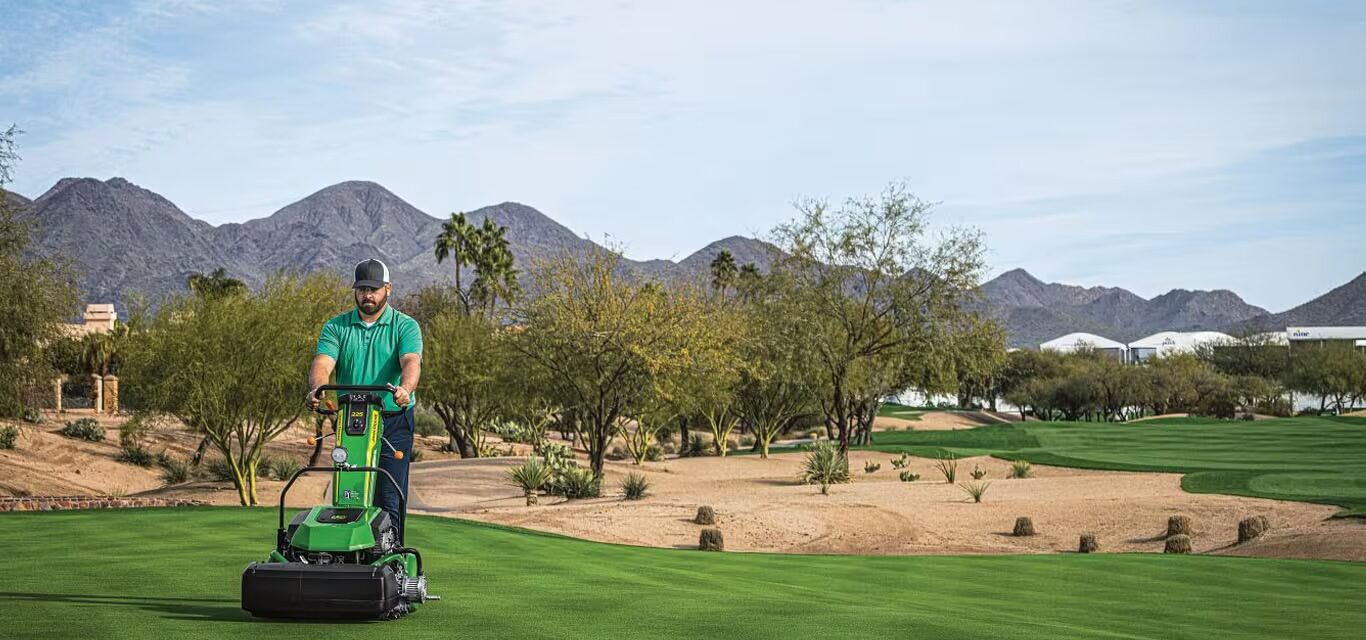
John Deere walking mowers are built for precision cutting in areas where every pass makes a difference in surface quality.
From golf greens to tight, detail-heavy spaces, these machines deliver the control and consistency needed for a clean, uniform finish where larger equipment falls short.
This guide covers how John Deere walking mowers work, where they’re used, and how to choose the right model for your needs.
Key Takeaways
- John Deere walking mowers are built for precision, control, and consistent cut quality in detailed or sensitive turf areas.
- Reel-based greens mowers are built for fine turf and deliver a clean, uniform cut at lower heights.
- Commercial walk-behind models balance coverage and control for landscaping and property maintenance.
- Key features like hydrostatic drive, ergonomic controls, and precise height adjustments support consistent performance across conditions.
- The right mower depends on turf type, property layout, and workload requirements.
What Is a John Deere Walking Mower?
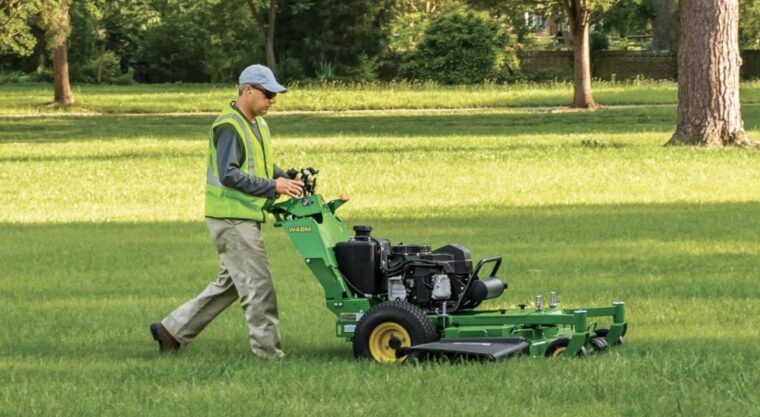
A John Deere walking mower is a walk-behind machine where the operator controls movement and cutting from behind the unit, unlike riding mowers and zero-turn machines where the operator sits and steers.
While riding equipment is built to cover large areas quickly, walking mowers are built for control and precision, allowing for more accurate handling in tight or detailed spaces.
Where Walking Mowers Fit Best In Turf Care
Walking mowers are best suited for areas where precision and consistency take priority over coverage speed, such as:
- Golf courses, where maintaining a uniform surface across greens, collars, and surrounds is a requirement to ensure playability.
- Sports fields and managed turf areas, where high-visibility zones demand a consistent, even finish.
- Residential and commercial properties, particularly tight spaces, edges and landscaped areas where larger equipment cannot operate effectively.
- Slopes and confined areas, where operator control and stability are critical for both safety and maintaining cut quality.
Walk Greens Mowers for Fine Turf Precision
For fine turf applications, maintaining consistent height and surface quality is critical. John Deere’s walk greens mowers are built for that level of precision, with multiple cutting widths available to match different needs.
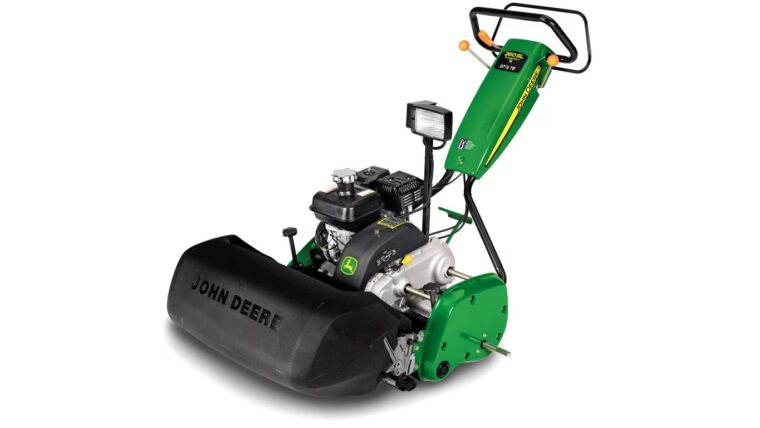
John Deere 180SL, 220SL, and 260SL Overview
John Deere offers three SL PrecisionCut™ walk greens mowers designed for golf greens and ultra-fine turf applications:
All three models use reel cutting systems paired with PrecisionCut™ technology, which maintains consistent contact between the reel and bedknife for a clean, uniform cut. This helps reduce grass tearing, supports overall turf health, and delivers the finish required on greens.
Key Features That Support Precision Cutting
Several features contribute to these mowers’ high-quality cutting performance, including:
- Reel cutting systems, which use rotating blades against a fixed bedknife to create a clean, scissor-like cut. These are more precise than rotary systems, which use a horizontal blade to slice grass on impact.
- Speed Link™ height-of-cut adjustment, which allows for quick, precise changes to cutting height. It keeps both sides of the rear roller aligned, helping maintain a consistent cut across the entire unit.
- Lightweight, balanced design, which reduces turf compaction while staying stable during operation.
Commercial Walk-Behind Mowers for Versatility
Commercial walk-behind mowers are designed for a wider range of mowing conditions, combining efficient coverage with the maneuverability needed for tighter areas.
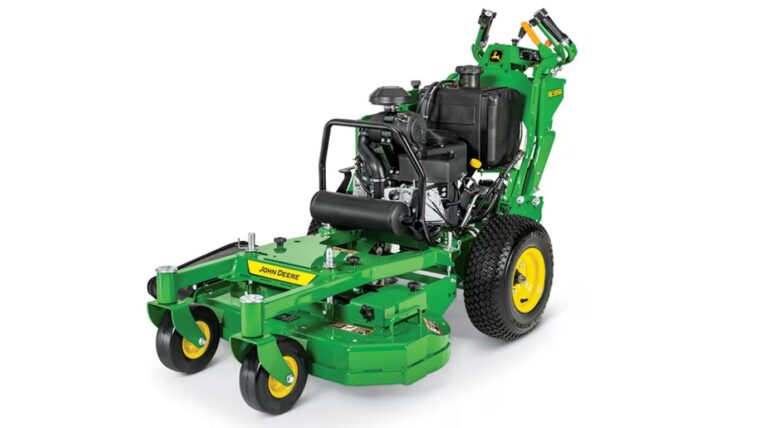
John Deere W36M and W36R
The W36M and W36R are compact, 36-inch walk-behind mowers designed for properties with tight spaces, obstacles, or complex layouts. Both models use rotary cutting systems, making them well-suited for general landscaping and mixed turf conditions where versatility is important. Their smaller footprint allows for strong control in detailed mowing areas that larger equipment can’t access easily.
The difference comes down to performance and operator comfort.
- The W36M offers a simpler, more straightforward setup suited for routine jobs.
- The W36R adds features like electric start, providing smoother control and easier operation during longer or more demanding work.
John Deere W48M and W48R
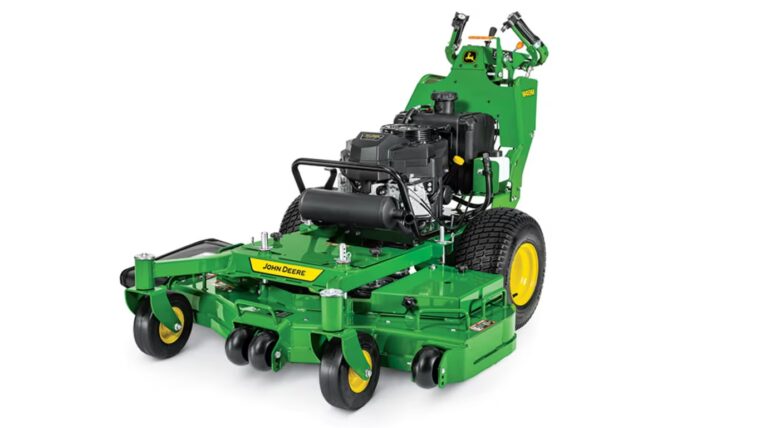
The W48M and W48R feature wider 48-inch cutting decks designed to increase productivity on larger properties. Like the W36 models, they use a deck-based cutting system suited for commercial work that requires covering more ground without sacrificing control around varied terrain.
Similarly to the W36 models, performance is the main difference.
- The W48M is a practical choice for consistent day-to-day use, with a more basic configuration that supports reliable operation across standard mowing tasks.
- The W48R is better suited for larger workloads, with electric start and a wider cutting width that make extended operation and broader coverage easier to manage.
M vs. R Series: What’s the Difference?
M and R Series mowers both use hydrostatic drive systems, but they differ in specific features and capabilities. The comparison below breaks down the key differences to help you determine which model best fits your needs and operating conditions.
| Features | M Series | R Series |
| Drive System | Hydrostatic | Hydrostatic |
| Overall positioning | Simpler, more straightforward setup | Higher-performance, more feature-rich |
| Starting system | Recoil (pull start) | Electric start |
| Operator experience | Basic, durable controls | Smoother, more refined control feel |
| Typical use case | Standard routine mowing with straightforward needs and smaller workloads | Commercial applications requiring efficiency, higher-demand performance, and extended use |
Features That Improve Precision and Control
Walking mowers are designed to give operators direct control over cutting performance, with features that support consistent results in real-world conditions:
- Ergonomic controls, including spring-loaded neutral lock handles, reduce hand fatigue and help maintain steady, uniform cutting patterns during longer passes or detailed work around edges.
- Hydrostatic transmission allows for smooth, gradual speed adjustments, making it easier to stay consistent when moving between open areas and tighter sections.
- Strong maneuverability helps operators navigate around obstacles, landscaping, and confined spaces without disrupting the surrounding turf.
- Consistent cutting performance delivers an even cut across different grass types, whether maintaining fine turf or transitioning to general landscaping areas.
How to Choose the Right John Deere Walking Mower
Choosing the right walking mower starts with understanding how it will be used and the conditions it needs to handle. Key factors like turf type, property layout, and workload can help narrow down the best fit.
Consider Your Turf Type
Fine turf, such as golf greens, requires reel mowers that cleanly snip each blade of grass using a reel and bedknife. This precise cut supports lower cutting heights and a more uniform surface without damaging the turf.
For general lawn care or mixed-use properties, rotary walk-behind mowers are often a better fit. Their high-speed horizontal blade cuts on impact, making them more effective for taller grass, uneven terrain, and a wider range of conditions.
Evaluate Property Size and Layout
Tight spaces, obstacles, and detailed areas require smaller, more maneuverable models that are easier to control in confined layouts.
Larger properties benefit from wider cutting decks that improve efficiency, allowing operators to cover more ground without sacrificing control in key areas.
Match Equipment to Application
Golf course maintenance requires specialized greens mowers designed for precision and consistency. Commercial landscaping, on the other hand, calls for more versatile equipment that can handle varying turf conditions across different properties.
Frequency of use should also factor into your decision, especially for operators managing multiple properties. Daily or high-volume work demands equipment built for durability, performance, and operator comfort.
Maintenance and Performance Considerations
Consistent performance requires regular upkeep, including:
- Keeping reels and blades sharp to ensure a clean, precise cut. Dull components can tear grass, leading to uneven results and increased turf stress.
- Performing routine inspections to catch wear on key components like belts, rollers, and cutting units before they impact performance or lead to downtime.
- Staying on top of regular maintenance to extend equipment life and ensure the mower continues to deliver consistent cutting quality.
Explore John Deere Walking Mowers on MachineFinder
John Deere walking mowers are designed for controlled, consistent cutting across a range of turf care applications. Whether you’re maintaining fine turf or managing commercial properties, selecting the right machine helps improve both efficiency and results.
To explore available John Deere walking mowers, contact your local John Deere dealer or browse current listings on MachineFinder to find a model that fits your needs.

John Deere Walking Mower FAQs
1. What Are the Main Benefits of Using a John Deere Walking Mower for Precision Cutting?
Walking mowers give operators more direct control over speed and positioning, which helps maintain a consistent cut in detailed or sensitive areas. They are especially effective for fine turf, tight spaces, and slopes where larger equipment is harder to manage.
2. Which John Deere Walking Mower Models Are Best for Golf Course Greens?
The 180SL, 220SL, and 260SL are designed specifically for golf greens and ultra-fine turf. They use reel cutting systems and PrecisionCut™ technology to deliver a clean, uniform cut at lower heights.
3. How Does Hydrostatic Transmission Compare to Belt-Driven Systems?
Hydrostatic systems allow for smoother, more precise control of speed and direction, which helps maintain consistent cutting in tight or variable conditions. Belt-driven systems use a simpler mechanical setup, making them easier to maintain and well-suited for straightforward, routine mowing tasks.
4. Can John Deere Walking Mowers Handle Slopes and Uneven Ground?
Yes, walking mowers are well-suited for slopes and uneven terrain because they allow operators to maintain control and adjust movement more precisely. Their design helps reduce turf disruption while improving stability in challenging areas.
5. How Do You Match a Walking Mower to Your Turf Type?
Fine turf requires reel mowers to maintain a clean, precise cut at lower heights. General lawn care and commercial applications are better suited for rotary walk-behind models that can handle a wider range of grass types and conditions.