Whether you’re clearing overgrown fence lines, maintaining pastures, or managing roadside vegetation, the right John Deere rotary cutter can help you mow more efficiently. Available in multiple sizes and duty ratings, these cutters are built for different tractor horsepower ranges, mowing conditions, and land management needs.
This blog breaks down the different types of John Deere rotary cutters, what each is built to handle, and how to choose the right model for your land, tractor, and mowing needs.
Key Takeaways
- John Deere offers light-duty, medium-duty, heavy-duty, and flex-wing rotary cutters designed for different vegetation types, tractor models, and mowing applications.
- Choosing the right rotary cutter starts with evaluating the vegetation, terrain, acreage, tractor compatibility, and mowing frequency.
- Light-duty cutters are ideal for routine maintenance, while medium- and heavy-duty models are built for thicker vegetation and more demanding workloads.
- Flex-wing rotary cutters help improve productivity across large pastures, roadsides, and other expansive areas by covering more ground with fewer passes.
- Matching the rotary cutter to both the job and the tractor helps support efficient operation, long-term durability, and consistent mowing performance.
What Are John Deere Rotary Cutters and What Are They Used For?
John Deere rotary cutters are PTO-powered implements built to cut grass, weeds, and brush in areas that can quickly become overgrown.
Unlike finish mowers, which are designed to create a smooth, manicured appearance, rotary cutters are built for tougher mowing conditions. Their durable construction allows them to tackle rough terrain, dense growth, and more demanding jobs where efficient land management matters more than a polished finish.
Common applications include:
- Maintaining pastures and managing vegetation in hay production areas
- Controlling weeds along fence lines and field edges
- Clearing brush and overgrown areas
- Maintaining trails, hunting property, and recreational land
- Mowing roadsides and rights-of-way
Because mowing conditions vary widely, John Deere offers multiple categories of rotary cutters that balance cutting capacity, durability, and productivity for different types of work.
What Types of John Deere Rotary Cutters Are Available?
To help match equipment to the job, John Deere rotary cutters are available in several categories, including:
- Light-duty rotary cutters
- Medium-duty rotary cutters
- Heavy-duty rotary cutters
- Flex-wing rotary cutters
Light-Duty Rotary Cutters
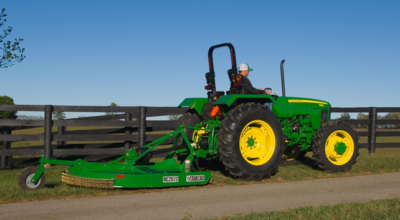
What are they? Light-duty rotary cutters are designed for routine mowing where vegetation is relatively easy to manage. Their compact size makes them easier to maneuver around buildings, trees, fence lines, and other obstacles commonly found on smaller properties and operations.
Common uses: Seasonal mowing, maintaining grass and light weeds, cleaning up field edges, and preventing smaller acreages from becoming overgrown.
Best for: Property owners, hobby farms, small farms, and other operations using compact or smaller utility tractors for routine land maintenance.
Medium-Duty Rotary Cutters
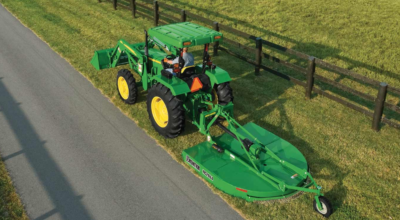
What are they? Medium-duty rotary cutters handle thicker vegetation and more frequent mowing than light-duty models. A heavier construction makes them well suited for the varied mowing conditions commonly found on working farms and ranches.
Common uses: Maintaining pastures, mowing heavier weeds, managing waterways, and controlling vegetation that requires regular upkeep.
Best for: Livestock operations, row crop farms, ranches, and other agricultural properties using utility tractors.
Heavy-Duty Rotary Cutters
What are they? Heavy-duty rotary cutters are built to power through demanding mowing conditions, including thick brush, dense vegetation, and rugged terrain. Reinforced components help them withstand repeated impact and heavier workloads.
Common uses: Clearing overgrown fields, cutting thick brush, maintaining roadsides and rights-of-way, and reclaiming neglected areas.
Best for: Large farms, ranches, commercial land management, municipalities, and other operations that regularly mow tough vegetation with larger utility or agricultural tractors.
Flex-Wing Rotary Cutters
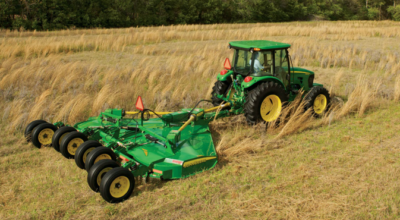
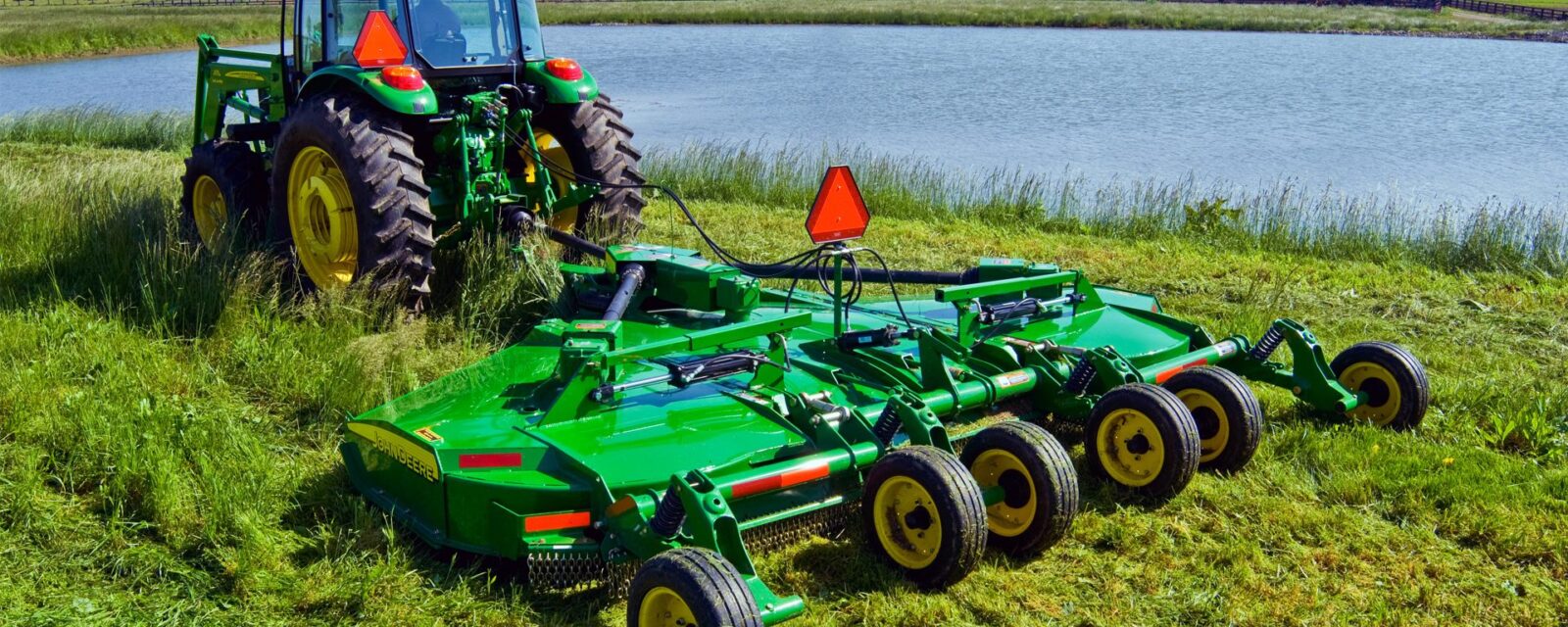
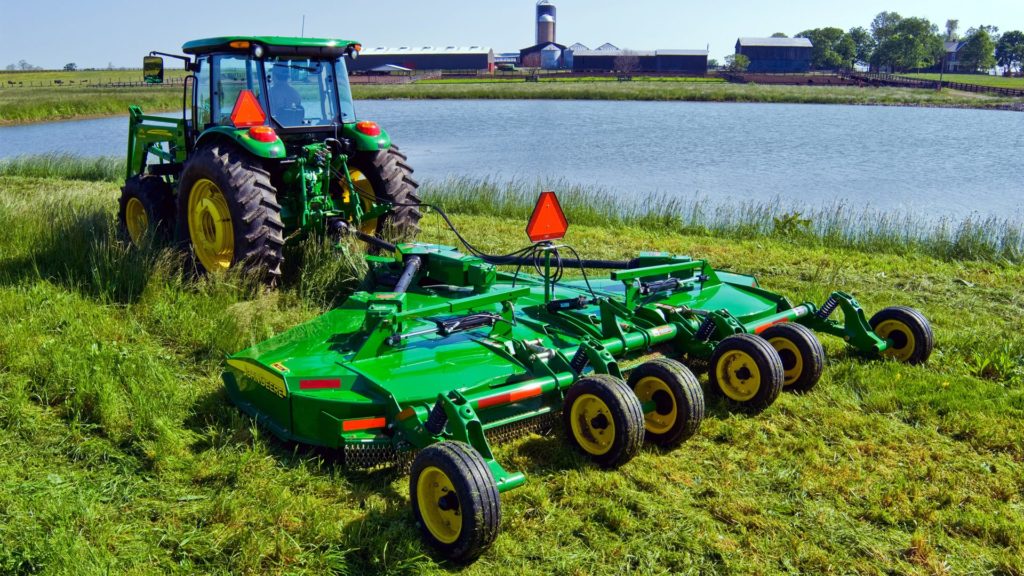
What are they? Flex-wing rotary cutters feature multiple cutting decks connected by hinged wings that flex to follow changing terrain. Their wider cutting widths allow operators to cover more ground efficiently while maintaining a consistent cut across uneven landscapes.
Common uses: Maintaining large pastures, mowing roadsides and rights-of-way, managing open fields, and covering expansive acreage with fewer passes.
Best for: Large farms, ranches, municipalities, highway departments, and operations responsible for maintaining extensive areas where productivity is a priority.
How to Choose the Right John Deere Rotary Cutter
The best rotary cutter depends on more than the size of your property. Vegetation, tractor compatibility, terrain, and mowing frequency all play a role in determining which cutter will help you work efficiently.
- Start with the the type of vegetation you need to cut
- Match the cutter to your tractor
- Consider cutting width and acreage
- Think about terrain and mowing conditions
- Decide how often you will use it
Start With the Type of Vegetation You Need to Cut
Choose a rotary cutter that matches the vegetation you’ll encounter most often. Routine grass maintenance typically requires a lighter-duty cutter, but reclaiming overgrown fields filled with thick weeds and young saplings within the cutter’s rated cutting capacity may require a heavier-duty model.
Also consider how quickly vegetation grows back between mowing intervals. If areas regularly become overgrown, choosing a cutter built for denser conditions can help you maintain productivity without pushing your equipment beyond its intended use.
When comparing models, review the cutter’s rated cutting capacity, which identifies the maximum brush or sapling diameter the machine is designed to handle.
Match the Cutter to Your Tractor
Your rotary cutter should be compatible with your tractor’s horsepower, PTO, hitch, and lift capacity. An oversized cutter can reduce mowing performance or place unnecessary strain on your tractor, and one that’s too small may limit productivity.
Compact utility tractors are commonly paired with light-duty cutters, though larger compact and utility tractors may also handle appropriately sized medium-duty models. Always verify your tractor’s specifications before making your selection.
Consider Cutting Width and Acreage
Match the cutter’s width to the size of the area you mow. Wider cutters help operators cover more ground with fewer passes, making them a practical choice for large pastures, hay fields, and open acreage.
If you’re mowing around gates, trees, fence lines, or ditches, a narrower cutter may be easier to maneuver while still providing the capacity needed for routine maintenance.
Think About Terrain and Mowing Conditions
Terrain is just as important as vegetation when choosing a rotary cutter. Slopes, uneven ground, rocks, stumps, and wet areas all place additional demands on your equipment, making a heavier-duty cutter a better fit for more challenging conditions.
Decide How Often You Will Use It
Choose a rotary cutter that’s built for your expected workload. Occasional seasonal mowing may only require a light-duty model, while routine agricultural, commercial, or municipal use often calls for equipment designed to withstand heavier workloads.
Operations that maintain pastures throughout the growing season or regularly manage roadsides and rights-of-way typically benefit from investing in a more durable cutter to support long-term performance and reduce wear over time.
John Deere Rotary Cutter Options by Mowing Need
Different mowing applications call for different types of rotary cutters. The table below matches common land maintenance tasks with the John Deere rotary cutter categories that are typically the best fit.
| Mowing task | Recommended rotary cutter |
| Pasture maintenance | Medium-duty rotary cutters for routine pasture mowing where grass and weeds are maintained regularly. Flex-wing rotary cutters for larger pastures where wider cutting widths can improve productivity. |
| Brush control | Medium-duty rotary cutters for heavier weeds and light brush that receive regular maintenance. Heavy-duty rotary cutters for thicker brush, woody vegetation, or more rugged conditions. |
| Roadside mowing | Heavy-duty or flex-wing rotary cutters for roadside maintenance, depending on acreage, terrain, and productivity requirements. Flex-wing rotary cutters for greater efficiency maintaining long stretches of roadsides, rights-of-way, and other expansive areas. |
| Small acreage | Light-duty rotary cutters for routine mowing on smaller properties. Medium-duty rotary cutters for heavier vegetation or areas where mowing is less frequent. |
| Large acreage | Flex-wing rotary cutters for covering expansive pastures and open fields with fewer passes. |
Take the Next Step Toward Smarter Land Maintenance
The right rotary cutter depends on the vegetation you mow, the tractor you operate, the terrain you maintain, and how frequently the equipment is used.
With options ranging from light-duty cutters, medium-duty cutters, heavy-duty cutters and flex-wing models, John Deere offers solutions for a wide range of mowing needs.
Ready to find the right John Deere rotary cutter for your operation? Contact your local John Deere dealer or explore available used rotary cutters on MachineFinder.

John Deere Rotary Cutter FAQs
1. How Does Vegetation Density Affect Which John Deere Rotary Cutter You Should Use?
Denser vegetation requires a more capable rotary cutter. Light-duty models are a good fit for routine grass maintenance, while thick weeds, brush, and young saplings typically require a medium- or heavy-duty cutter built for tougher conditions.
2. How Does Mowing Frequency Change the Type of Rotary Cutter You Need?
Frequent mowing places greater demands on both the rotary cutter and the tractor. Light-duty models may be sufficient for seasonal maintenance, while regular agricultural, commercial, or municipal mowing is often better suited to medium-, heavy-duty, or flex-wing cutters.
3. How Should Tractor Horsepower Influence Your Rotary Cutter Selection?
Tractors should have enough horsepower to safely operate the selected rotary cutter. Before purchasing, verify the tractor’s PTO horsepower, hitch compatibility, and lift capacity to ensure the equipment is properly matched. Rotary cutter requirements are typically based on PTO horsepower rather than engine horsepower, making PTO ratings the most important specification when matching equipment.
4. How Do PTO Requirements and Hitch Compatibility Affect Rotary Cutter Selection?
PTO requirements determine whether your tractor can provide the power needed to operate a rotary cutter, while hitch compatibility ensures the implement can be connected and supported properly. Matching both helps the tractor and cutter work together as intended.
5. How Can the Wrong Rotary Cutter Affect Tractor Performance?
A rotary cutter that’s too large or heavy can reduce mowing performance, place extra strain on your tractor, and make the equipment more difficult to operate. Choosing a cutter that’s properly matched to your tractor helps support efficient operation and long-term equipment performance.
6. What Features Matter Most When Comparing Used John Deere Rotary Cutters?
Inspect high-wear components such as the deck, blades, gearbox, driveline, tailwheel, and hitch for signs of damage or excessive wear. Look specifically for gearbox leaks, blade carrier or stump jumper damage, missing or damaged PTO shaft guarding, and deck rust-through. Reviewing the cutter’s maintenance history and previous applications can also provide a better understanding of its overall condition.