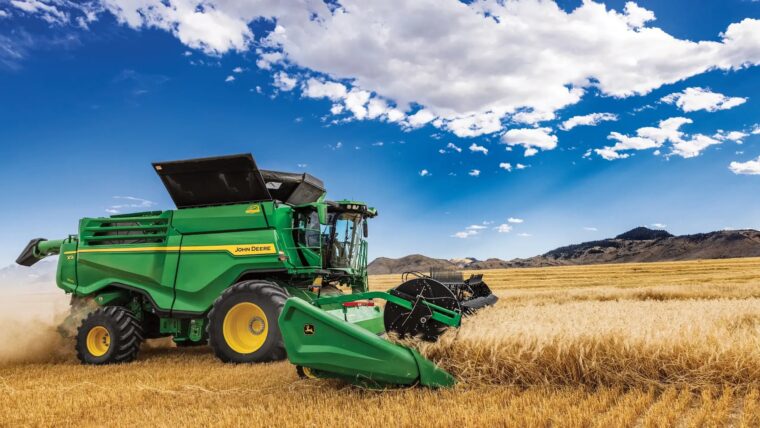
High-capacity harvesting requires the feeding, threshing, separation, cleaning, and grain-handling systems to work together. The John Deere X9 1000 and X9 1100 share the same core crop-processing architecture, but differ in engine power, grain-tank capacity, and unloading rate.
This guide compares their specifications, capabilities, and available technology to help buyers evaluate which configuration may fit their operation.

Key Takeaways
- The X9 1000 and X9 1100 share core harvesting systems, while the X9 1100 adds horsepower, grain tank capacity, and unloading speed for operations that need to move more crop.
- Wide feeding, dual rotors, and a large cleaning area help the X9 process large crop volumes while limiting grain loss and maintaining grain quality.
- Grain tank capacity, unloading speed, and auger reach can affect how well an X9 fits your grain-cart setup and harvest logistics.
- Available automation, guidance, and machine-control technology can reduce manual setting changes and steering demands throughout the harvest day.
What Is the John Deere X9 Combine?
The John Deere X Series is a line of high-capacity combines designed for demanding crops and harvest conditions, such as high-moisture corn and tough-threshing small grains.
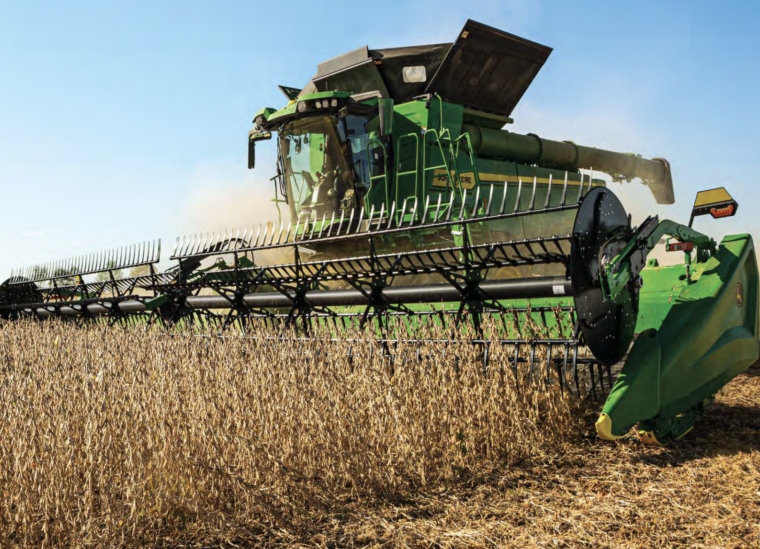
Both models use a wide feeding system and dual rotors to move, thresh, and separate crop. The Dyna-Flo XL cleaning shoe then removes the chaff and other material before clean grain reaches the tank.
Together, these systems are designed to maintain crop flow through feeding, threshing, separation, and cleaning.
John Deere X9 Combine Specs
The X9 1000 and X9 1100 share several specifications that support crop processing across both models, including:
- Engine: JD14 PSS 13.6 L
- Fuel capacity: 330 gal.
- Separator type: Dual rotor
- Rotor length: 11.5 ft.
- Total cleaning area: 75.02 sq. ft.
The chart below highlights the key specifications that distinguish the two models.
| Specifications | X9 1000 | X9 1100 |
| Rated engine power | 549 hp | 603 hp |
| Maximum engine power | 630 hp | 690 hp |
| Grain tank capacity | 420 bu. | 460 bu. |
| Peak unloading rate | 4.6 bu. / sec. | 5.3 bu. / sec. |
The biggest differences between the X9 1000 and X9 1100 are horsepower and grain-handling capacity. For buyers, these differences matter most when heavier crop volumes or grain-handling demands require more from the combine.
How Does the John Deere X9 Process Crop During Harvest?
Like other John Deere harvesting equipment, the X9 combines multiple crop-processing systems within one machine. Within the combine, crop moves through feeding, threshing, separation, and cleaning stages before reaching the tank.
Feeding and Feederhouse
The feederhouse moves harvested crop from the header into the combine, where maintaining consistent flow helps the threshing and separating systems process material efficiently.
The X9 uses several features to manage crop flow:
- 67.7-inch-wide feeding system: A four-strand conveyor chain with formed steel slats moves large crop volumes through the feederhouse and into the rotors at a steady rate.
- Feed Accelerator Stone Trap, or FAST: An eight-wing chevron accelerator promotes consistent crop flow into the rotors, while the stone-trap design helps prevent rocks and other dense objects from entering the crop-processing system.
- Modulated feederhouse reverser: If material plugs the feederhouse, the modulated reverser lets the operator reverse crop flow to help clear the blockage.
Dual-Rotor Threshing and Separation
Once crop leaves the feederhouse, threshing removes grain from heads, pods, or cobs, while separation recovers additional grain from the remaining plant material before residue exits the combine.
The X9 uses two 24-inch-diameter, approximately 11.5-foot-long rotors for threshing and separation. Their large processing area supports high crop throughput while helping maintain grain quality and limit grain loss.
Dyna-Flo XL Cleaning System
After threshing and separation, the grain still contains chaff and other material that needs to be removed before entering the grain tank. The Dyna-Flo XL cleaning system uses airflow and sieves to separate lighter material from the grain.
Both X9 models provide 75.02 square feet of total cleaning area, helping the cleaning system keep pace with the volume moving through the feeding and rotor systems.

How Much Grain Can a John Deere X9 Hold and Unload?
Processing crop quickly only helps if the combine can store and unload grain at a similar pace. The X9 1000 offers:
- Grain tank capacity: 420 bushels
- Peak unloading rate: 4.6 bushels per second
The X9 1100 increases both capacities with:
- Grain tank capacity: 460 bushels
- Peak unloading rate: 5.3 bushels per second
Those differences can affect how often the combine needs to unload and how long each grain-cart transfer takes.
Unloading-auger length and configuration vary by model year and machine specification. Longer configurations can provide additional clearance between the combine and grain cart when working with wider headers. Confirm the installed auger and its dimensions on any used X9 being considered.
Matching these capabilities with the grain cart’s capacity, speed, and clearance can help reduce waiting time and keep harvest moving.

What Headers Are Compatible With the John Deere X9?
Header choice depends on your crop, row configuration, field conditions, and desired cutting width.
Compatible John Deere combine headers include:
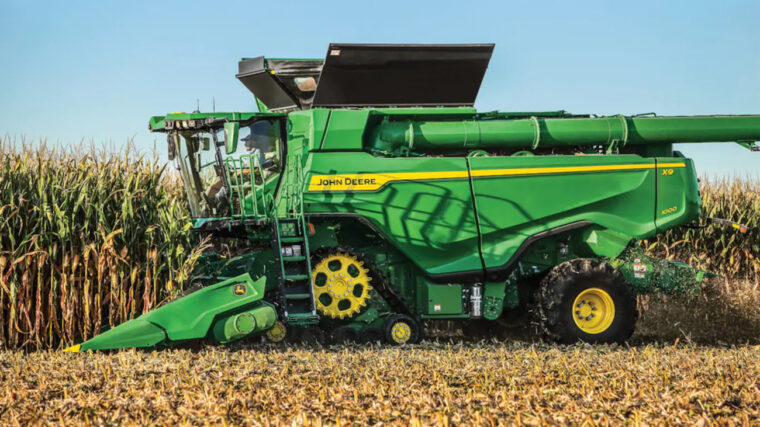
- CR rigid corn heads, which use a fixed frame to gather and feed row-crop corn into the combine.
- CF folding corn heads, which perform the same harvesting job but fold into a narrower configuration for easier transport between fields.
- RDF HydraFlex drapers, which flex to follow field contours while cutting crops close to the ground, such as soybeans and small grains.
- HDR rigid cutterbar drapers, which maintain a fixed cutting position while belts move cut crop toward the feederhouse.
- BP belt pickups, which collect crops that have already been cut and placed in windrows.
What Precision Technology Is Available on the John Deere X9?
Available precision technology can automate combine adjustments, steering, machine coordination, and harvest-data collection. Available technology varies by model year and machine configuration, so it’s important to confirm the features included on a used X9.
Automated Harvest Adjustments
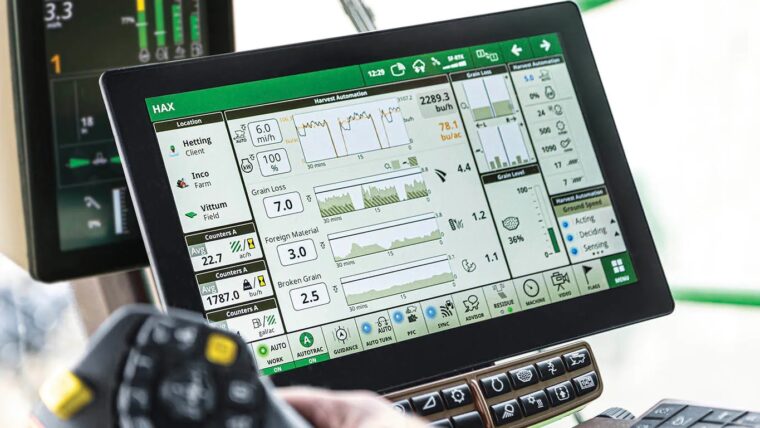
Depending on model year, configuration, and installed activations, available harvest automation can help maintain operator-selected targets for grain loss, broken grain, foreign material, and throughput. The system may adjust crop-processing settings such as rotor speed, concave clearance, cleaning-fan speed, and chaffer or sieve openings as conditions change.
Guidance and Machine Control
Integrated guidance steers the X9 along consistent passes, reducing the small corrections operators make throughout the day. With less attention required for steering, operators can focus more on crop flow, combine performance, and surrounding equipment.
When properly configured and activated, AutoTrac Turn Automation can coordinate an automated end-of-pass turn and guide the combine toward the next guidance line, reducing repetitive steering inputs at the headland. This can help improve pass-to-pass consistency.
Machine Sync can coordinate the movement of a compatible tractor and grain cart relative to the combine during unloading on the go. Compatible machines can also use supported in-field data-sharing functions to share coverage maps and guidance lines. Requirements vary by display, receiver, activation, and machine configuration.
Displays, Receivers, and Harvest Data
StarFire receivers provide the positioning data for guidance and other precision functions. Integrated displays bring that information into the cab alongside combine settings and harvest data.
Operators can use the display to track yield, field progress, machine performance, and combine settings throughout the harvest.


What Should You Look for When Buying a John Deere X9 Combine?
When buying used harvest equipment, look beyond horsepower to how the combine’s condition and configuration fit your crops, fields, and harvest setup. Consider:
- Model fit. The X9 1100 offers more horsepower, grain capacity, and unloading speed than the X9 1000, which may benefit operations handling heavier crop volumes.
- Hours and condition. Check engine and separator hours alongside wear on the feederhouse, rotors, cleaning system, and unloading components, since high hours and heavy wear can point to more immediate maintenance needs.
- Header compatibility. Compatibility can depend on header model and width, feederhouse configuration, drive requirements, tires or tracks, ballast, software, and model year, so buyers should verify the exact combine-header combination with a John Deere dealer.
- Grain handling. Larger grain carts or wider headers may require more auger reach, while faster cart cycles make unloading rate and tank capacity more important.
- Tires or tracks. Tracks provide more flotation in soft or wet fields, while tires may better suit firmer ground and operations with more road travel.
- Precision technology. Look for guidance and automated adjustments if reducing steering or manual setting changes is a priority, and verify the necessary displays, receivers, and activations are included.
- Maintenance history. Service records showing regular maintenance and completed repairs can help distinguish normal wear from components that may require attention soon after purchase.
Find the Right John Deere X9 Combine with MachineFinder
Choosing between the X9 1000 and X9 1100 comes down largely to how much horsepower and grain-handling capacity your operation needs.
Choosing between the models is only the first step. The individual machine also needs to fit your operation, from its header setup to its mobility, grain-handling configuration, and installed technology.
Compare used John Deere X9 combines on MachineFinder to find a model and configuration that can meet your operation’s demands. Connect with your local John Deere dealer to confirm specifications, condition, and compatibility before buying.


John Deere X9 Combine FAQs
1. Is the John Deere X9 the Largest Combine John Deere Makes?
Yes. The X9 is John Deere’s highest-capacity combine platform in the current North American lineup. Within the X9 lineup, the X9 1100 provides more engine power and grain-tank capacity than the X9 1000.
2. What Crops Is the John Deere X9 Combine Designed to Harvest?
The X9 can harvest crops such as corn, soybeans, and small grains, including high-moisture corn and tough-threshing varieties. The right header and combine settings depend on the crop and field conditions.
3. Can a John Deere X9 Combine Use Tracks Instead of Tires?
Yes; X9 combines can use tracks instead of tires, with tracks providing additional flotation in soft or wet fields. Tires may be better suited to firmer conditions or operations that require more road travel between fields.
4. How Does the John Deere X9 Monitor and Manage Grain Loss During Harvest?
The X9 uses grain-loss monitoring to give the operator information about machine performance. When equipped with applicable harvest-automation features, the combine can also adjust supported settings to help maintain operator-selected targets for grain loss, grain quality, and throughput.
5. How Does Crop Condition Affect John Deere X9 Combine Performance?
Crop moisture, yield, residue, and threshing difficulty can affect how quickly and cleanly material moves through the X9. Changes in those conditions may require different ground speeds and crop-processing settings to maintain throughput while limiting grain loss.