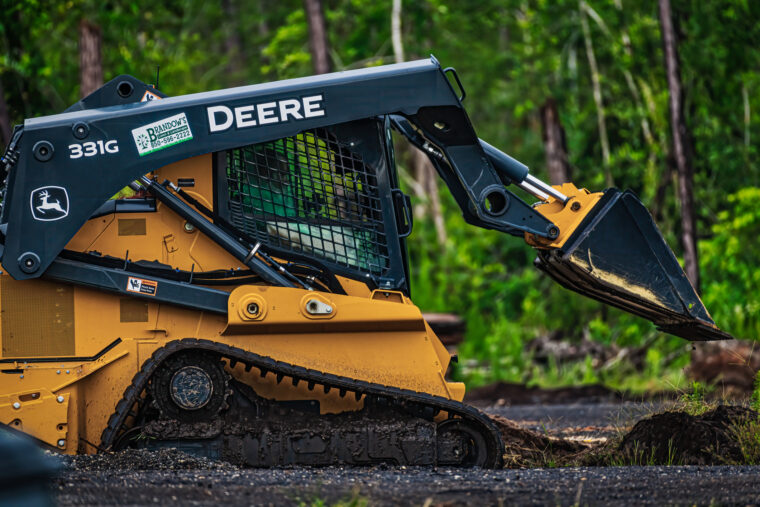
When evaluating the right compact track loaders for your agricultural, landscaping, or construction needs, John Deere 331G vs. 333G stands out as top contenders. While both models share several key features, like enhanced serviceability and advanced automation, they also boast unique specifications tailored to the job at hand. Regardless of specific differences, both are designed to enhance work site productivity and the operator experience.
Key Takeaways
- The main difference between the John Deere 331G and 333G is power, size, and capability, with the 333G offering higher performance for demanding applications.
- The 331G is narrower and more maneuverable, making it ideal for tight spaces and easier transport between job sites.
- The 333G provides greater rated operating capacity, higher horsepower, and advanced grading technology like SmartGrade™ for increased productivity.
- Both models share key features such as strong attachment compatibility, operator comfort, and easy serviceability, making them versatile compact track loaders.
What is a John Deere 331G Compact Track Loader?
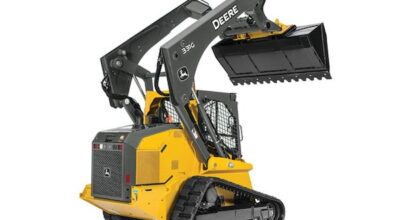
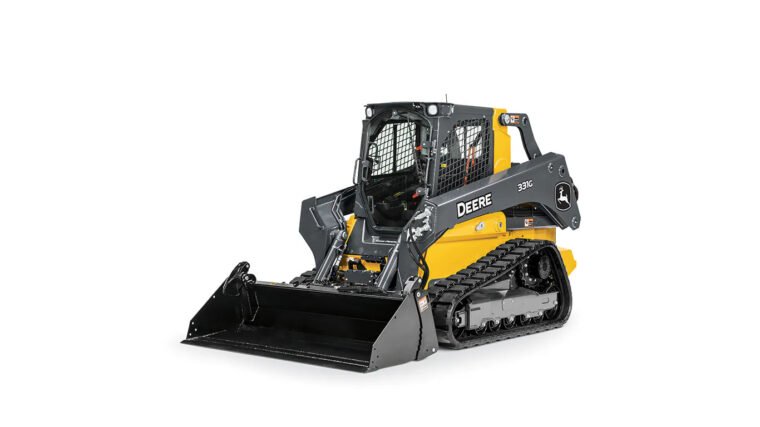
The John Deere 331G compact track loader is a blend of power and precision. With a slightly narrower frame than the 333G, it can move comfortably in tight spaces and is easy to trailer. Its ergonomic design, advanced control features, and an array of attachment options make it a versatile choice for those seeking efficiency and comfort.
What is a John Deere 333G Compact Track Loader?
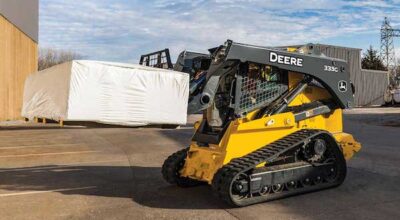
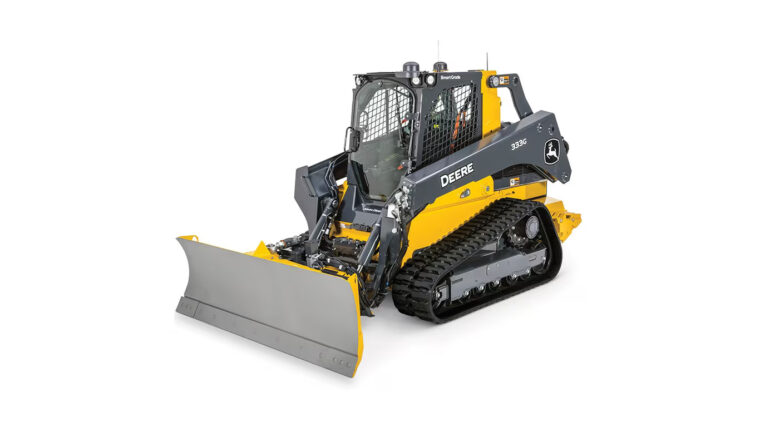
The John Deere 333G builds on the capabilities of the 331G with greater power, lifting capacity, and available grade-control technology. It’s a wider, heavier, and more powerful machine built to handle heavy-duty tasks. The 333G pushes the entire industry forward with advanced features like the first fully integrated 3D grade control solution available on a compact track loader.
John Deere 331G vs 333G: What’s the Difference?
The main differences between the John Deere 331G and 333G are size, power, and capability. The 333G is larger, heavier, and offers higher operating capacity and advanced grading technology, making it better suited for demanding job sites. The 331G, on the other hand, is slightly narrower and more maneuverable, making it ideal for tighter spaces and easier transport.
| Feature | 331G | 333G |
| Engine Power | 68 kW | 72 kW |
| Torque | 382 lb-ft | 395 lb-ft |
| Operating Capacity | 3,100 lbs | 3,700 lbs |
| Operating Weight | 11,900 lbs | 12,100 lbs |
| Width | Narrower | Wider |
| Grade Control | Basic | Advanced (SmartGrade™) |
| Best For | Tight spaces | Heavy-duty applications |
While both models share the same engine platform and many core specifications, the 333G stands out with higher power output, increased lifting capacity, and advanced grade control features.
John Deere 331G vs. 333G: Key Features
The John Deere 331G and 333G share many of the same key features. However, potential buyers should also be aware of the 333G’s more advanced grading capabilities:
Grade Control Solutions
While both models excel in basic grading functionalities, the 333G can be outfitted with advanced grade control solutions, including 2D Laser Slope Control, SmartGrade™ Ready with Slope Control, and SmartGrade™, the industry’s first fully integrated 3D grade control solution available on a compact track loader. These solutions provide grade assistance that improves precision and efficiency while minimizing material waste, rework, and operator burnout.
Attachment Versatility
Both loaders boast over 100 construction equipment attachments and offer the optional Quik-Tatch™ system that enables select attachments to connect internally within the cab. Compared to previous models, the 331G and 333G both offer increased auxiliary hydraulic flows and power, allowing for better utilization of attachments like snow blowers, rotary cutters, or brooms.
Spacious and Pressurized Cab
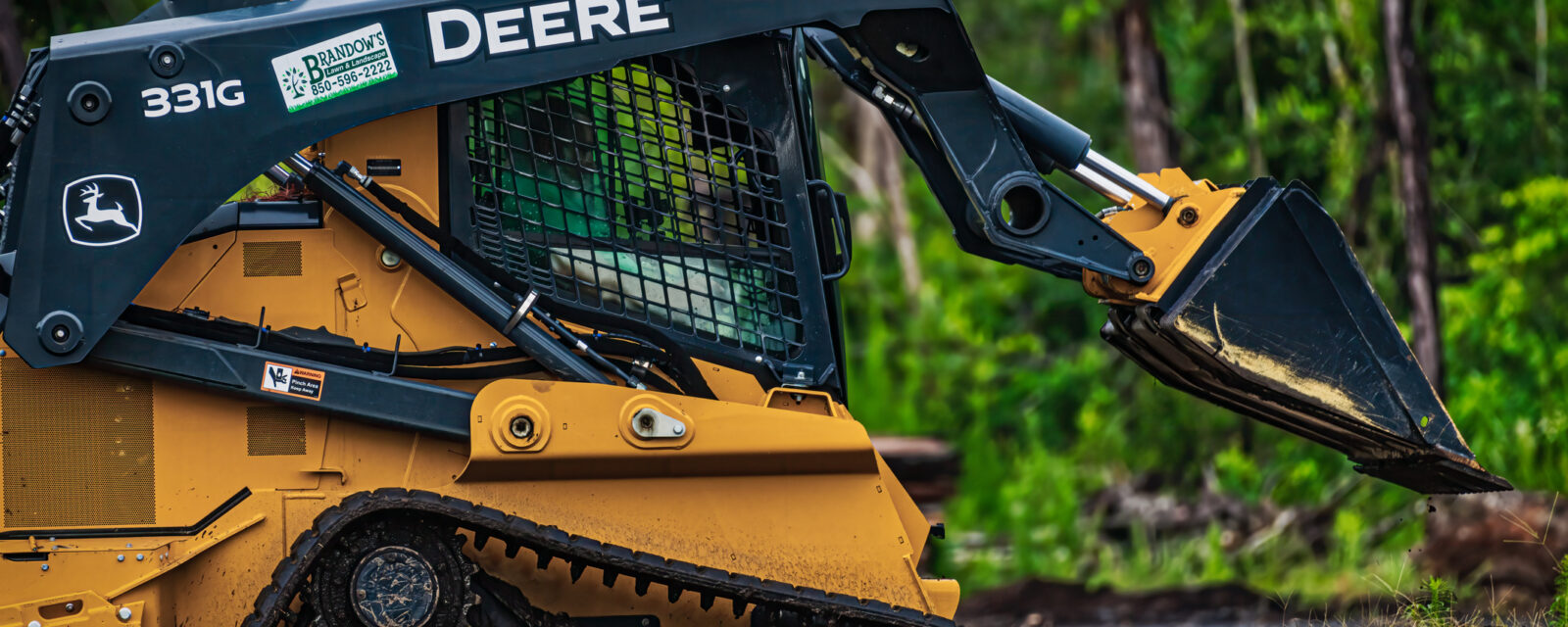
Both models prioritize operator comfort and control. They feature a pressurized cab and a sophisticated HVAC system that effectively reduces noise, prevents water and debris ingress, and maintains a comfortable temperature. The design is spacious and ergonomic, providing a larger footwell space and allowing operators to select their preferred control pattern to facilitate a smoother workflow.
Electro-Hydraulic Boom Performance Package
The optional electro-hydraulic (EH) boom performance package provides automated boom functions on both models, setting them to match operator preference. This functionality reduces cycle times and increases productivity for repetitive tasks like moving the boom up and down.
Ease of Serviceability
John Deere designs its loaders for easy maintenance, with both models offering quick access to daily and preventive maintenance points, including ground-level access to dipstick, fuel and fluid filler necks, filters, and see-through reservoirs. These enhanced serviceability features extend the lifetime of your vehicle while ensuring more time is spent on the job and less on upkeep.
Enhanced Visibility Features
Visibility is crucial for safety and precision. Both models offer excellent sightlines even when the boom is down, optional LED lighting for improved job site awareness in low-light conditions, and a rearview camera for unmatched rear visibility.
John Deere 331G vs. 333G: Key Specifications
While the 331G and 333G compact track loaders share several key specs, they also feature some distinct differences catered to varied operational needs:
Engine Manufacturer
Both loaders are powered by Yanmar engines, designed to deliver the power and torque needed for heavy-duty applications.
Engine Model
Both possess the 4TNV94FHT Yanmar engine model. However, the 333G has a slight edge with a higher net output (72 kW) and torque (395 lbf) compared to the 331G (68 kW / 382 lbf).
Rated Speed
Each model has a rated speed of 2500 rpm.
No Bucket/Foundry Bucket Length
While both machines share the same overall length, the 333G is slightly wider than the 331G, providing additional stability and supporting its higher operating capacity.
Fuel Tank
Both models have sizable fuel tanks possessing a maximum capacity of 114 liters (30 gallons). This helps reduce the need for frequent refueling stops.
Rated Operating Capacity
The 333G has a higher-rated operating capacity of 1680 kg (3,700 lbs) than the 331G (1,407 kg / 3,100 lbs).
Maximum Speed
Both models can reach travel speeds of up to 12.8 km/h (7.8 mph), ensuring quick transit across job sites.
Operating Weight
The slightly heavier 333G is designed to provide stability and support for increased power and capacity. Its operating weight is 5,493 kg (12,100 lbs), while the 331G weighs 5,403 kg (11,900 lbs).
Should You Choose the 331G or 333G?
The right choice between the John Deere 331G and 333G depends on how and where you plan to use your machine. Consider the following scenarios to determine which model best fits your needs.
Choose the 331G if:
- Need easier transport
- Want a smaller machine for tighter jobsites
Choose the 333G if:
- You need more lifting capacity
- Work on demanding job sites
- Want advanced grading technology
John Deere 331G vs. 333G: Find Your Ideal Match Now
Choosing between the John Deere 331G and 333G compact track loaders depends on your job site requirements. The 333G is ideal for more demanding applications and environments, offering a greater power output, higher rated operating capacity, and advanced grade control technology. The 331G still possesses many of the same features and specs as the 333G but with a narrower frame and a lower price point.
To learn more about which loader is right for your operational needs, visit your local John Deere dealer.
John Deere 331G vs. 333G FAQs
1. What Is the Difference Between 331G and 333G?
The main difference between the John Deere 331G and 333G is power, size, and capability. The 333G offers higher horsepower, greater rated operating capacity, and advanced grading technology, making it better suited for heavy-duty applications. The 331G is slightly narrower and more maneuverable, making it ideal for tighter job sites and easier transport.
2. Is a John Deere 331G High Flow?
Yes, the John Deere 331G can be equipped with a high-flow auxiliary hydraulic option. This allows the machine to power more demanding attachments, such as mulchers or cold planers, making it a versatile choice for a variety of job site applications.
3. How Much Can a John Deere 331G Lift?
The John Deere 331G has a rated operating capacity of approximately 3,100 pounds (1,407 kg). This makes it well-suited for tasks like material handling, grading, and loading on construction and landscaping job sites.