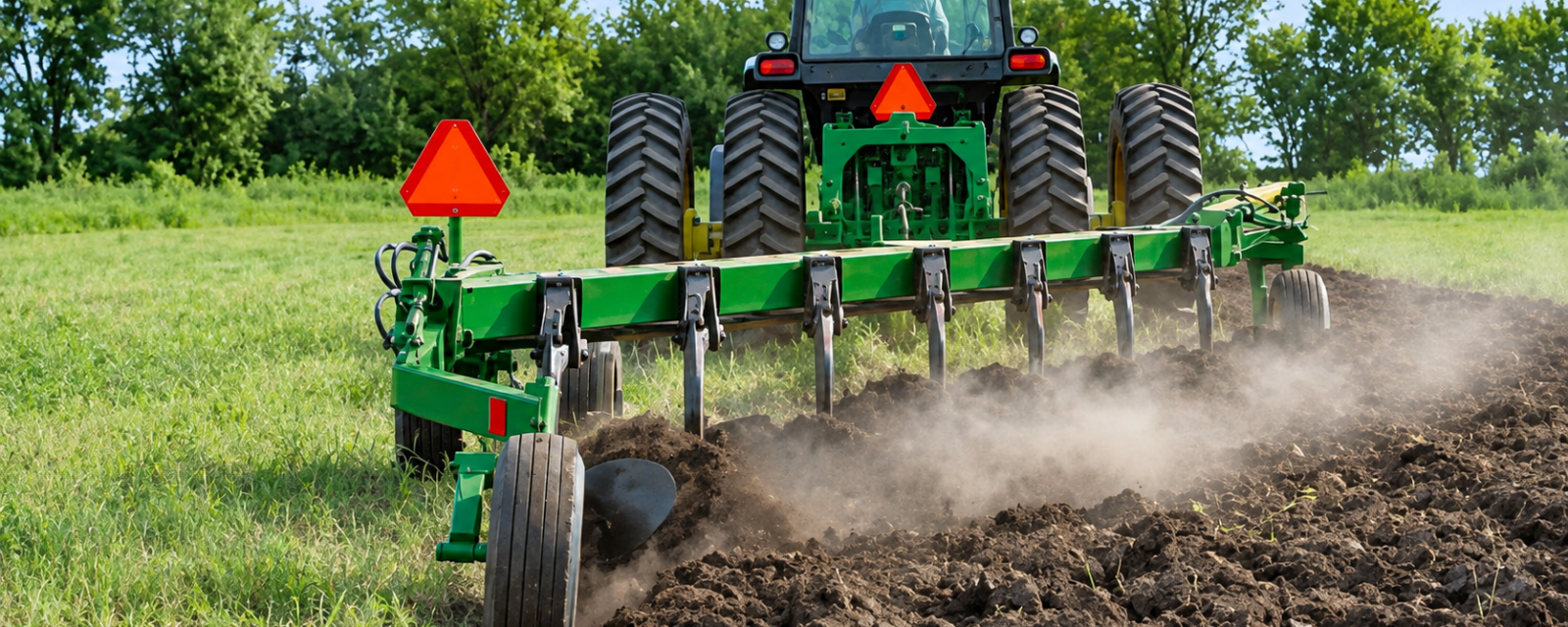
After harvest, operators need to decide how to manage crop residue and prepare the field for the next growing cycle. When substantial soil turnover fits your field goals, a moldboard plow can provide a primary tillage option that turns the soil while incorporating surface residue.
This guide covers how moldboard plows work, where they fit into post-harvest tillage, and what to consider when choosing one.
Key Takeaways
- Moldboard plows invert the furrow slice while incorporating much of the surface residue and vegetation.
- Post-harvest moldboard plowing can bury existing weeds and volunteer growth while preparing the field for secondary tillage.
- Soil turnover needs, erosion risk, and field conditions help determine where moldboard plowing fits into a tillage plan.
- Plow size, configuration, residue clearance, and tractor requirements help buyers match a moldboard plow to their fields and equipment.
What Is a Moldboard Plow and How Does It Work?
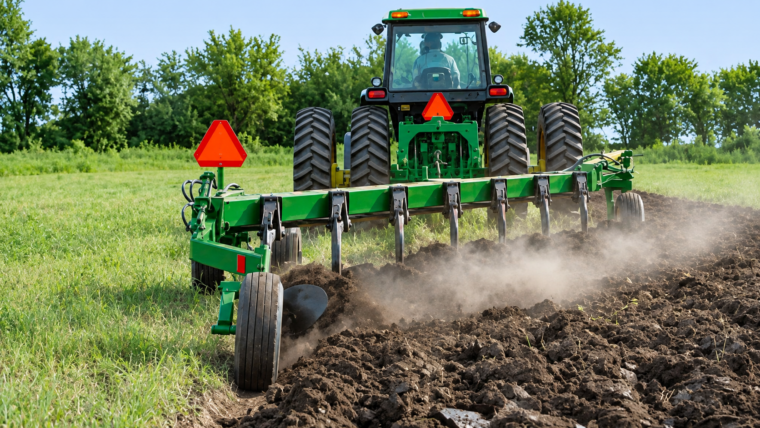
A moldboard plow is a primary piece of tillage equipment that digs beneath the soil surface and turns over the upper layer, incorporating crop residue and vegetation.
During each pass, the coulter slices through surface material, the share separates the soil underneath, and the curved moldboard turns that section of soil to one side. This creates more soil disturbance than tillage tools designed for lighter mixing or surface-level work.
Because moldboard plowing turns the soil rather than finishing the seedbed, additional field preparation may be needed before planting.
Why Use a Moldboard Plow After Harvest?
After harvest, a moldboard plow can incorporate crop residue, bury or uproot existing vegetation, and provide substantial soil inversion ahead of later seedbed preparation.
Incorporate Crop Residue
Stalks, stems, and other crop residue remain on the field after harvest. A moldboard plow incorporates much of that material into the soil, leaving less residue on the surface.
The amount incorporated depends on residue levels, field conditions, and the plow setup, so some material may remain on the surface after a pass.
Address Existing Weeds and Volunteer Growth
Moldboard plowing can uproot and bury many existing weeds and volunteer plants. This can control existing growth during the tillage pass, although weeds can emerge again afterward.
Set Up Later Field Preparation
The initial plowing pass handles substantial soil inversion, leaving later stages in the farming cycle to focus on refining the seedbed by breaking apart remaining clods and leveling the ground for planting.
When Does Moldboard Plowing Make Sense for a Field’s Tillage Plan?
Moldboard plowing may fit when post-harvest prep calls for substantial soil nversion and field conditions can accommodate that level of soil disturbance.
Start with the amount of crop residue and vegetation on the surface. If heavy crop residue or existing vegetation needs to be incorporated, a moldboard plow can move much of that material below the surface as it works the soil.
Because moldboard plowing can substantially reduce protective surface residue, fields that are highly susceptible to wind or water erosion may be better suited to tillage systems that retain more residue.
Also account for any secondary tillage needed after plowing. Because moldboard plowing can leave rough soil or larger clods, allow enough time for secondary tillage when field conditions are suitable before planting.
John Deere Moldboard Plow Options
Used John Deere moldboard plows come in several sizes. Current MachineFinder listings include the John Deere 975, 995, and 3710 moldboard plows in configurations suited to different tractors and field needs.
John Deere 975 Moldboard Plow
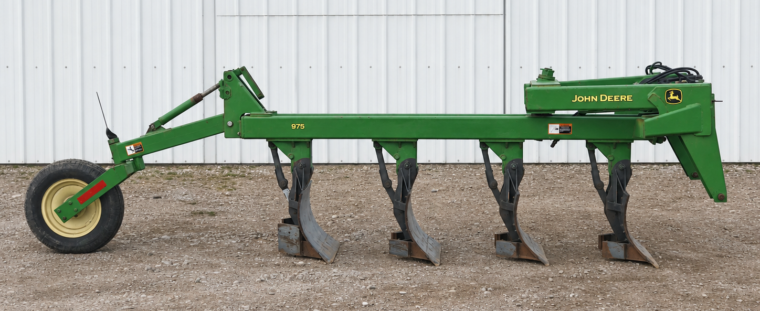
The John Deere 975 is a reversible moldboard plow found on the used market in several configurations. Because specifications can vary by configuration and production year, buyers should verify the number of bottoms, working width, hitch requirements, and tractor compatibility for the individual plow being considered.
More bottoms generally increase working width to cover more ground per pass but also place greater demands on the tractor. Compare the plow’s configuration with your tractor’s capabilities before buying.
John Deere 995 Moldboard Plow
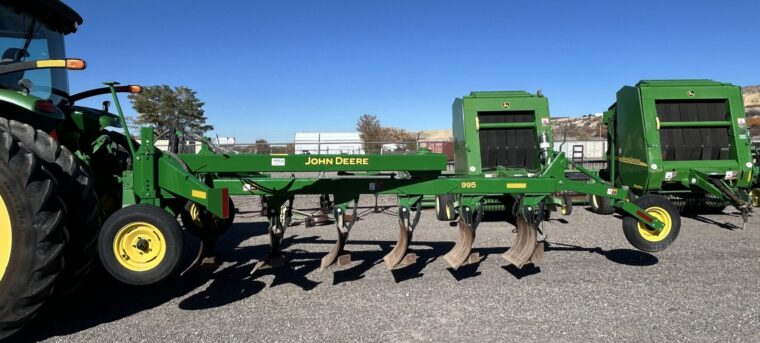
The John Deere 995 is an on-land reversible plow designed for larger-horsepower tractors. Key features include:
- Reversible moldboards pivot for right- and left-hand passes, allowing operators to work back and forth across the field.
- Seven-bottom configuration: The John Deere 995 is a seven-bottom reversible moldboard plow with a 10.5-foot total cutting width. John Deere lists a 14-inch plowing depth and a tractor power requirement of approximately 175–200 hp.
- Steel or plastic moldboards suit different soil conditions, with steel designed for tough or abrasive soils and plastic providing better soil shedding.
- Three-piece moldboards allow worn shins to be replaced separately rather than replacing the entire bottom.
- Available trip protection allows the plow bottom to respond when it strikes an obstruction, with optional mechanical-trip standards for rocky fields.
John Deere 3710 Moldboard Plow
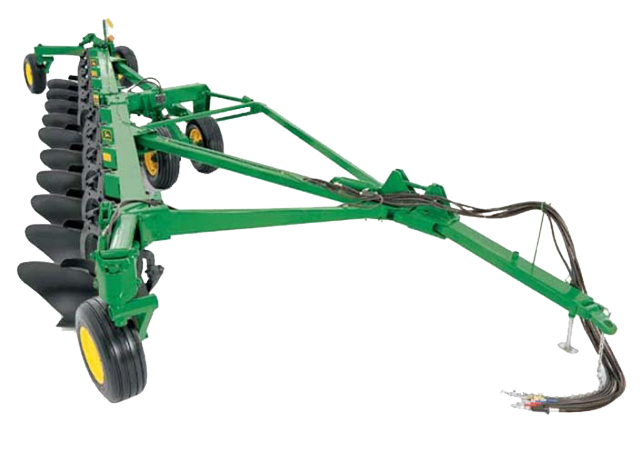
The John Deere 3710 offers several features for different field and residue conditions:
- NU bottoms sit behind the mainframe to reduce areas where residue can collect, helping material move through the plow with less buildup.
- Safety-trip standards release when a plow bottom encounters an obstruction and can be reset by raising the plow rather than backing up.
- Adjustable-force cushion coulters provide overload protection while allowing operators to adjust depth, position, and downforce for rocky or changing field conditions.
The 3710 was offered in rigid and flex configurations, with equipment and features varying by configuration and production year. Flex models use an articulated frame that helps the plow follow field contours.
For buyers considering a used John Deere 3710, check the bottoms and coulters for wear and confirm that the trip mechanisms and adjustment points operate properly.
What Should You Consider Before Choosing a Moldboard Plow?
When buying a used moldboard plow, consider the tractor pulling it, the fields it will work, and the condition of the individual machine. Key factors to compare include:
- Tractor compatibility. Confirm the tractor meets the power, hitch, hydraulic, and other operating requirements of the specific plow. If you plan to pair it with a used tractor, verify that machine’s specifications, since capabilities can vary by model, year, and configuration.
- Plow size and configuration. Match the number of bottoms and working width to your desired field capacity and the tractor available to pull the plow. Soil type, working depth, field conditions, traction, and plow configuration can all affect draft requirements.
- Field conditions. If you regularly work through heavy residue, look for enough clearance to let material pass through without frequent buildup. In rocky fields, trip protection can help protect the plow when a bottom encounters an obstruction.
- Soil type and moisture. Soil texture and moisture affect draft requirements, soil flow across the moldboard, residue handling, and the finish left behind. Avoid plowing when soil is excessively wet, since wet conditions can increase smearing and compaction.
- Condition of a used plow. Inspect shares, shins, moldboards, landsides, coulters, and other ground-engaging components for wear or uneven wear. Also inspect the frame, hitch, wheels, cylinders, hydraulic hoses, trip mechanisms, and adjustment points for damage, leaks, excessive play, or evidence of repairs. Review maintenance records, when available, for additional information about the plow’s service history.
Find a Moldboard Plow for the Work Ahead
Match the moldboard plow to your tractor, field conditions, and post-harvest workload. The right setup should provide the capacity you need while fitting smoothly into the fieldwork that follows harvest.
Ready to get plowing? Explore moldboard plows on MachineFinder to compare available models and configurations, or contact your local John Deere dealer for help finding a plow that fits your tractor and field needs.
Moldboard Plow FAQs
1. What Is the Difference Between a Moldboard Plow and a Chisel Plow?
A moldboard plow cuts, lifts, and inverts a furrow slice, while a chisel plow loosens and fractures the soil with much less inversion. As a result, chisel plowing generally leaves more crop residue on the surface.
2. Does a Moldboard Plow Bury All Crop Residue?
No. A moldboard plow can incorporate much of the crop residue on the surface, but how much gets buried depends on residue levels, field conditions, and the plow setup. Some residue may remain visible after a pass.
3. Should You Moldboard Plow Every Field After Harvest?
No. Moldboard plowing should be considered based on the goals and conditions of each field. The amount of soil turnover needed, desired surface cover, erosion risk, and any tillage planned afterward can all help determine whether it makes sense for your operation.
4. Does a Moldboard Plow Create a Finished Seedbed?
Not necessarily. Moldboard plowing provides primary soil inversion, but it can leave clods or an uneven surface behind. Secondary tillage may be needed to break up those clods and level the field before planting.
5. What Should You Inspect on a Used Moldboard Plow?
Inspect the bottoms, shares, moldboards, and coulters for wear, along with the frame, wheels, and hydraulic components for damage or leaks. Also review available maintenance records and verify that the plow’s size and operating requirements are compatible with the tractor you plan to use.