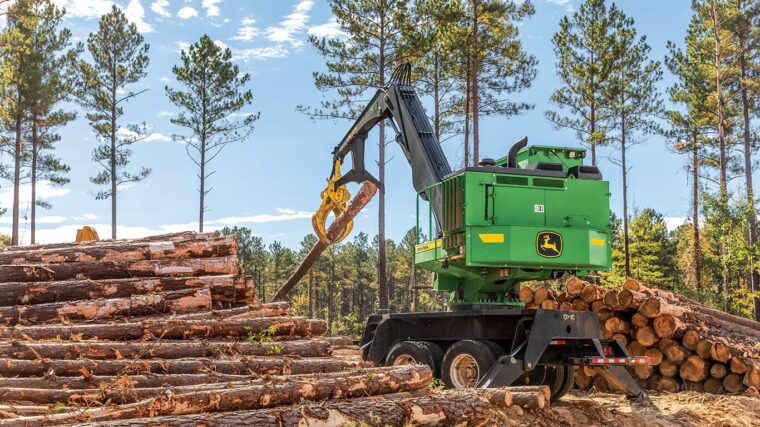
The pace of a log loader sets the rhythm of logging operations, shaping how efficiently timber moves from the landing to transport. By taking on lifting and sorting, log loaders reduce manual labor and keep material moving through yards, landings, and processing sites.
From compact log yards to large-scale forestry operations, the right loader helps crews handle higher volumes with less strain on both operators and equipment. John Deere offers a range of loader options built to match different terrains, workloads, and operating styles.
Let’s explore the different types of log loaders, how they’re used, and what to consider when choosing the right machine for your operation.
Key Takeaways
- Log loaders are essential machines for lifting, sorting, stacking, and loading timber safely and efficiently.
- Different loader types are designed for different jobs, with options built to match specific terrain conditions, timber volume, and mobility requirements.
- Modern hydraulics and visibility features along with connected technology help operators work faster and with greater confidence.
- John Deere offers a range of log loader solutions designed to perform reliably in real-world forestry conditions and support consistent productivity over time.
What Is a Log Loader?
A log loader is a machine used during the loading stage of the logging process to sort, stack, and load cut timber for transport. They’re designed to handle heavy timber efficiently and with control, supporting key functions such as:
- Repetitive lifting and precise placement: Log loaders move high volumes of timber through continuous loading cycles while maintaining stability and accuracy with each lift.
- Purpose-built balance and reach: Unlike excavators or general-purpose wheel loaders designed for digging or earthmoving, log loaders are optimized for gripping, lifting, and placing logs safely.
- Durability for forestry conditions: Log loaders are built with heavy-duty structures and responsive hydraulic systems to withstand long shifts and the demanding conditions common in forestry environments.
Types of Log Loaders
Log loaders come in several configurations, each suited to different terrain, production demands, and worksite layouts. Understanding how each type differs will help you choose a loader that supports productive timber handling without overcomplicating the job.
Knuckleboom Loaders
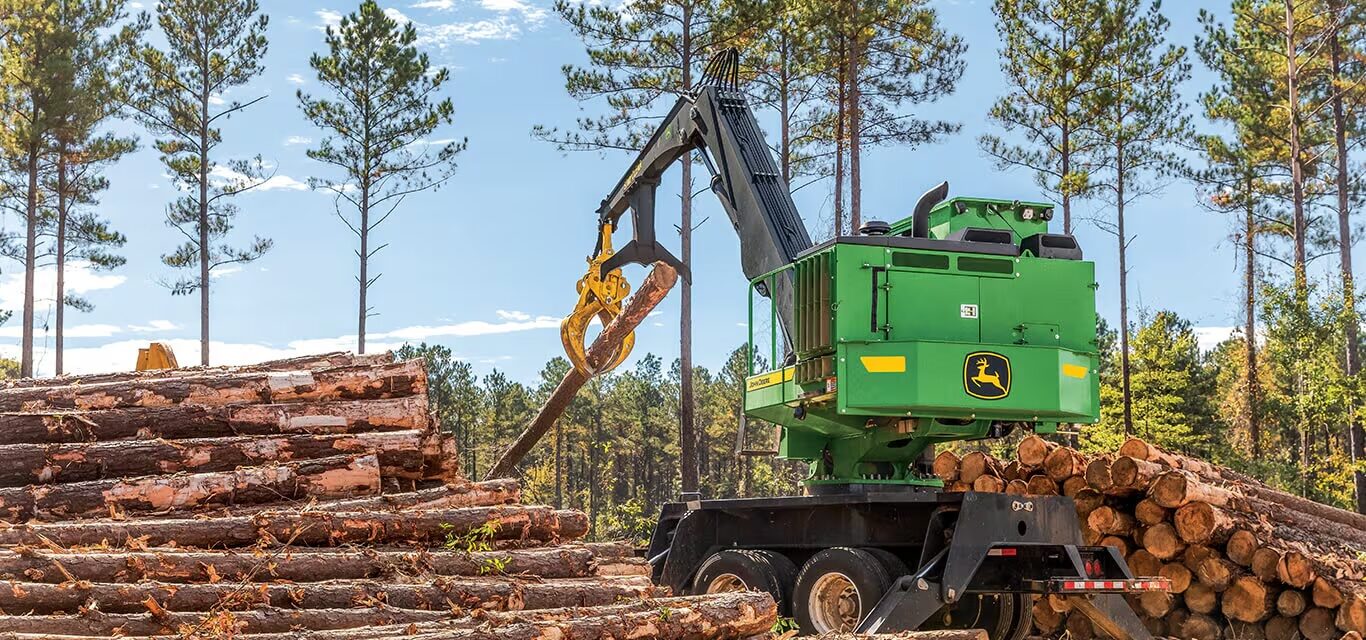
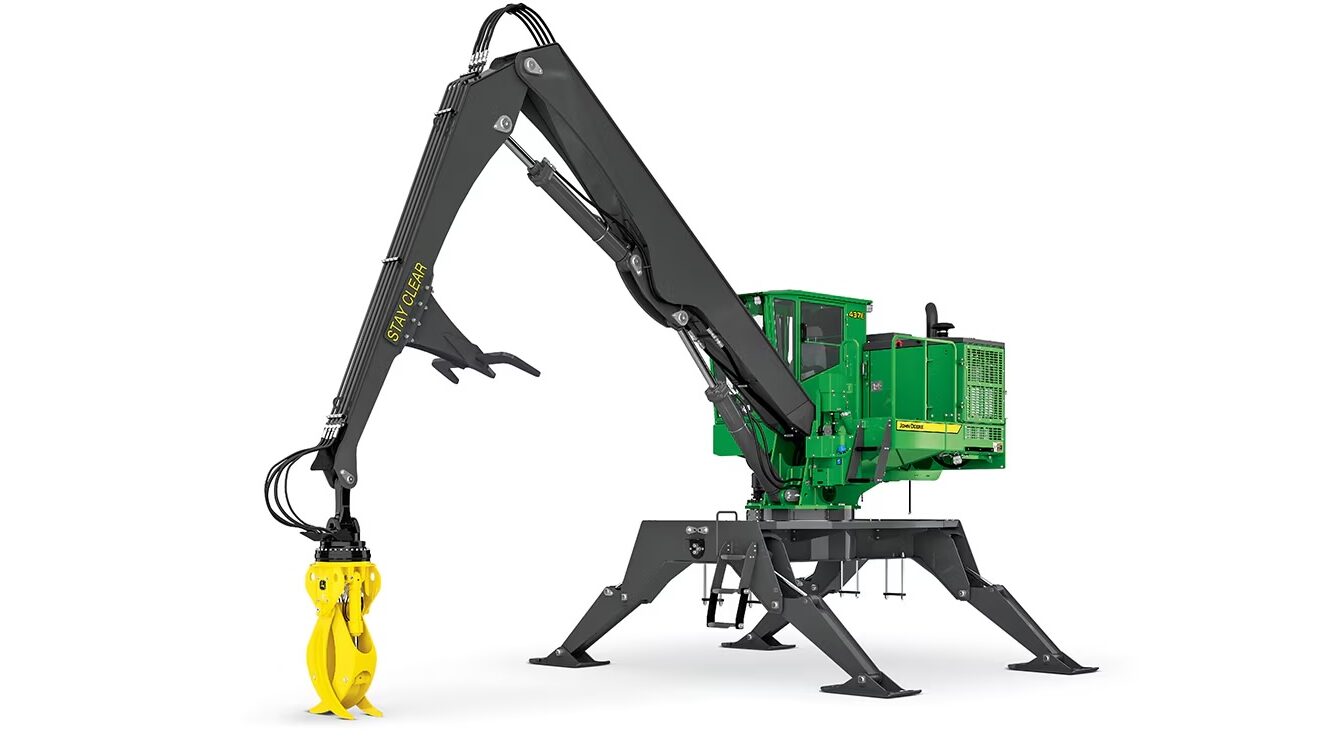
- What is it? A knuckleboom loader is a purpose-built log loader that uses a swinging boom and grapple to lift, sort, and place logs with control.
- What is it used for? These loaders are commonly used at landings and log yards where crews need steady, repeatable loading and fast log placement for larger-scale production.
John Deere knuckleboom loaders like the 437E are engineered for demanding forestry work, featuring a heavy-duty boom design that supports controlled placement and repeated loading.
Wheel Log Loaders
- What is it? Wheeled log loaders are wheel-based machines used in forestry operations, built with a front loader arm and attachment interface and typically outfitted with log forks and grapples for timber handling.
- What is it used for? Their ability to travel quickly across firm, level ground makes them well suited for log yards, where loaders frequently move short distances between log decks, trucks, and processing areas.
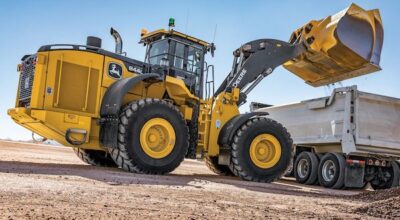
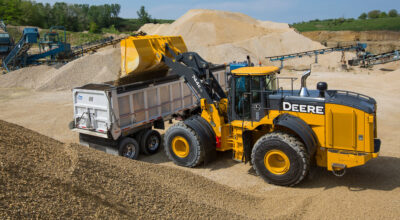
Wheeled loaders like the John Deere 944K are commonly used in forestry yard applications, offering the front-end power and stable load-handling needed to support continuous operation under heavy timber loads.
Tracked Log Loaders
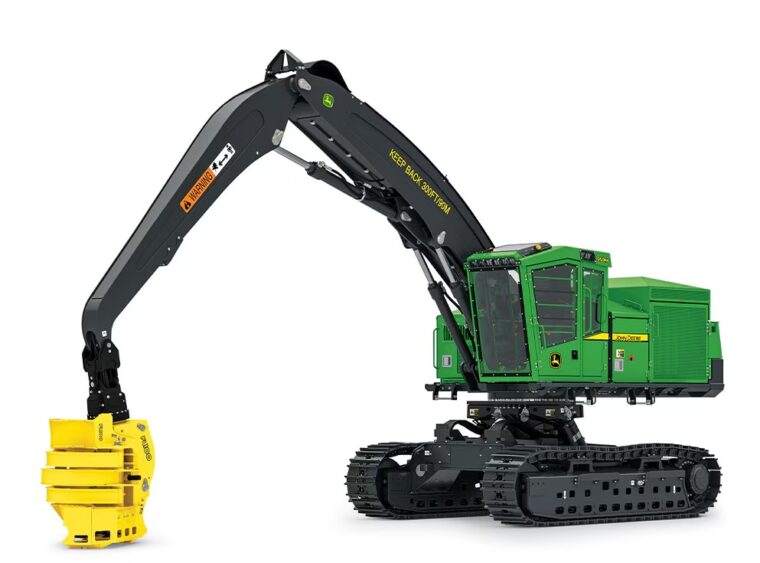
- What is it? Tracked log loaders use a tracked undercarriage to spread machine weight across the ground, providing stability and traction when handling logs on uneven or soft terrain.
- What is it used for? They’re often selected for rugged landings or sloped ground where controlled lifting and steady machine positioning matter more than travel speed.
In challenging forestry contexts, John Deere’s tracked loaders like the 2656G combine tracked stability with precise material handling and extended reach.
Trailer-Mounted and Truck-Mounted Loaders
- What is it? These loaders are mounted either on towable trailers or directly on log trucks, creating a mobile loading setup that travels with the operation.
- What is it used for? They’re well suited for roadside and shortwood operations where logs are loaded near the harvest site or sites without permanent yard infrastructure.
For many mobile operations, truck- and trailer-mounted systems offer a flexible, cost-conscious option for smaller crews or shortwood work, but are less suited to high-volume yard loading.
Key Features of Modern Log Loaders
Modern log loaders are built to perform in demanding forestry environments while supporting all-day productivity. The features below directly influence how efficiently timber is handled and how reliably machines perform.
Hydraulic Power and Performance
Hydraulic systems play a central role in how smoothly a log loader handles timber and how controlled each lift feels to the operator. In practical terms, strong hydraulics support:
- High lifting force under load: Operators can lift heavy, uneven log bundles cleanly, reducing hesitation and unnecessary repositioning during high-volume loading.
- Precise control and grip consistency: Smooth, responsive hydraulics maintain steady boom movement and consistent grapple pressure, helping operators place logs accurately while minimizing load shift.
Grapple Options and Lift Capacity
Grapple selection directly affects how securely logs can be lifted, controlled, and placed, especially when handling different log sizes within the same operation. Common grapple configurations include:
- Bypass grapples: Bypass grapples use opposing jaws that close around the load, allowing operators to grab uneven bundles securely. They’re well suited for handling smaller logs, shortwood, and mixed material.
- Butt-and-top grapples: These grapples are designed for handling larger, full-length logs by gripping timber at the base. This configuration supports larger load sizes and more precise organization when working with stacks of tree-length wood.
Operator Comfort and Visibility
Long hours in the cab make operator comfort and visibility essential to maintaining productivity and jobsite safety. Key features that support all-day operation include:
- Ergonomic cab design and controls: Supportive seating, climate control, and intuitive cab layouts help operators to maintain steady performance during long shifts.
- Clear sightlines and visibility: Panoramic cab views help improve awareness of the load, grapple, and surrounding work area, supporting safer operation and more accurate log placement.
Stability, Reach, and Durability
Forestry work puts constant stress on machines, making stability, reach, and structural strength critical. Log loaders are designed with these demands in mind, with structural features that support controlled operation and long-term reliability:
- Stable undercarriages and machine balance: Well-balanced undercarriages help keep the loader steady during lifting and carrying, reducing unwanted movement when working on uneven or shifting ground.
- Reach suited for log placement: Extended reach allows operators to stack and load logs accurately without excessive repositioning, supporting smoother material flow across the site.
- Structural strength for heavy loads: Reinforced frames and heavy-duty components support repeated lifting of heavy timber and contribute to dependable performance over long service intervals.
Smart Tech and Telematics
Connected technology helps operators monitor machine performance and reduce downtime. John Deere log loaders integrate tools that support more informed equipment management in the field and across fleets:
- JDLink™ telematics and diagnostics: JDLink™ provides remote access to machine hours, fuel use, and performance data while supporting diagnostics, service alerts, and maintenance tracking to help teams address issues early and keep equipment in service.
- Precision Forestry planning tools: Precision Forestry technologies like TimberMatic™ Maps support site planning and layout by giving operators access to mapped work areas and landing information.

How to Choose the Right Log Loader for Your Operation
Factors like terrain, timber volume, and site mobility influence which log loader will deliver the best balance of productivity and ease of use. Here are a few considerations to keep in mind:
- Terrain: Tracked machines are better suited for uneven, soft, or sloped ground, while wheel and truck-mounted loaders perform efficiently on firm, level surfaces.
- Job volume and workload: High-volume yards handling large, full-length logs are better suited to knuckleboom or wheel-based loaders designed for continuous loading. Lower-volume or shortwood operations often benefit from trailer- and truck-mounted loaders since they prioritize flexibility and reduce the need for dedicated yard infrastructure.
- Mobility and transport needs: For operations that move between landings or roadside sites, trailer- and truck-mounted loaders offer flexibility by making transport and setup faster between locations.
- Attachment compatibility: Grapple selection affects how logs are handled, with bypass grapples offering flexibility for mixed log sizes and butt-and-top grapples supporting controlled placement of larger stems.
John Deere Log Loaders: Engineered for Forestry Excellence
Log loaders keep timber moving from the landing to transport with consistency and control. John Deere’s forestry equipment lineup offers a range of loader solutions designed to handle demanding workloads, support long shifts, and perform reliably in real-world conditions.
Ready to find the right log loader for your operation? Visit your local John Deere dealer or explore MachineFinder to compare available models and configurations based on your jobsite needs.

Log Loaders FAQs
1. What are the uses of a log loader?
Log loaders are used to lift, sort, stack, and load logs at landings and log yards. They support efficient loading onto transport equipment while reducing manual handling.
2. How do you maintain a log loader?
Keeping a log loader in good working condition requires regular attention to hydraulics, grapples, and other high-wear components. Lubrication, visual inspections, and performance monitoring through telematics when available help reduce unexpected downtime and support longer machine life.
3. What are the safety precautions for operating a log loader?
Operators should maintain clear visibility, control loads carefully, and stay within rated lift limits. Daily machine inspections, proper protective equipment, and adherence to site safety procedures are also essential for safe operation.
4. What are the different types of log loaders?
Log loaders are available in several configurations, including knuckleboom loaders, wheel loaders, tracked loaders, and trailer- and truck-mounted loaders. Each type is designed to match specific terrain, workload, and mobility needs.